Italy
Italy: The Ventimiglia legacy

Discover the profound impact of the Ventimiglia family on Italy and Sicily. This page explores their royal and political influence, revealing how their legacy shaped these vibrant regions and their connections to neighboring European countries.

The founding families of Italy and Sicily
The Ventimiglia family holds a significant place in history, recognized as the founders of both Italy and Sicily. Their vision and leadership laid the groundwork for the regions we know today, establishing a heritage rich in royalty and political power.
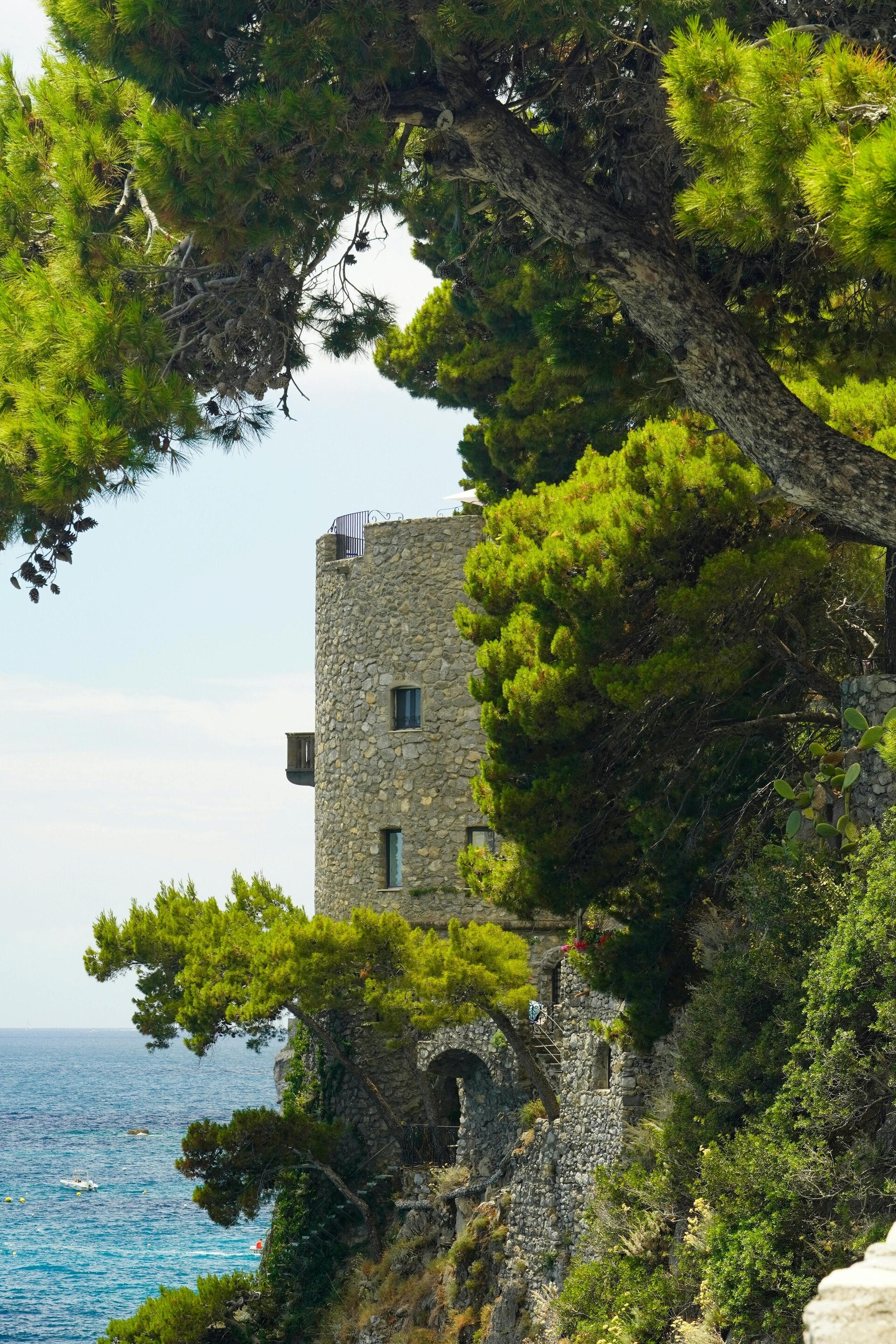
Royal and political influence
Throughout centuries, the Ventimiglia family exerted immense royal and political influence across Italy and Sicily. Their strategic alliances, leadership, and enduring presence shaped the geopolitical landscape, leaving an indelible mark on governance and culture.
While the surname itself originated in northern Italy (the city of Ventimiglia in Liguria) and expanded significantly via the powerful nobility of Sicily (such as the Ventimiglia di Sicilia), its deep ties to the North African Maghreb evolved through three distinct historical phases.
1. The Medieval Hafsid Trade Network
During the Middle Ages, the noble House of Ventimiglia established massive feudal territories in western Sicily. Because of Sicily's geographic proximity to North Africa, the family became deeply involved in maritime commerce with the Hafsid Emirate of Tunis and trading hubs near Algiers. Family merchant galleys regularly transported grain, textiles, and coral across the Sicily Channel, forging early diplomatic and commercial ties with Muslim rulers in Tunis.
2. The Barbary Corsair Era and the Ransom Trade
Between the 16th and 18th centuries, the Mediterranean became a theater for the "Holy War" between Christian powers and the Barbary Pirates (Corsairs) operating out of the autonomous Ottoman regencies of Algiers and Tunis.
- Raids on the Sicilian Coast: Corsairs from Algiers routinely raided Sicilian coastal towns where the Ventimiglia family held estates. Thousands of locals were captured and taken back to the slave markets of Algiers and Tunis.
- The Redemptive Orders: Because of their immense wealth and political standing, the Ventimiglia nobility frequently acted as regional coordinators and financial backers for Catholic redemptive orders (such as the Trinitarians and Mercedarians). They pooled resources to negotiate ransoms, sending massive sums of gold directly to Algiers and Tunis to buy back captured family members, vassals, and fishermen.
3. The 19th-Century Italian Diaspora to French North Africa
The most direct reason why families bearing the Ventimiglia surname can be natively traced to Tunis and Algiers today is the massive migration wave of the 1800s.
- Migration for Work: Long before the French colonized Tunisia in 1881, tens of thousands of impoverished Sicilians migrated to the coastlines of North Africa looking for work. Families of Sicilian fishermen, laborers, and sailors—including many named Ventimiglia—settled permanently in the La Goulette district of Tunis and the bustling port neighborhoods of Algiers.
- The "Pied-Noir" Evacuation (1962): These Italian diaspora communities integrated deeply, often gaining French citizenship over the generations. Following the bloody conclusion of the Algerian War of Independence in 1962, hundreds of thousands of European settlers (known as Pied-Noirs) fled Algiers and Tunis. Many families with the Ventimiglia surname migrated to mainland France or returned to Italy, carrying with them a multi-generational heritage deeply rooted in North Africa.
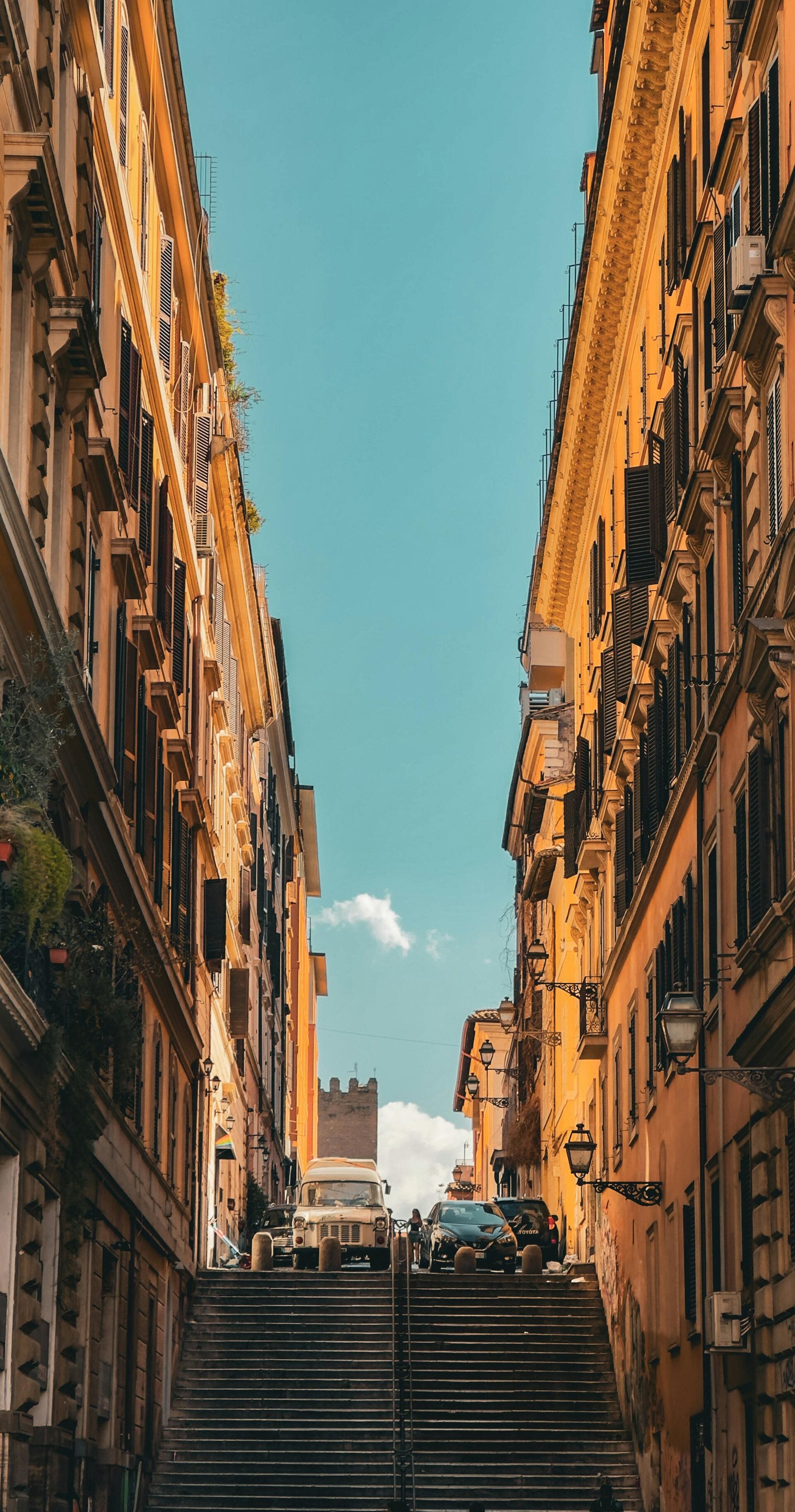
Coastal beauty and European connections
Italy's breathtaking coastal beauty, with its proximity to Monaco and other key European regions like France and Portugal, is deeply intertwined with the Ventimiglia family's history. Ancient castles and historical architecture stand as testaments to their enduring legacy and the family connections that span across these areas.
The surname Ventimiglia is one of the most prominent aristocratic names in Italian and Genovese history. While there is no direct genealogical or geographic tie between the Ventimiglia family and the Swiss city of Geneva, their historical domains are interconnected through the French-Italian border region (the Alps/Riviera) and overlapping royal dynasties like the House of Savoy.
The connections between the surname and this broader European geographic hub include:
1. Geographic Origin of the Surname
The surname Ventimiglia originates from the coastal town of Ventimiglia, located in the Liguria region of northwestern Italy, right near the French border and just east of Nice. The name derives from the ancient Roman settlement Albintimilium, later shortened to Vintimilium, and is coincidently similar to the Italian words for "twenty miles".
2. The Ligurian and Provençal Noble Houses
- The Counts of Ventimiglia: In the Middle Ages, the powerful Counts of Ventimiglia governed this coastal region and its hinterland.
- The House of Savoy: The territory of Ventimiglia historically bordered and occasionally fell under the control of the neighboring House of Savoy, which originated in the western Alps across France, Italy, and Switzerland.
- The Lascaris Line: In 1269, the Count of Ventimiglia (Guglielmo Pietro I Balbo) married Eudossia Laskaris, a Byzantine princess. From this union began the Lascaris of Tenda dynasty. Eventually, the last heir, Anne Lascaris, married Renato of Savoy, bringing the territories of the Counts of Ventimiglia directly into the Savoy dynasty.
3. The Move to Sicily
While the original family branch remained in Liguria and southern France, a prominent branch migrated to Sicily in the Middle Ages. The Sicilian Ventimiglias became incredibly powerful feudal lords, often described as "semi-kings". They built major castles, such as the one in Castelbuono, and held dozens of prestigious titles. Many individuals today who carry the Ventimiglia surname trace their ancestry back to this Sicilian branch.
4. Direct Transit and Geography
Today, while you won't find a historical ruling Ventimiglia family in Geneva, Geneva, Switzerland and Ventimiglia, Italy are major connected transit hubs on opposite sides of the Alps. European travelers often move between them, as the Italian Riviera town of Ventimiglia serves as the major coastal gateway for trains going up through France to Geneva.
On To Austria
The connection between Ventimiglia (a border town in Liguria, northwestern Italy) and Austria depends on the context of your query. Because there is no singular famous historic treaty or concept known explicitly as "The Ventimiglia-Austria Connection," this phrase typically refers to one of three contexts: transit infrastructure, genealogical nobility, or geopolitical border management.
1. The Rail and Transit Connection
Historically and commercially, Ventimiglia serves as the westernmost international rail gateway of Italy, right on the French border.
- The Trans-European Rail Corridor: Ventimiglia and Austria are bound together by major European freight and passenger rail networks. Passengers can travel directly across the top of Italy—from Ventimiglia, through Milan and Venice—to reach Vienna, Austria via daily international links.
- The Cuneo–Ventimiglia Line: Ventimiglia connects to Piedmont via the spectacular Tendabahn (Col di Tenda railway). This mountain-crossing engineering feat has historically been compared to Austria's famous Semmering and Brenner Alpine passes, linking the Mediterranean coast directly to Central European transit logic.
2. The House of Ventimiglia (Nobility)
If you are looking at European history, the connection is genealogical through the House of Ventimiglia, a highly influential Italian noble family of Ligurian origin.
- Members of this dynasty spread across Europe, establishing powerful branches in Sicily (ruling places like Ventimiglia di Sicilia).
- Through centuries of strategic aristocratic marriages, the Italian nobility of the Holy Roman Empire frequently intermarried with Austrian, Bavarian, and Habsburg nobility, linking the Ventimiglia bloodline to Central European elite circles.
3. Geopolitical EU Border Hotspots
In modern European politics, Ventimiglia and Austria are frequently paired in news media regarding the Schengen Zone and migration:
- The "Bookends" of Italian Transit: Ventimiglia (on the French border) and the Brenner Pass (on the Austrian border) are the two primary, highly scrutinized transit bottlenecks for migrants attempting to leave Italy for northern Europe.
- Whenever France tightens border security at Ventimiglia, or Austria tightens security at the Brenner Pass, it triggers joint diplomatic discussions between Italy, France, and Austria regarding EU border policies and the temporary suspension of Schengen open-border rules.
Greece
While "Ventimiglia" is a purely Italian geographic surname originating from Liguria and Sicily, it has a deep and direct footprint in Greek history and society.
The presence of the Ventimiglia name in Greece—and its evolution into Greek variants—happened through two main historical pathways:
1. The Noble Pathway: Lascaris di Ventimiglia
Following the 1261 marriage between Count Guglielmo Pietro I of Ventimiglia and the Byzantine Princess Eudoxia Laskarina, the family formally merged names to become the House of Lascaris di Ventimiglia.
- The Surnames in Greece: In Greece, the family line is heavily associated with the name Laskaris (Λάσκαρις). While some European branches kept the hyphenated "Lascaris-Ventimiglia", in Greek-speaking lands, the royal surname Laskaris took precedence because of its imperial prestige.
- The Return to Greece: While the branch originally flourished in Italy and France, many descendants returned to the Aegean or maintained close ties to Greek-administered islands, ensuring the lineage remained highly visible in Greek aristocratic records.
2. The Crusader & Trade Pathway: Venetian/Genoese Rule
Between the 13th and 17th centuries, Catholic Italian maritime republics (primarily Venice and Genoa) conquered and ruled various parts of Greece, a period Greeks call the Latinokratia. They controlled places like Crete, Cyprus, Evia, and the Cyclades Islands (such as Naxos and Santorini).
- Italian Settlers: Noble families and merchants from the town of Ventimiglia (and the powerful Sicilian Ventimiglia clan) relocated to these Greek islands to serve as administrators, governors, or landowners.
- Grecianization of the Name: Over generations, these Catholic Italian families integrated into the local Greek Orthodox populations. Their distinct Italian last names were phonetically altered to sound more Greek.
What the Name Looks/Sounds Like in Greece Today
If you are looking for people of Ventimiglia descent or families who carried the name into Greece, it usually manifests in a few specific ways:
- Vendimilia / Bentimilia (Βεντιμίλια): Because the modern Greek alphabet lacks a distinct letter "V", western names starting with "V" are spelled with the Greek Beta (Β), which is pronounced like a "V". The "g" in the Italian pronunciation is dropped.
- The Suffix "-akis" (Crete): In Crete, where Italian noble influence was massive, Western surnames often took on the classic Cretan ending. An Italian name like Ventimiglia could historical morph into something like Ventimilakis (Βεντιμιλάκης).
- The "Frangoi" (Φράγκοι): In places like the island of Syros or Corfu, there are still prominent populations of Greek Catholics (historically called Frangoi or "Franks" by Orthodox Greeks). Italian surnames, including Ventimiglia, survived quite clearly in these specific island parish registries.
Turkey
An incredible historical intersection connects the Ventimiglia surname directly to the medieval history of Turkey.
The bond is forged through a major royal marriage that fused Italian nobility with the Byzantine Empire, the medieval Greek-speaking Roman Empire centered in what is now modern-day Turkey.
👑 The Ventimiglia-Lascaris Alliance
Following the devastating 1204 Fourth Crusade, Western European knights sacked Constantinople. The Byzantine imperial court fled east into Anatolia (the Asian side of modern Turkey) and established the Empire of Nicaea (centered around modern-day İznik, Turkey).
The ruling imperial family of this medieval state was the House of Laskaris.
- The Marriage: In 1261, the Count of Ventimiglia—Guglielmo Pietro I di Ventimiglia—married Eudoxia Laskarina, a Byzantine royal princess and the daughter of the Nicaean Emperor Theodore II Laskaris.
- The New Dynasty: This marriage resulted in a powerful, elite branch of nobility called the Lascaris di Ventimiglia (or Vintimille-Lascaris).
🏰 Traces Left Behind in Anatolia (Turkey)
During the medieval period, the Laskaris dynasty ruled a highly strategic area of northwestern Turkey. If you trace this bloodline back to its roots in the region, several major historical strongholds stand out:
- İznik (Ancient Nicaea): Located just southeast of Istanbul, this fortified lakeside city served as the capital for Eudoxia’s family. The massive medieval walls, towers, and the site where the ecumenical councils met are still highly preserved.
- The Palaiologan Coup: Shortly after the marriage, a rival faction led by Michael VIII Palaiologos usurped the Nicaean throne from Eudoxia's young brother. This political upheaval forced Princess Eudoxia to permanently relocate to the Western Mediterranean, firmly anchoring her Byzantine-Turkish imperial bloodline into the Italian Ventimiglia family tree.
🏛️ The Living Legacy
Because of this medieval connection to Turkey, the Ventimiglia family adopted the Byzantine double-headed eagle into their coats of arms.
Furthermore, if you ever visit the famous Palais Lascaris in Nice, France (very close to the town of Ventimiglia), you are looking at a palace built by the descendants of this exact Italian-Byzantine union.
Before they adopted the habitational name Ventimiglia from their sovereign county in Liguria, the dynastic lineage of the Counts of Ventimiglia was a branch of the Anscarici dynasty, often referred to by the surname or house name d’Ivrea (of Ivrea).
The Ancestral Surname: D'Ivrea (Anscarici)
The sovereign counts of Ventimiglia trace their patrilineal descent back to the high-ranking Frankish nobility that ruled northern Italy.
- The Royal Connection: Historically, the family is recognized as direct descendants of Berengar II d’Ivrea, the King of Italy from 950 to 961.
- The Shift to Ventimiglia: Berengar II's son, Corrado d’Ivrea (also known as Corrado Cono), was the Margrave of Ivrea. His descendants established local rule over the extreme western Ligurian coast, eventually anchoring their power at the fortress city of Ventimiglia. By the 11th century, the family dropped "d’Ivrea" and adopted the name of their new capital, becoming the Conti di Ventimiglia.
Other Notable Names in the Lineage
If you are looking at different eras or specific branches of the family tree, they have been known by a few other highly prominent names:
- Lascaris (or Lascaris di Ventimiglia): In 1261, Count Guglielmo Pietro I married Princess Eudoxia Laskarina, daughter of the Byzantine Emperor Theodore II Laskaris. The primary ruling branch of the family proudly adopted the imperial Byzantine surname Lascaris, ruling the County of Tenda under this name for centuries.
- Del Bosco (or Lo Bosco): A powerful cadet branch that migrated to Sicily in the 13th century modified their name to Ventimiglia del Bosco, which was later shortened by some descendants to simply Del Bosco or Lo Bosco.

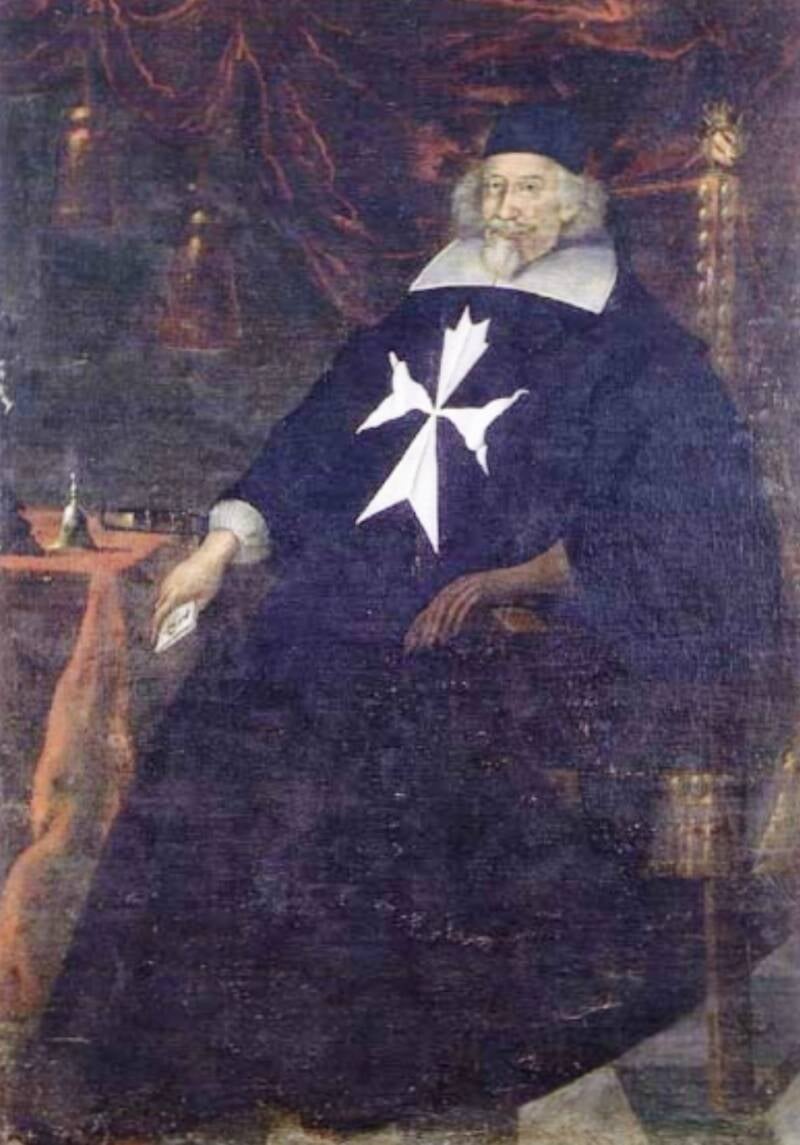
Grand Master Giovanni Paolo Lascaris di Ventimiglia
As a sovereign head of state (Grand Master of the Knights of Malta, 1636–1657), Giovanni Paolo is the most heavily painted and visually documented individual in the entire family line.
- The Anonymous 17th-Century Oil Portrait: A highly famous, authentic Baroque oil painting is held within an elite Italian Private Collection (initially preserved in Piedmontese contexts like Masino Castle). It portrays the Grand Master in full length with a long, flowing white beard, swathed in the jet-black monastic robes of the Order featuring a prominent white Maltese Cross.
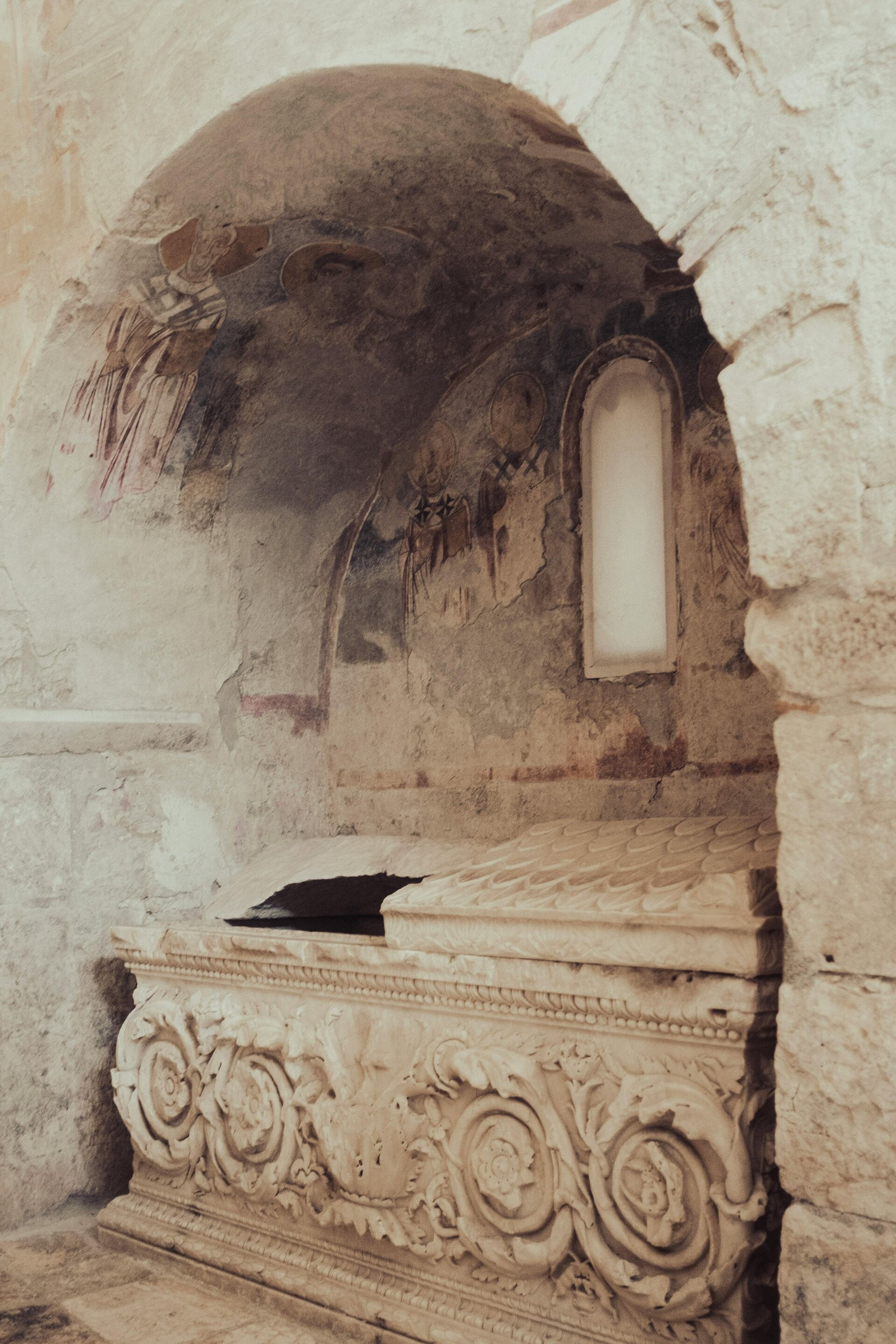
🏛️ The Funerary Effigy of Count Francesco I Ventimiglia
- Location: Church of Santa Maria Maggiore (or ancestral repositories), Geraci Siculo, Sicily [6]
- Period: Mid-14th Century (Gothic Era)
- Medium: Carved White Sicilian Marble
Historical Significance:
Before the widespread adoption of canvas oil portraiture in the Mediterranean, the sovereign rulers of the House of Ventimiglia recorded their exact physical likenesses through the medium of three-dimensional stone sculpture. This exquisite gisant (recumbent tomb effigy) depicts Count Francesco I Ventimiglia, one of the most powerful and defiant feudal lords in Sicilian history, who laid the foundations for the family’s golden age by constructing the landmark Castello dei Ventimiglia in Castelbuono.
Artistic & Visual Analysis:
- The Profile: Unlike highly stylized medieval icons, this monument behaves like a precise anatomical drawing. The master sculptor meticulously chiseled the Count's facial structure, capturing distinct expressions, sharp cheekbones, and individual hair transitions that reflect a genuine, life-like portrait.
- The Regalia: The Count is depicted lying in state, swathed in the luxurious, heavy garments worn exclusively by the highest-ranking nobility of the Kingdom of Sicily. Every fold of the fabric, the decorative embroidery, and the ceremonial belt are rendered with stunning geometric precision, serving as a permanent visual testament to the family's merum et mixtum imperium (absolute judicial sovereignty) over the region.
- The Gothic Frame: The tomb structure itself features the classic pointed arches and geometric heraldry characteristic of the high-medieval period, ensuring that any visiting dignitary or subject instantly recognized the supreme status of the Ventimiglia patriarch.
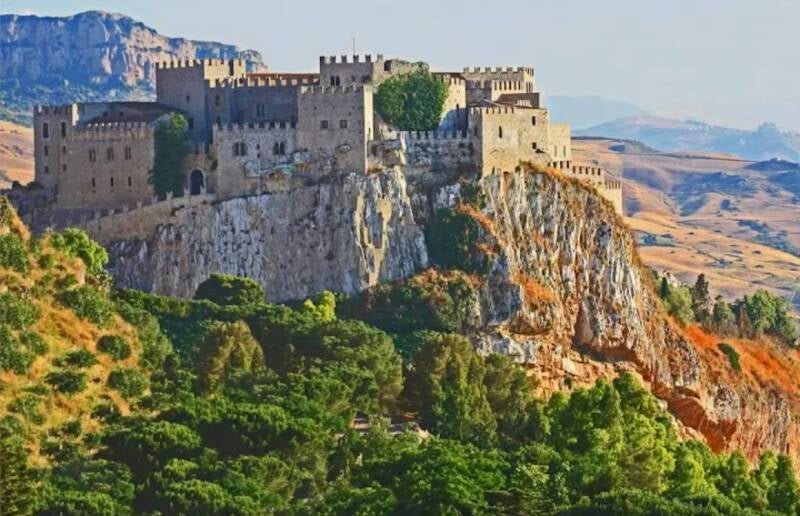
The absolute greatest rival to the House of Ventimiglia in Sicily was the House of Chiaramonte.
During the 14th century, the central royal authority of the Aragonese Kings of Sicily crumbled. This vacuum allowed a few elite noble families to amass so much land, private military might, and local authority that contemporary chroniclers explicitly labeled them "Semi-Kings" (Semi-Reges).
The Ultimate Rivalry: Chiaramonte vs. Ventimiglia
While the Ventimiglia dominated the north and west from their stronghold in the Madonie mountains (Geraci and Castelbuono), the House of Chiaramonte established an immense, near-sovereign territory in the south and east, centered around the County of Modica.
The families represented two opposing factions on the island:
- The Latin Faction (Chiaramonte): They championed the native Italian/Sicilian baronial interests. They frequently resisted the direct interference of the Spanish-Aragonese Crown.
- The Catalan Faction (Ventimiglia): While often acting in their own self-interest, the Ventimiglias were traditionally aligned with the Aragonese monarchy and foreign court diplomacy.
Blood Feuds and a Broken Marriage
The rivalry was not just political; it was deeply personal. In 1315, in an attempt to broker peace, Count Francesco I Ventimiglia married Costanza Chiaramonte. Ten years later, Francesco publicly humiliated the Chiaramonte family by divorcing and repudiating Costanza, claiming she was barren.
This sparked an all-out baronial war across Sicily. The Chiaramonte family used their political leverage to frame Francesco for treason, leading to a royal siege of his fortress and his ultimate death in battle in 1338.
The Era of the Four Vicars
By 1377, the monarchy was so weak that the island was officially carved up and ruled by a baronial regency known as the Four Vicars. Both the Ventimiglia and the Chiaramonte ruled as two of these four de facto dictators of Sicily, dividing the island’s administration and economy entirely between themselves.
The Chiaramonte legacy matches the Ventimiglias in culture as well; their wealth built the famous Palazzo Chiaramonte-Steri in Palermo and birthed an architectural style unique to the island known as Chiaramontan Gothic.
Other Notable Rivals
While the Chiaramonte were the primary rivals, two other families occasionally matched the Ventimiglias in raw power:
- The Alagona Family: A powerful dynasty of Catalan origin that controlled Catania and eastern Sicily. They served as another of the Four Vicars and frequently clashed with both the Ventimiglia and the Crown.
- The Passaneto Family: Along with the Ventimiglia and Chiaramonte, they were the third family originally elevated to the status of "Semi-Kings" during the height of 14th-century feudal anarchy.
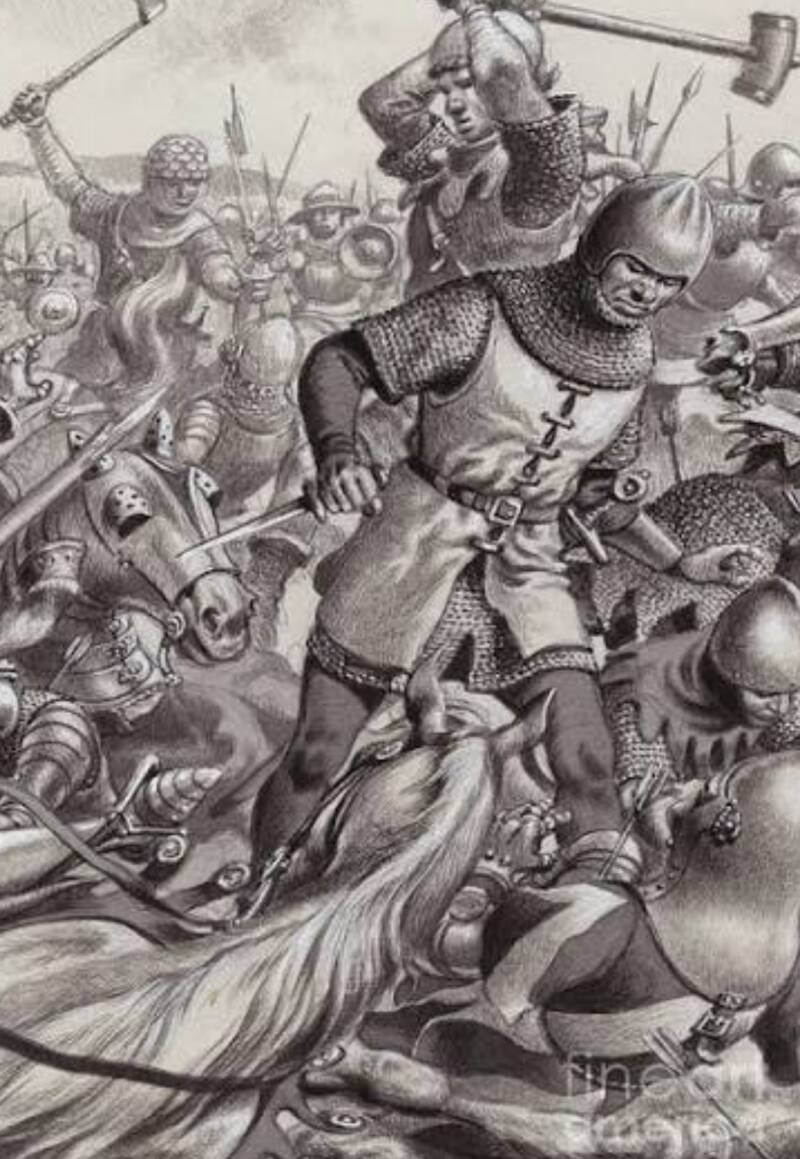
The fall of the House of Chiaramonte in 1392 was one of the most dramatic and violent political collapses in medieval Sicilian history. It abruptly ended the era of baronial anarchy, effectively breaking the power of the native Sicilian elite and restoring absolute royal rule under the Crown of Aragon.
The destruction of the family unfolded through a rapid sequence of events:
1. The Catalyst: The Return of the Crown
By 1391, the Chiaramonte family had reached the absolute apex of their power. Manfredi III Chiaramonte controlled vast swaths of western and central Sicily, and his daughter, Costanza, was married to King Ladislaus of Naples. However, when Manfredi III died late that year, he left his massive inheritance and leadership of the anti-Aragonese baronial resistance to his young, less politically astute son, Andrea Chiaramonte.
The geopolitical landscape shifted drastically in March 1392 when King Martin I of Aragon (alongside his father, Martin the Elder, Duke of Montblanc) landed a massive fleet on the shores of Sicily to re-establish centralized royal authority over the island.
2. The Siege of Palermo
Most of the independent Sicilian barons folded quickly under the raw military pressure of the arriving Aragonese army, but Andrea Chiaramonte stubbornly chose to fight. He holed up in Palermo, relying on the immense defenses of the family's urban palace, the Palazzo Chiaramonte-Steri.
Aragonese troops subjected the city and the palace to a brutal, month-long siege. Starved of reinforcements and isolated by the desertion of his former aristocratic allies, Andrea was finally forced to capitulate and surrender the city.
3. Execution at the Palace Gates
King Martin made an immediate, ruthless example of Andrea to ensure no other baron would ever defy the Crown again. Andrea was tried for high treason, found guilty, and sentenced to a swift public death.
On June 1, 1392, Andrea Chiaramonte was beheaded in the public square directly in front of the main gates of his own majestic palace.
[1307-1320: Palace Built] ---> [1391: Manfredi III Dies] ---> [1392 Siege of Palermo] ---> [June 1, 1392: Execution] ^ v └─────────────────── (The Chiaramonte-Steri Palace served as the stage for both their zenith and extinction)
4. Systemic Eradication and Forfeiture
Following Andrea’s execution, the Crown systematically dismantled the Chiaramonte empire overnight, ensuring the lineage was entirely stripped of its wealth and influence:
- Property Confiscation: The entire Chiaramonte patrimony was seized by the state. Their primary stronghold, the wealthy County of Modica, was stripped away and given to a loyal Spanish general, Bernardo Cabrera, on June 5, 1392.
- The Fate of the Steri: The magnificent Palazzo Chiaramonte-Steri was taken by the Crown. For the next century, it was used as the official court residence for the Spanish-Aragonese Viceroys. Later, in a dark historical twist, it became the dreaded headquarters and prison of the Sicilian Inquisition.
- The Royal Divorce: The fallout reached as far as Naples. Recognizing that the Chiaramonte name was permanently ruined and no longer brought any political or military value, King Ladislaus of Naples petitioned the Pope and promptly divorced Costanza Chiaramonte just one month later, in July 1392.