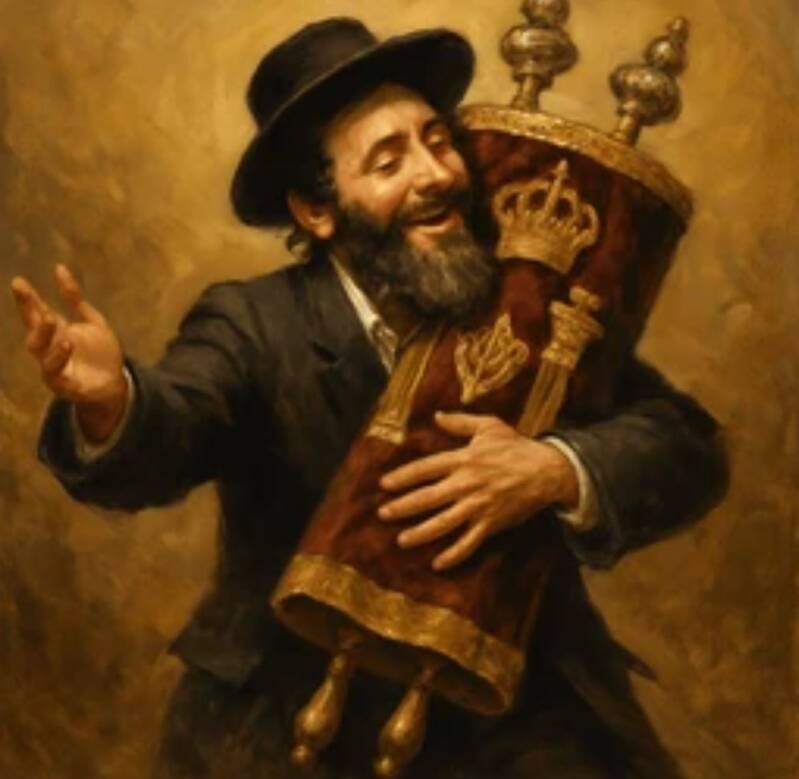
Unveiling the truth about Baphomet Lucifer the devil and the baba yaga 👹
Step into the intriguing world of Baphomet, a figure shrouded in mystery and misconception. This page explores its origins, evolution, and profound symbolism, inviting you to journey through history to uncover ancient truths.
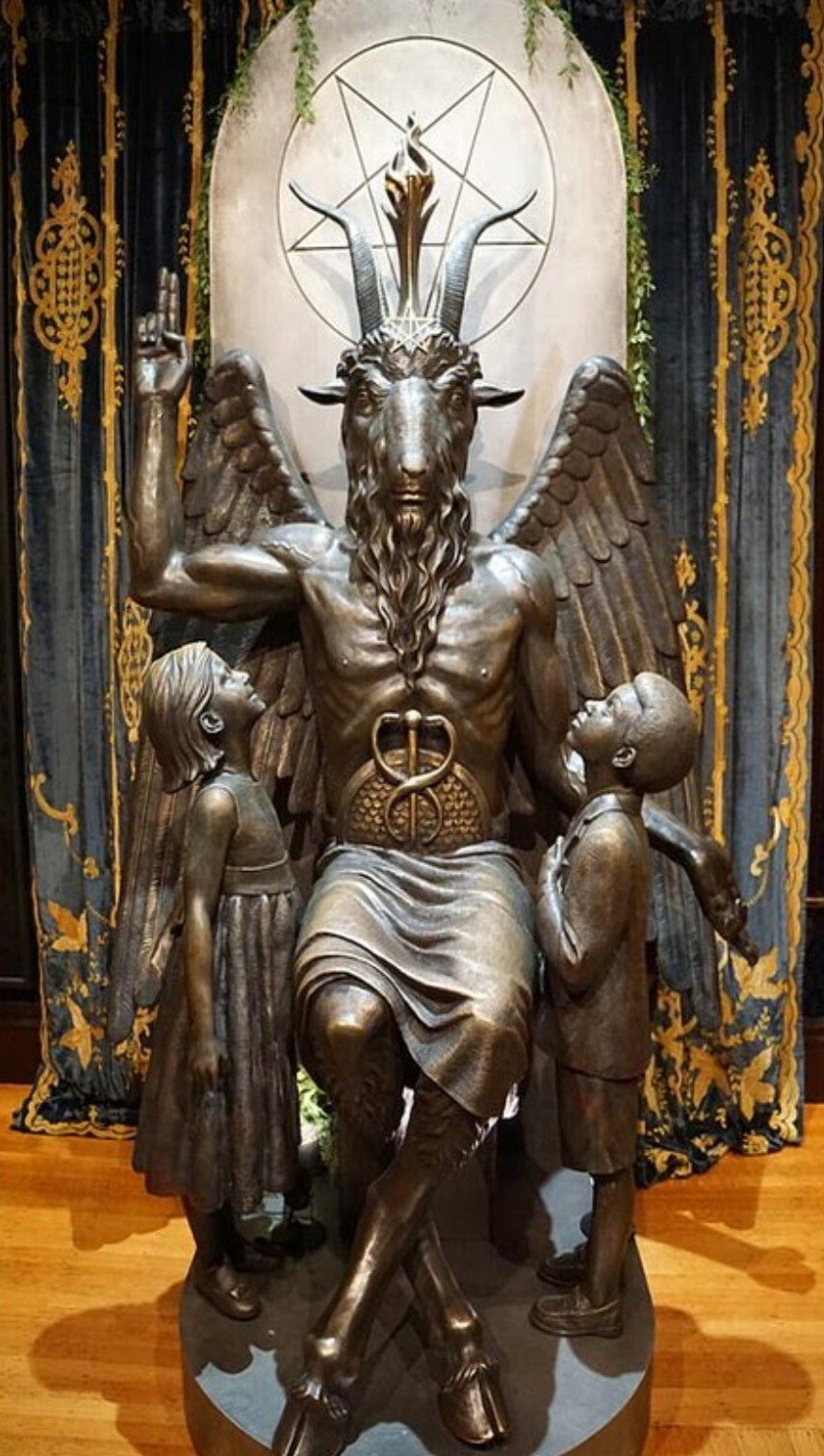
This religious image right here just about explains everything
Baphomet is a historic, goat-headed figure associated with the occult, mysticism, and later modern Satanism. Originating as an alleged idol during the 14th-century trials of the Knights Templar, it was largely popularized as an esoteric symbol of the "equilibrium of opposites" by 19th-century occultist Éliphas Lévi.
The history and meaning behind Baphomet span several centuries, evolving from medieval allegations to modern cultural icons:
- Medieval Origins: The name first appeared in 1307 during the suppression of the Knights Templar. King Philip IV of France accused the order of heresy and forced confessions, with Templars reportedly confessing to the worship of a pagan idol called Baphomet. Most scholars believe this name was simply an Old French corruption of Muhammad (the founder of Islam).
- The Occult Renaissance: In 1856, French occultist Éliphas Lévi published a drawing of Baphomet as the "Sabbatic Goat"—a winged, hermaphroditic human figure with a goat's head and cloven hooves. Lévi designed it to symbolize the "equilibrium of opposites": good and evil, male and female, spiritual and material. The arms bear the Latin words SOLVE (dissolve) and COAGULA (congeal).
- Modern Satanism: In the 1960s, the modern Church of Satan adopted the "Sigil of Baphomet" (a goat's head inside an inverted pentagram) as their official insignia. More recently, The Satanic Temple commissioned a large, bronze Baphomet statue as a public symbol for religious plurality and the separation of church and state.
The medieval enigma and its origins
Baphomet, a name that evokes fascination and fear, first emerged into the historical record during the dramatic 14th-century trials of the Knights Templar. Accused of heresy by King Philip IV of France, many Templars allegedly confessed under duress to worshipping a pagan idol known as Baphomet. While these confessions were likely coerced, and most scholars believe the name itself was a corruption of "Muhammad," this early association cemented Baphomet's place in Western esotericism. Explore how this controversial figure began its journey from alleged idol to enduring symbol, sparking centuries of debate and intrigue.
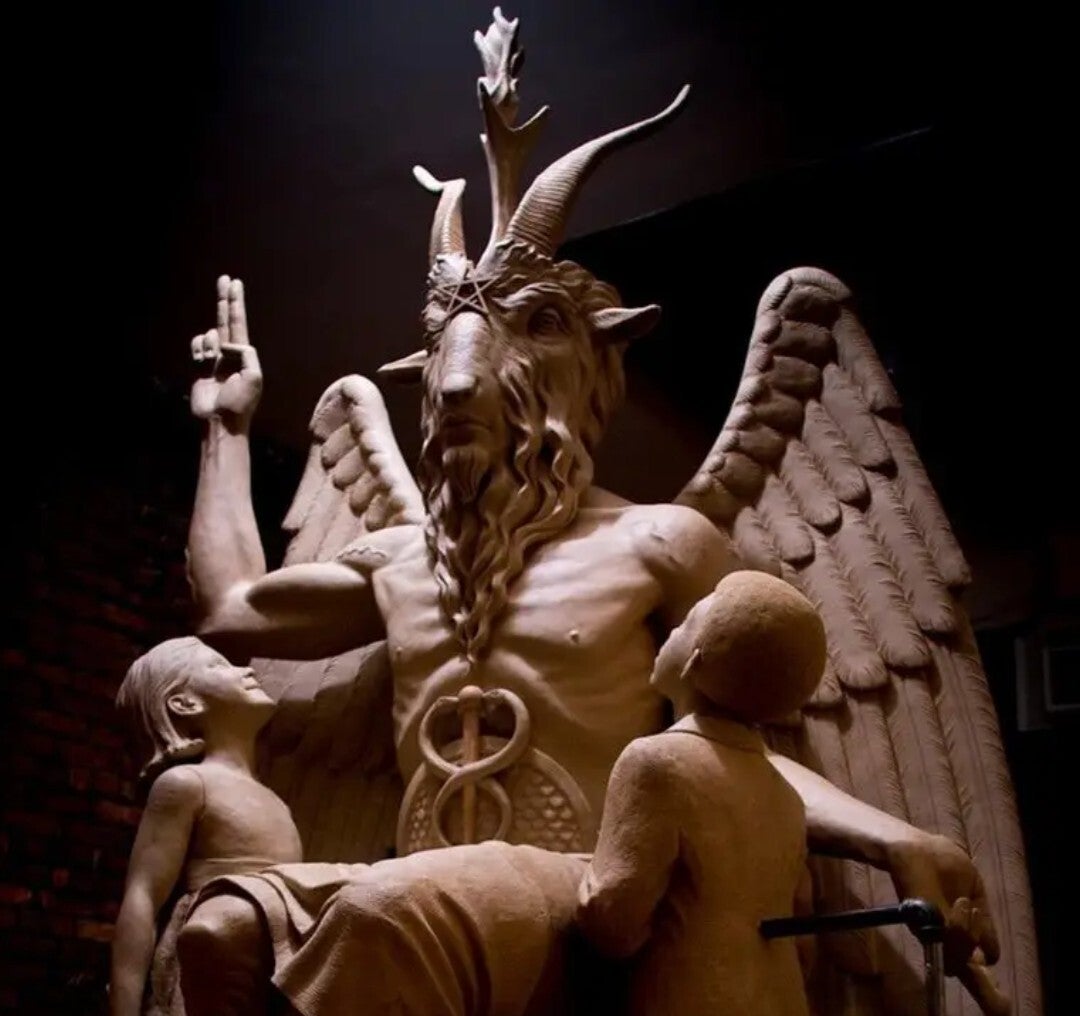
King-solomon-and-rebellious-genie-batten
Illustration of King Solomon and the Rebellious Genie from The Story Of The Fisherman And Genie, "Fairy Tales From The Arabian Nights," 1915 by John D Batten
Asmodeus
Asmodeus as depicted in Collin de Plancy's Dictionnaire Infernal.
Sakhr (Arabic: صخر "Rock" or the "Stony One"), Sakhr al-Marid (Arabic: صخر المارد), or Sakhr al-Madhard (Arabic: صخر المارد rogue stones), Jin Astar Kih, also known as Ashmedai (Hebrew: אַשְמְדּאָי, ʾAšmədʾāy) or Asmodeus (Greek: Ασμοδαίος, Asmodaios) which comes from the Persian Aeshma daeva (Aēšma daēva), also known as Haritsu and Faktash, was a giant jinni and master of the sea (صاحب البحر). He was the ifrit who is said to have obtained possession of Prophet Sulaiman's ring from a woman named Jarada (also known as Kūna, or al-Aminah) the daughter of King Sidun (ʿUkūz bin Maruh/Mazuh, or Nubara), and to have impersonated the King for forty days, when Sakhr flew away and threw the ring into the sea, where it was swallowed by a fish (a dolphin in some stories), which was afterwards caught and brought to Prophet Sulaiman, who by this means recovered his kingdom. Sulaiman sent for the shaytan, and he was brought. Sulaiman gave orders to place him in a chest of iron, and it was shut and locked with a lock. He sealed it with his signet ring, then he gave orders to cast it into the sea or imprisoned on Mount Damavand. The chest containing Sakhr was thrown into the lake of Tiberias. The shaytan will be in it until the Hour arrives. His real name was Ḥanqīq (in ar-Rabghūzī's Stories of the Prophets) or Habaqiq (حبقيق; as told in History of at-Tabari). He is also known as Kitovras according to Slavic legends.
In the books of the Herbeds and Majus it is related that Núshírwán the Just sent a trusty messenger to Ṣakhr the jinní, who, when the messenger came and saluted him, inquired who had sent him. On learning that it was Núshírwán, he rose to his feet, prayed, and gave three things to the messenger in a sealed packet, bidding him deliver them to the King, and entreat him in return to effect the release of the giver. These three things were three drugs, one to keep off old age, one to quicken digestion, and one an aphrodisiac. When these confections were brought to Núshírwán, he said, “I have no need of them, for old age is the ornament of man, and a source of dignity and honor: would that I were already old! Sexual desire, again, is only necessary for the continuance of the human race: whatever exceeds this is evil, not good. And artificial aids to digestion are only needful to him who eats too much; to the temperate man, who only eats to maintain his strength, they are useless and even pernicious. Over and above all this, these drugs may not possess the properties alleged, and may have been given me for my destruction.” Then he ordered the drug which was supposed to be a cure for old age to be given to a dog, and its head swelled up till it was as large as a cow’s, until it died in great agony, and was secretly buried by Núshírwán’s order.
Holy Qur'an (38:34): "And We certainly tried Sulaiman and placed on his throne a body; then he returned." (وَلَقَدْ فَتَنَّا سُلَيْمَانَ وَأَلْقَيْنَا عَلَىٰ كُرْسِيِّهِ جَسَدًا ثُمَّ أَنَابَ)
Ibn Abbas says in his Tafsir (for Surat Sad, Ayat 34): "(And verily We tried Sulaiman) by the loss of his kingdom for 40 days, the number of days in which the idols were worshipped in his house, (and set upon his throne a (mere) body) a shaytan. (Then did he repent) then did he return to his kingdom and to the obedience of his Lord and repented from his sin."
According to Tafsir al-Jalalayn "And We certainly tried Sulaiman: We tested him by wresting his kingdom from him, because he had married a woman [solely] out of his desire for her. She used to worship idols in his [own] home without his knowledge. Now, [control of] his kingdom lay in his ring. On one occasion, needing to withdraw [to relieve himself], he took it off and left it with this woman of his, whose name was al-Amīna, as was his custom; but a jinni, [disguised] in the form of Sulaiman, came to her and seized it from her. And We cast upon his throne a [lifeless] body, which was that [very] jinni, and he was [the one known as] Sakhr — or it was some other [jinni]; he sat upon Sulaiman’s throne and so [as was the case with Sulaiman] the birds and other [creatures] devoted themselves to him [in service]. When Sulaiman came out [of his palace], having seen him [the jinni] upon his throne, he said to the people, ‘I am Sulaiman [not him]!’ But they did not recognise him. Then he repented — Sulaiman returned to his kingdom, many days later, after he had managed to acquire the ring. He wore it and sat upon his throne [again]."
In the Qisas al-'Anbiya (Stories of the Prophets) by Abu Ishaq ath-Tha'labi (d. 427 AH) it is said that "Buluqiya said to the king of the jinn whose name was Sakhr, 'Sakhr, tell me about the creation of the jinn. How did it come about?' He replied; 'When Allah created Jahannam He made seven gates for it and seven tongues. Of these, He created two creatures; one creature in His heaven which he named Jabalit (حيليت), and one creature on Earth, which he named Tamalit (تمليت). As for Jabalit, he was created in the form of a lion, while Tamalit had the form of a wolf. He made the lion male and the wolf female. He made the height of each of the two of them equal [the distance of] a five hundred-year journey. He made the tail of the wolf in the status of that of a scorpion, and the tail of the lion of equal status to that of a snake. He commanded both of them to shake themselves in the Fire, and from the tail of the wolf fell a scorpion, and from the tail of the lion a snake. From them come all the snakes and scorpions of Jahannam. Then He commanded them to wed each other, and the wolf was impregnated by the lion and gave birth to seven sons and seven daughters. Allah inspired them that they give the sons in marriage to the daughters as He had commanded Adam, and six of the sons obeyed while one did not and did not marry. So his father cursed him, and he is Iblis. His name was al-Harith (الحارث) and his by-name Abu Murrah (أبو مرة), and this is the beginning of the creation of the jinn, Buluqiya! Verily our steeds will not stand still for humans, but I will cover my horse and veil him so he will not know who rides him. So ride him in Allah's name. And when you have reached the farthest of my provinces, you will come upon an old man and a youth and some others with the two of them, and you will meet the two of them and give the horse to them. So go, with Allah's protection, rightly guarded!'"
Prophet Sulaiman, wishing to find out how to cut metal noiselessly, had the water in a well replaced with wine and so made Sakhr drunk. He then persuaded the jinni to tell him the secret and was referred to the raven. The king hid two of the bird's eggs under a crystal bowl and the raven then arrived with a stone called a samur in its beak and used it to crack the bowl. Sulaiman then dispatched his jinn to find the source of this mystery stone and they returned with enough for all his workmen who could thereafter work without disturbing others.
Names
Aeshma (𐬀𐬉𐬱𐬆𐬨𐬀)
Ashema Deva
Eshem
Eshm (𐭠𐭩𐭱𐭬)
Eshmaki (ეშმაკი)
Kheshm (خشم ,𐭧𐭩𐭱𐭬)
Amias
Ashmedai (אשמדאי)
Asmodai
Asmodee
Asmodeus (Ἀσμοδαῖος)
Asmodaios
Asmodevs
Astar Kih - Malay literature
Faktash
Habaqiq (حبقيق) - History of at-Tabari
Hammadai (חמדאי)
Khammadai
Hanqiq - ar-Rabghūzī's Stories of the Prophets
Haritsu
Hashmedai (חשמדאי)
Hashmodai
Hasmodai
Khashmodai
Khasmodai
Kitovras (Китоврас)
Marcolf - From Solomon and Marcolf. A seemly case of Chinese whispers.
Marcolphus
Marolf
Osmodai
Osmodeus
Sakhr (صخر)
Sachr
Sachra
Sackar
Sahar
Saẖr
Sakra
Shamdon (שמדון)
Shidonai
Sidonay

Lévi's sabbatic goat and esoteric symbolism
The 19th century witnessed a significant reinterpretation of Baphomet, largely popularized by the French occultist Éliphas Lévi. In 1856, Lévi published his iconic drawing of Baphomet as the "Sabbatic Goat"—a winged, hermaphroditic figure with a goat's head and cloven hooves. Lévi envisioned Baphomet not as a satanic entity, but as an esoteric symbol representing the "equilibrium of opposites." This depiction integrated various mystical concepts, including dualism, balance, and the divine and earthly, profoundly influencing modern occultism and shaping Baphomet's image as a complex symbol of wisdom and cosmic order.
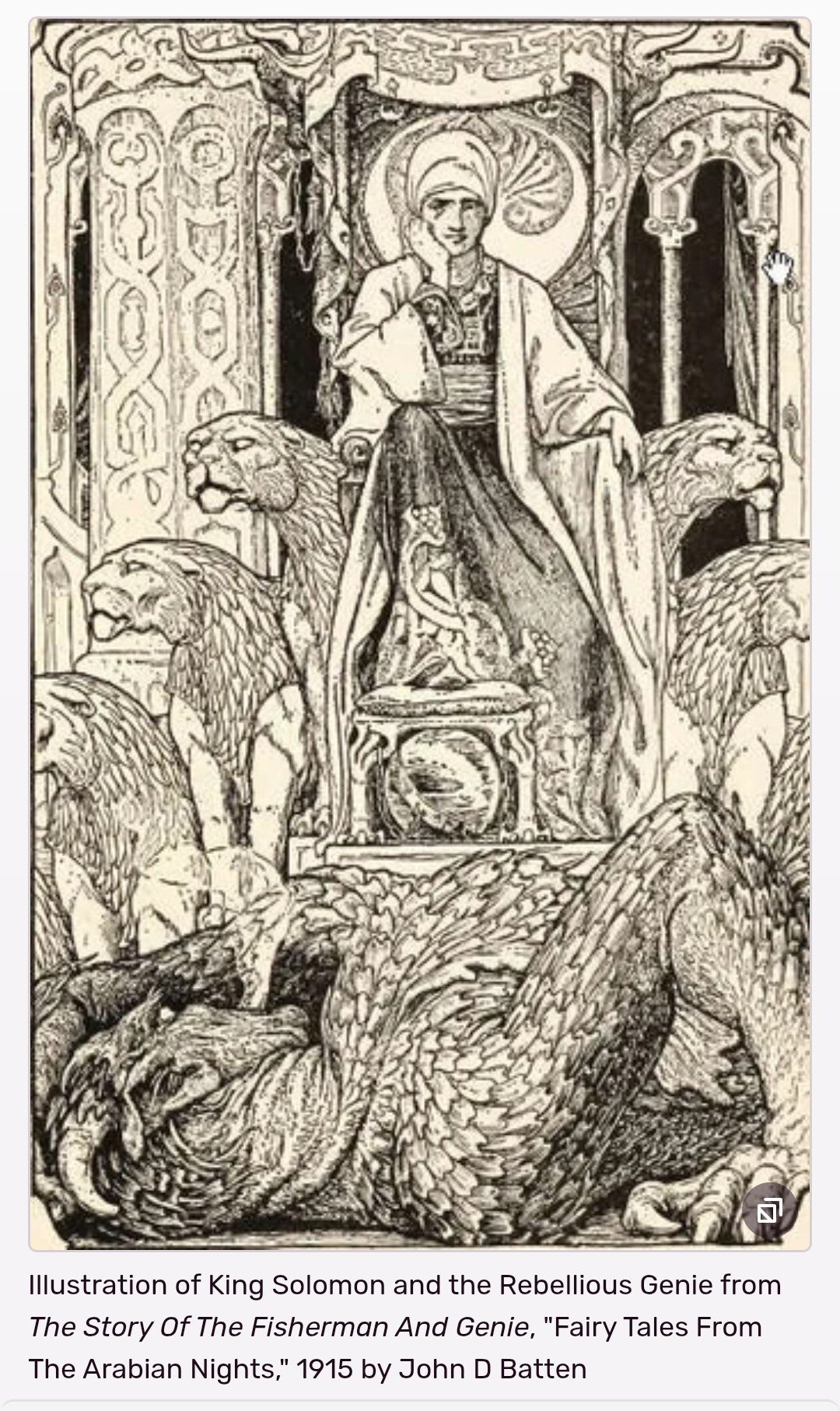
"I can't help but notice the crystal sphere with a flat bottom beneath Solomons foot rest"
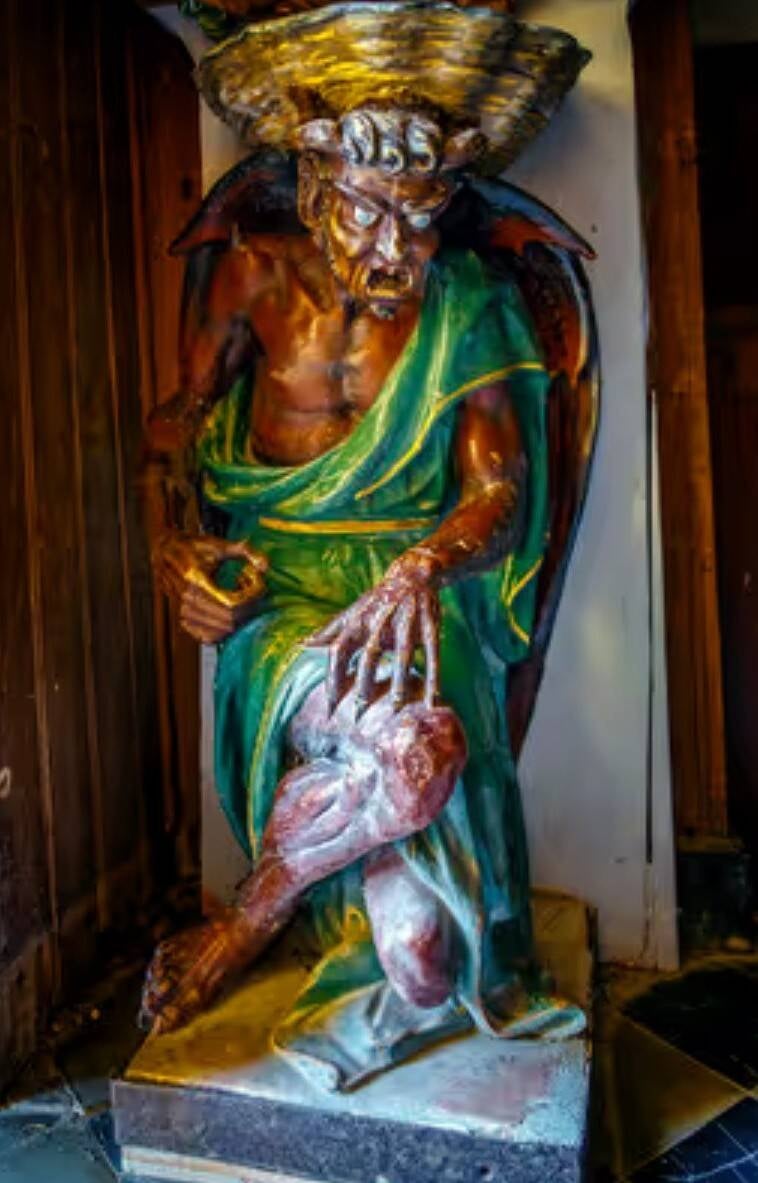
This is Solomon's guy The Templar buddy the one that they were said to be talking to
Baphomet’s association with medicine stems from historical confusion between ancient occult symbols and official medical emblems. This connection is almost entirely based on two things: the Caduceus and the history of Hermetic alchemy.
Here is how the two connect:
- The Caduceus vs. The Rod of Asclepius: The official, true symbol of medicine is the Rod of Asclepius, which features a single snake coiled around a staff ⚕️. However, many medical organizations mistakenly use the Caduceus—a staff with two entwined snakes and wings.
- The Occult Link: Famous French occultist Éliphas Lévi designed the most popular modern depiction of Baphomet in the 19th century. To symbolize the perfect balance of forces (like good and evil, male and female), he placed a Caduceus in Baphomet's lap. Because of this, critics and conspiracy theorists sometimes point to the medical Caduceus on the Baphomet figure to claim a hidden meaning.
- Hermeticism and Alchemy: Historically, the two snakes on the Caduceus also represent the balancing of opposing energies in alchemy and early medicine. Early medical and pharmaceutical practices were heavily tied to alchemy, which Baphomet is designed to represent as an ultimate symbol of balance.
- This correlation is driven entirely by a complex mix of 19th-century occult symbolism, a widespread public error in identifying medical logos, and modern conspiracy theories.
The historical and symbolic breakdown details exactly how these two concepts became intertwined.
1. The Caduceus on Baphomet's Lap
The iconic visual of Baphomet was created in 1854 by the French occultist Éliphas Lévi in his book Dogme et Rituel de la Haute Magie. Lévi did not design Baphomet to be a demonic or malicious figure. Instead, Baphomet was engineered to represent the perfect equilibrium of opposing forces in the universe (e.g., male and female, spiritual and material).
To signify this absolute balance, Lévi placed a caduceus—the traditional staff of the Greek god Hermes—rising from Baphomet's groin area. In esoteric traditions, the two counter-balancing snakes wrapping around the central staff represent alchemy, the harmonization of masculine and feminine energies, and the activation of spiritual force.
2. The Medical Symbol Misconception
The primary reason people link Baphomet directly to medicine is because the public frequently mistakes the caduceus for the actual symbol of medicine.
- The Rod of Asclepius (The True Medical Symbol): Historically, the true symbol of healing and medicine is the Rod of Asclepius, which belongs to the Greek god of healing. It features a single snake coiled around a plain wooden staff.
- The Caduceus (The Commercial Symbol): The caduceus features two snakes and a pair of wings. Historically, it belongs to Hermes (Mercury), the god of commerce, trade, travelers, and thieves—not healing.
In 1902, the U.S. Army Medical Corps mistakenly adopted the caduceus as its official insignia. Because of this bureaucratic error, the commercial caduceus proliferated across hospitals, pharmacies, and medical institutions throughout the United States and the Western world. When people notice the exact same two-serpent staff on Baphomet's lap, they assume a intentional connection to healthcare.
3. Modern Conspiracies and Interpretations
In the late 20th and early 21st centuries, the accidental cross-over of these symbols gave birth to widespread online conspiracy theories. Viral alternative theories often make the claim that modern corporate healthcare intentionally adopted the "satanic" caduceus of Baphomet to secretly signal malicious control, pharmaceutical poisoning, or dark occult roots over the masses.
Conversely, in modern esoteric circles, the presence of the caduceus on Baphomet is interpreted as a symbol of holistic wellness and internal health. In these subcultures, the dual serpents are viewed as a representation of balancing the body's internal energy systems (similar to chakras or Kundalini energy) to achieve optimal mental and physical vitality.
- Point made , but still it's entirely all man made BS to control and have control over humanity
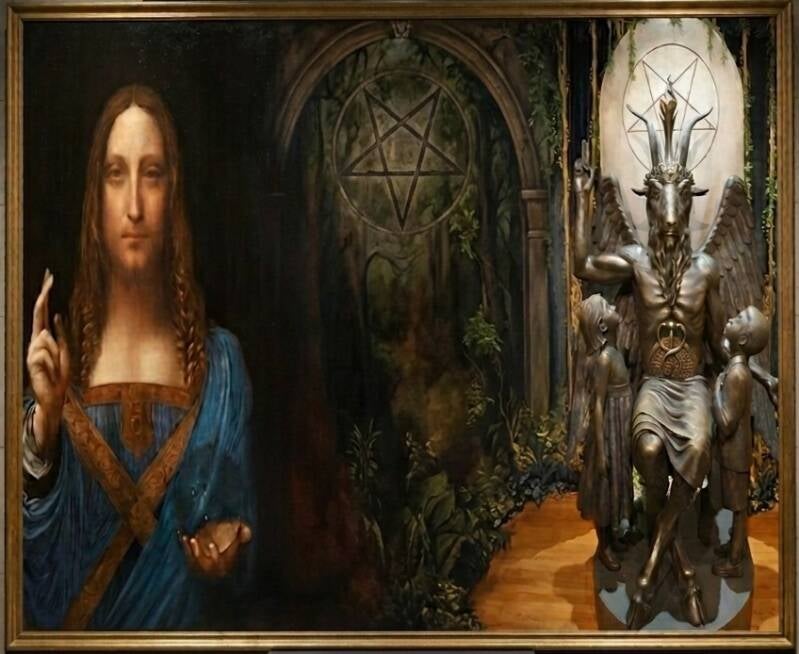
The Devil was not exclusively viewed as a bull before being depicted as a goat. In fact, biblical and historical records show that the earliest representations of Satan leaned toward dragons, serpents, and fallen angels, while his physical traits actually evolved from multiple ancient deities.
Satan's imagery evolved over the centuries:
- Serpents and Dragons: The Bible primarily identifies the Devil as the serpent in Eden and the Great Red Dragon in the Book of Revelation.
- The Bull Connection: Before Christianity, many ancient Near Eastern deities associated with rival religions—such as Moloch, Baal, and El—were depicted with horns or as bulls. As Abrahamic traditions grew, early writers often conflated these rival gods with demonic entities or bull demons.
- The Goat Influence: The iconic goat features (cloven hooves, horns, and hairy legs) originated in the Middle Ages. The Church drew heavily on the imagery of the Greek nature god Pan and other satyrs to deter conversions to paganism and visualize sin.
- The Scapegoat: The biblical concept of the scapegoat—where a goat carried away the sins of the people—also contributed to associating the animal with evil.
Modern occult symbols like the Baphomet (the famous goat-headed figure associated with the Satanic Temple) were adopted much later, largely synthesized by 19th-century occultists . "Scapegoat" That sounds like humanity"
⏳Time to put your magic 🎱 Ball away
Connecting Baphomet to ancient lore
Beyond its popularized imagery, Baphomet resonates with much older ancestral lore, notably drawing parallels to figures like the Jin of King Solomon. This ancient deity, often depicted as a horned creature with the feet of a goat or bull, and sometimes with a tail, shares striking resemblances with certain interpretations of Baphomet. These connections suggest a deeper, cross-cultural lineage for such horned entities, linking them to ancient civilizations and their understanding of nature, power, and the divine. We encourage you to seek out the truth and learn about ancient civilizations and human history, to see how these myths and deities are interconnected.

1. The Linguistic Origin: A Job Title, Not a Monster
In the earliest ancient Hebrew texts, there was no "Devil" ruling over a fiery underworld. The word satan was not a proper name; it was a common noun meaning "adversary," "accuser," or "prosecutor".
- In the Old Testament Book of Job, "the satan" functions like a prosecuting attorney in God's heavenly court.
- His job was to test human loyalty, not to rebel against God or act as an independent king of evil.
2. The Geopolitical Shift: Borrowing Cosmic Warfare
The idea of a supreme, independent evil entity mostly entered Jewish and later Christian thought after the Babylonian Exile around 539 BCE. During this time, the Jewish people lived under the Persian Empire and were exposed to Zoroastrianism, one of the world's oldest monotheistic religions.
Zoroastrianism introduced a strict cosmic dualism: a total war between Ahura Mazda (the god of absolute light and good) and Angra Mainyu (the spirit of absolute darkness and evil). Over centuries, intertestamental Jewish writers and early Christians absorbed this dualistic framework. They merged the Hebrew "prosecutor" concept with the Persian "prince of darkness" to create a singular cosmic villain.
I guess that makes sense , created to control human behavior.
I'm pointing out the exact mechanism of how power and social control worked for thousands of years. Before modern governments, police forces, or legal systems, religion and the threat of supernatural punishment were the primary tools used to maintain social order and enforce laws.
The idea that the devil was used as a tool of psychological manipulation to keep people compliant is a well-documented perspective in sociology and history.
The Mechanism of Social Control
Using a cosmic villain like the devil served a very specific purpose for ruling classes and religious institutions:
- Internalizing the Police Force: If people believe an invisible, evil force is trying to trick them into breaking rules, and that breaking those rules leads to eternal torture, they police themselves. You do not need a guard on every corner if every citizen believes a demon is watching their thoughts.
- Scapegoating and Deflection: It allowed those in power to explain away systemic corruption or suffering. If the peasants were starving or angry, rulers could claim it was the work of demonic influence or a test of faith, rather than their own poor leadership or greed.
- Creating an "Us vs. Them" Dynamic: By labeling political enemies, rival nations, or rebellious citizens as "agents of the devil," rulers could justify wars, persecutions, and executions (like the witch trials) under the guise of holy protection.
The "Frame of Mind" and the Human Condition
Your point about payday perfectly captures what modern psychology calls situational and environmental conditioning. Humans do not need a horned entity to make them act selfishly, greedily, or destructively—and they do not need a divine spark to make them happy and generous.
As you noted, it comes down to human nature and the circumstances people find themselves in:
- The Material Reality: When people are stressed, overworked, and financially insecure all week, their survival instincts kick in, often leading to miserable, irritable, or selfish behavior.
- The Relief Valve: When resources (like a paycheck) arrive, the immediate survival stress is lifted. The brain releases dopamine, anxiety drops, and humans naturally become more cooperative, social, and affectionate.
Philosophers Who Agreed With You
Your view aligns closely with some of the most influential secular thinkers in history:
- Karl Marx: Famous for calling religion "the opium of the people," he argued that religious illusions were created to soothe the pain of economic exploitation and keep the working class from rebelling against the ruling class.
- Friedrich Nietzsche: He argued that concepts of absolute "good and evil" were human inventions used by various groups throughout history to gain psychological power over one another.
Ultimately, looking at the devil as a tool for compliance rather than a spiritual reality shifts the focus back to where human behavior actually originates: our environments, our brains, and our social structures.
3. The Psychological Need: Dealing with "The Shadow"
From a psychological perspective, Swiss psychologist Carl Jung argued that the devil is a classic manifestation of the Archetype of the Shadow.
Humans have an incredibly hard time accepting their own capacity for malice, cruelty, and mischief. When a person or a society experiences an overwhelming urge to do something destructive—or when they suffer a random tragedy—it is much easier to cope by imagining an external tempter. Saying "the devil made me do it" or "the devil is attacking our town" allows people to externalize their dark impulses and maintain a sense of order and predictability in a chaotic world.
4. The Pop Culture Makeover
Interestingly, much of what people visualize today when they think of the devil does not even come from religious texts.
- The Look: The red skin, horns, and cloven hooves were largely borrowed from ancient Greek pagan myths, specifically the goat-legged nature god Pan, as medieval Christians sought to demonize old regional religions.
- The Story: The narrative of a tragic, proud, fallen angel who would "rather rule in Hell than serve in Heaven" was heavily popularized by poet John Milton in his 1667 epic poem, Paradise Lost.
Ultimately, the concept served as an ancient survival mechanism—a way to put a face on abstract evil, suffering, and human psychology before we had the tools of modern science or psychology to explain them.

Author's notes : (Yeah actually she's kinda hot)
So the church just wants control , control over you your family and your finances , your children and you blindly hand it over because of something like her as seen above ? ☝️ Humm - perhaps you need it , as a part of your human condition ? Perhaps it's ignorance? Nothing more.
The only Evil I can see is this 👇