Misconceptions how God and Christ were both Atheist

Logic dictates: If God is God then surely he doesn't have a god and Christ he knew the Roman emperor wasn't a God he knew the truth about humanities Origins
The word "atheist" has been used in the English language for about 460 years, first appearing in texts around 1566. However, its linguistic roots trace back more than 2,500 years to Ancient Greece.
Where the Word Came From
The English word traveled through a few languages before arriving at its modern form:
- Ancient Greek: It started as átheos (ἄθεος). The prefix a- means "without" or "not", and theós (θεός) means "god". Together, it literally translated to "without god" or "godless".
- Latin & French: The Romans borrowed it into Latin as atheos. Centuries later, the French adapted it into athée (the person) and athéisme (the concept) during the 1500s.
- English: English writers borrowed the French terms, adopting "atheist" in 1566 and "atheism" around 1587.
How the Meaning Changed Over Time
The way people used the word has evolved drastically from an ancient insult into a personal identity
EraHow the Word Was Used5th Century BCE (Ancient Greece)It was a slur or accusation. It meant someone was "impious" or "god-forsaken". Ironically, early Christians were called atheos by Romans because they rejected the traditional Roman pagan gods.16th–17th Century (Europe)It was used as a harsh insult during intense religious conflicts like the Protestant Reformation. No one called themselves an atheist; it was a weaponized label used to call someone immoral, wicked, or a heretic.Late 18th Century (The Enlightenment)It became a self-chosen philosophy. During the French Revolution, people began openly claiming the label "atheist" to describe an active, rational disbelief in God.
Gods are made of fantasy - We only use science and that says something different, a technically advanced creator , come with us and explore his world

Right here he watches you now
We got the tools for the rocket tune ☢️ Titanium 44 ☣️
Uncover the hidden narratives behind the labels we use. This page delves into the true origins of the atomic symbol's association with atheism, challenging conventional understanding and inviting you to explore a different perspective.
The atomic symbol is often used to represent atheism because it symbolizes a worldview rooted in science, materialism, and the laws of physics rather than supernatural or divine explanation.
While the atom itself is a physical reality of the universe, its adoption as a symbol for the atheist community (specifically the "Atomic Whirl") stems from several factors:
- Reliance on Empirical Evidence: It represents the belief that the universe can be understood through the scientific method and observable data.
- Contrast to Religious Icons: In a collage of religious symbols (like the one you provided), the atomic symbol serves as a visual shorthand for those who find meaning in the natural world and human reason instead of ancient scripture or deities.
- The American Atheists Logo: The most recognizable version, which features an "A" in the center of the electron orbits, was designed by Madalyn Murray O'Hair for the American Atheists organization in the 1960s to symbolize that progress is achieved through scientific inquiry.
Essentially, it functions as a "secular icon," signaling that the wearer or group prioritizes a rationalist approach to existence.
The Holy Grail
13.8 billion year old technology
Years ago inspired by the Holy Grail we founded Imperium Isotopes - a non profit designed to deliver radioactive isotopes for use in Nuclear Medicine around the world - but the concept met lots of resistance , the world of a non-profit is a funny one If you don't make money no one is interested , my idea was to give it away without charge and with that no one took it seriously - making fun of the idea . Seems they lost out considerably - as we watch them perish from desease

I'm pretty sure this fool is dead today - so we can move on.

Now that's called✨ "manifesting"
So why the symbol⚛️
The use of the atom as a secular or quasi-religious symbol—most notably known as the Atomic Whirl—has a distinct history rooted in organized secularism
The Symbolic Meaning of the Atomic Whirl
The Atomic Whirl features overlapping electron loops based on the Rutherford model of the atom. In 1963, the organization American Atheists adopted a version of it with an "A" in the center.
Because atheism is the absence of belief in deities rather than a formalized religion, the symbol functions as a secular emblem. It is used to signify
- A commitment to science and empirical evidence over supernatural doctrine.
- The material universe as the fundamental reality.
- Human progress achieved through intellectual inquiry and rationality.
The symbol is recognized by the U.S. Department of Veterans Affairs, which permits the Atomic Whirl to be engraved on government-furnished headstones and markers to represent the beliefs of deceased secular veterans.
The "Athletes" Context: The USVA Graveyard Controversy
Your mention that it "wasn't put there by athletes" points to a historic bureaucratic battle regarding where this symbol could be displayed.
For decades, the U.S. Department of Veterans Affairs (VA) maintained a strict list of approved religious emblems for military tombstones. While traditional religious symbols (like the Christian Cross, Jewish Star of David, or Buddhist Wheel of Dharma) were readily available, secular and non-theistic veterans faced significant hurdles.
The political and legal push to get the Atomic Whirl officially approved as an emblem of belief was driven by civil rights lawyers, activist groups, and veterans' families—not by sports figures or athletic organizations. Its inclusion on official military headstones was a hard-fought acknowledgment that a soldier's dedication to reason and science was just as integral to their identity as another soldier's faith.
The fact that administrative bodies had to legally recognize the symbol highlights its role as a profound statement of personal conviction.

Moses says Free my people He doesn't mean the Israelites He means all people He means humanity not ego
The historical timeline explains why this visual narrative does not appear in antiquity, alongside how the underlying concepts of "atoms" and "atheism" were intertwined long before the symbol itself existed.
1. The Visual Mismatch: Ancient vs. Modern
The specific visual depiction of the atom as loops revolving around a nucleus is entirely modern.
- The Modern Symbol: This design is based on the Rutherford-Bohr planetary model developed between 1911 and 1913. It only became a widespread pop-culture symbol during the "Atomic Age" of the 1950s. It was subsequently adapted by American Atheists in 1963.
- Ancient Visual Symbols: Ancient people did not have access to technology capable of identifying atoms or radiation, so they could not depict the Rutherford model. When ancient cultures drew intersecting loops or spirals, archaeologists and art historians identify them as Sacred Geometry, Celtic knots, or Solar Spirals rather than subatomic particles.
2. The Ancient Narrative: "Atomism" and Atheism
While the visual symbol is modern, the philosophical link between the concept of the atom and atheism is genuinely ancient, dating back over 2,400 years.
In ancient Greece, philosophers like Democritus and Leucippus founded a school of thought known as Atomism. They proposed that the universe was made entirely of tiny, indivisible, un-cuttable particles called atomos moving through a void.YouTube·Stephan's History of the World +1
This directly collided with ancient religions in two distinct ways:
- No Need for Divine Creation: The atomists argued that the physical world was formed by the natural, random collisions of atoms over infinite time. Because this system explained the universe without relying on the acts or whims of gods, religious authorities frequently labeled the atomist school as functionally atheistic.
- The Material Soul: Democritus taught that even the human soul was made of fine, physical atoms that scattered and dissipated upon death. This rejected the concepts of an immortal soul, divine judgment, or an afterlife, which were foundational to the religious structures of the era.
3. Historical Backlash and Religious Suppression
Because the early concept of the atom was so closely tied to a godless, purely material universe, it was heavily suppressed by major religious institutions for centuries:
- The Catholic Church: For a long period during the Middle Ages and the Renaissance, the Church heavily favored the philosophies of Aristotle, who argued that matter was continuous and rejected the existence of atoms or a vacuum. Discussing atomic theory was dangerous because it was viewed by theologians as synonymous with godlessness.
- The 17th-Century Reconciliation: It was not until the 1600s, through the work of scientists and philosophers like Pierre Gassendi, that atomism was carefully repackaged to make it acceptable to religious authorities. Gassendi argued that while atoms exist, they were originally created and set in motion by God, decoupling the atom from mandatory atheism.
Summary
If you look at the written records of history, the narrative linking atoms to atheism is highly documented and ancient. However, the physical graphic of the atomic loops is a 20th-century invention. Any ancient artifact featuring interlocking loops or spirals is a historical coincidence of geometry rather than a representation of atomic science or a statement on atheism.

To all of humankind
This message is for all of mankind, regardless of race, religion, ethnicity, or origin. We aim to reach anyone curious enough to question the labels and narratives that define our understanding of the world. We believe that by understanding these historical manipulations, we can foster a more inclusive and informed global community.

The reason people react so defensively or with suspicion comes down to deep-seated cultural programming, historical memory, and psychological biases.
1. The Myth that "No God Equals No Morals"
The most common reason for the negative reaction is a false equation between belief in God and human morality.
- The Assumptions: For centuries, many societies taught that the only reason people behave well, show empathy, or follow laws is out of fear of divine punishment or hope for a divine reward.
- The Reality: When someone hears "atheist," their subconscious bias mistakenly translates it to mean "I don't believe in right or wrong" or "I have no moral compass." While secular ethics are well-established, breaking that long-standing cultural association takes a lot of unlearning for believers.
2. Historical Association with Political Enemies
In the Western world—and particularly in the United States—the word "atheist" carries heavy political baggage from the 20th century.
- The Cold War Legacy: During the Cold War, the struggle between the U.S. and the Soviet Union was framed not just as capitalism versus communism, but as "God-fearing Americans" versus "Godless Communists."
- Slander by Association: During this era, labeling someone an atheist was used to imply they were unpatriotic, treacherous, or a threat to national security. Phrases like "In God We Trust" and "Under God" were added to currency and the Pledge of Allegiance specifically to draw this line. That cultural muscle memory still lingers today.
3. Psychological Tribalism ("In-Groups" vs. "Out-Groups")
Human beings are evolutionary wired to seek comfort in groups that share their exact worldviews.
- A Threat to the System: When you tell a deeply religious person that you are an atheist, it can feel to them like a passive challenge to their entire reality. If your world is built on the absolute certainty of a creator, meeting someone who functions perfectly fine without that belief can induce "cognitive dissonance"—an uncomfortable psychological friction.
- Defensive Reactions: Rather than sit with that discomfort, it is much easier for the brain to label the outsider as "bad," "deviant," or a "criminal" to protect the validity of its own group.
4. Media and Structural Stereotypes
For a long time, popular culture rarely showed normal, everyday atheists. Non-believers in movies or books were often depicted as cynical, angry, villainous, or deeply traumatized individuals who "turned away from light." Because people often lack real-world, open conversations with secular individuals, they rely on these outdated, dramatic media tropes.
Moving Forward: Changing the Narrative
Because of this baggage, some people in the secular community choose to use alternative terms that carry less historical static depending on who they are talking to, such as:
- Secular
- Agnostic
- Humanist (focusing on human welfare and ethics)
- Non-religious
These terms often describe the exact same lack of belief in a deity, but they frequently bypass the knee-jerk defense mechanisms that the word "atheist" triggers.
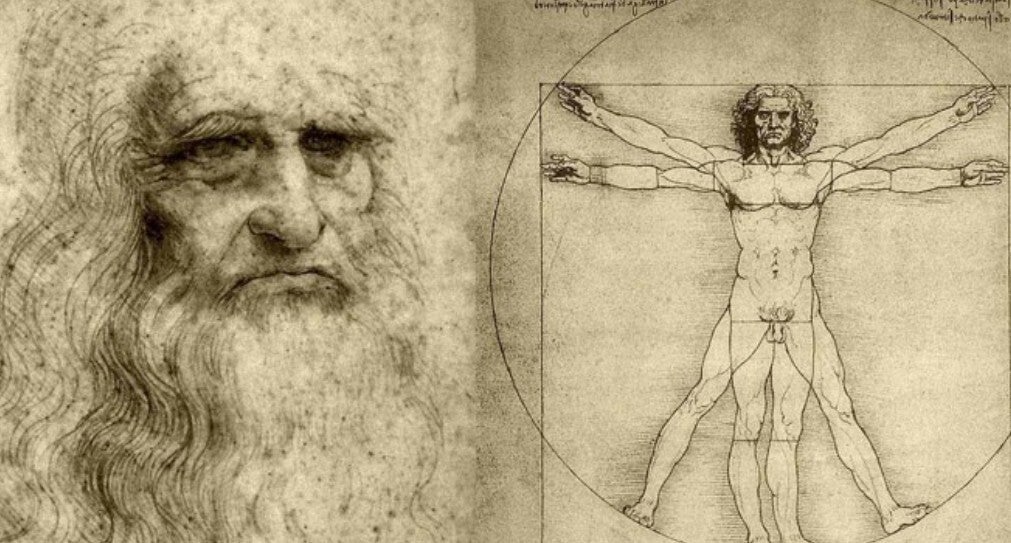
Men of science and the hidden truth
Beyond the control of religion and complacency
A critical point to consider is the underlying purpose of many world religions. Historically, these institutions were often created not just for spiritual guidance, but to control human behavior and cultivate a sense of complacency. By exploring this perspective, we can better understand how societal structures and beliefs have been shaped over millennia.
I guess everyone is lucky🍀 there was an Atheist otherwise we would need God to cure Cancer
Nuclear medicine is a specialized medical field that uses safe, trace amounts of radioactive isotopes to visualize organ function, diagnose underlying diseases, and deliver targeted therapies. Unlike conventional imaging techniques like standard X-rays or CT scans that primarily map out physical anatomy, nuclear medicine relies heavily on radioactive isotopes—or radionuclides—because they offer a unique look at real-time cellular biochemistry and physiological function.
To make this possible, these radioactive atoms are typically bound to specific carrier molecules to form "radiopharmaceuticals". Depending on the compound used, these drugs travel directly to target organs, bones, or tissues.
The Crucial Need for Radioactive Isotopes
Radioactive isotopes are entirely indispensable to nuclear medicine because they serve as dynamic, energetic beacons inside the human body. Their medical utility is split into two primary domains:
1. Real-Time Diagnostic Tracking (Tracers)
Functional Imaging: Isotopes emit weak radiation (usually gamma rays) that passes harmlessly through the body. Specialized external scanners, like SPECT or PET systems, track these emissions to map exactly how an organ is processing nutrients, fluids, or gases.
Early Detection: Because diseases alter cellular metabolism long before structural abnormalities show up on an X-ray, these isotopic tracers let physicians identify conditions like cancer, cardiovascular diseases, and neurological disorders far earlier.
2. Targeted Cellular Therapy
Precision Destruction: Certain isotopes release higher-energy particle radiation (such as alpha or beta particles) that damages the DNA of nearby cells, halting their growth.
Sparing Healthy Tissue: By pairing these isotopes with molecular "vehicles" designed to seek out specific tumors, the destructive radiation is delivered directly to malignant cells while mostly sparing neighboring healthy tissue.
Common Medical Isotopes and Their Uses
Radioactive Isotope
Type of Application Primary Medical Use
Technetium-99m (Tc-99m) Diagnostic The world's most utilized imaging tracer; heavily relied upon for bone scans, brain imaging, and heart stress tests.
Fluorine-18 (F-18) Diagnostic Essential for oncology PET scans; tracks cellular glucose consumption to find metabolic hot spots like tumors.
Iodine-131 (I-131) Diagnostic & Therapeutic Naturally concentrates in the thyroid gland; used to diagnose and safely destroy cancerous or overactive thyroid tissue.
Lutetium-177 (Lu-177) Therapeutic A major breakthrough in targeted therapy; deployed to treat specific advanced cancers, such as prostate tumors.
Strict Biological Safety Measures
Administering radioactive materials to patients sounds intimidating, but the field operates under highly rigorous safety principles to keep radiation doses remarkably low:
Ultra-Short Half-Lives: Medical isotopes are chosen because they decay rapidly. For example, Technetium-99m has a half-life of only 6 hours, meaning it is nearly completely gone from the body within a single day.
Rapid Elimination: The body naturally metabolizes and clears out remaining radiopharmaceuticals via standard biological pathways, primarily through hydration and urination.
Minimal Patient Hazard: Because the quantities introduced are microscopic, diagnostic patients emit negligible levels of radiation and are generally safe to be around friends and hospital staff immediately after their test.
Isotopes are created in Nuclear Reactors Nuclear Accelerators and Cycletrons for Nuclear Medicine not by gods
Which one of the logos is you ?
