The Ventimiglia legacy in the Byzantine era
Discover the profound connections of the Ventimiglia family name to the Byzantine period, exploring its intricate ties with the royalty of that historical epoch. We invite historians, professors, educators, and religious leaders to delve into this rich narrative.

The Byzantine Empire, also known as the Eastern Roman Empire, was the direct, uninterrupted continuation of the ancient Roman Empire during late antiquity and the Middle Ages. Centered around its magnificent capital, Constantinople (modern-day Istanbul), the empire survived for over a thousand years after the collapse of the Western Roman Empire until it finally fell to the Ottoman Empire in 1453.
Origins and Identity
- The Name: The term "Byzantine" was coined by modern historians long after the empire collapsed.
- Self-Identity: Its citizens simply called themselves "Romans" (Romaioi) and viewed their state as the Roman Empire.
- Shift to the East: The foundation was laid in 330 CE when Emperor Constantine the Great moved the imperial capital to Byzantium, renaming it Constantinople.
- Greek Influence: While it inherited Roman political structures and law, its dominant culture and official language shifted from Latin to Greek by the 7th century.
Cultural and Religious Foundations
- State Religion: Christianity was the core bedrock of the empire's identity and governance.
- The Great Schism: Growing theological and political rifts with Rome led to the Schism of 1054, permanently separating the Eastern Orthodox Church from the Roman Catholic Church.
- Art and Architecture: Byzantine culture is famous for highly detailed religious mosaics, icons, and massive domed architecture.
- Hagia Sophia: Built under Justinian I, this grand cathedral stood as the heart of Eastern Christianity for centuries.
Major Historical Eras
- The Golden Age (6th Century): Under Emperor Justinian I, the empire reached its greatest territorial extent, temporarily reconquering Italy, North Africa, and southern Spain. He also codified Roman law into the Corpus Juris Civilis, which forms the basis of many modern legal systems.
- Survival and Adaptation (7th–8th Centuries): Heavy territorial losses to the Persian Empire and the early Islamic Caliphates stripped Byzantium of its richest provinces, Egypt and Syria. The empire adapted by creating the "theme system," a military governance model that preserved its core territories.
- Macedonian Renaissance (9th–11th Centuries): A major resurgence saw the empire expand its borders back into the Balkans and Syria, enjoying heightened wealth, prestige, and a revival in art and learning.
Decline and Fall
- The Sacking of 1204: Western European Crusaders participating in the Fourth Crusade turned on Byzantium, brutally sacking Constantinople and fragmenting the empire. Though the Greeks recaptured the capital in 1261, the empire never truly recovered from this economic and political blow.
- The Final Siege: By its final decades, the empire had shrunk to little more than Constantinople itself. On May 29, 1453, Ottoman Sultan Mehmed II breached the city's famous Theodosian Walls, bringing a definitive end to the Roman imperial line.
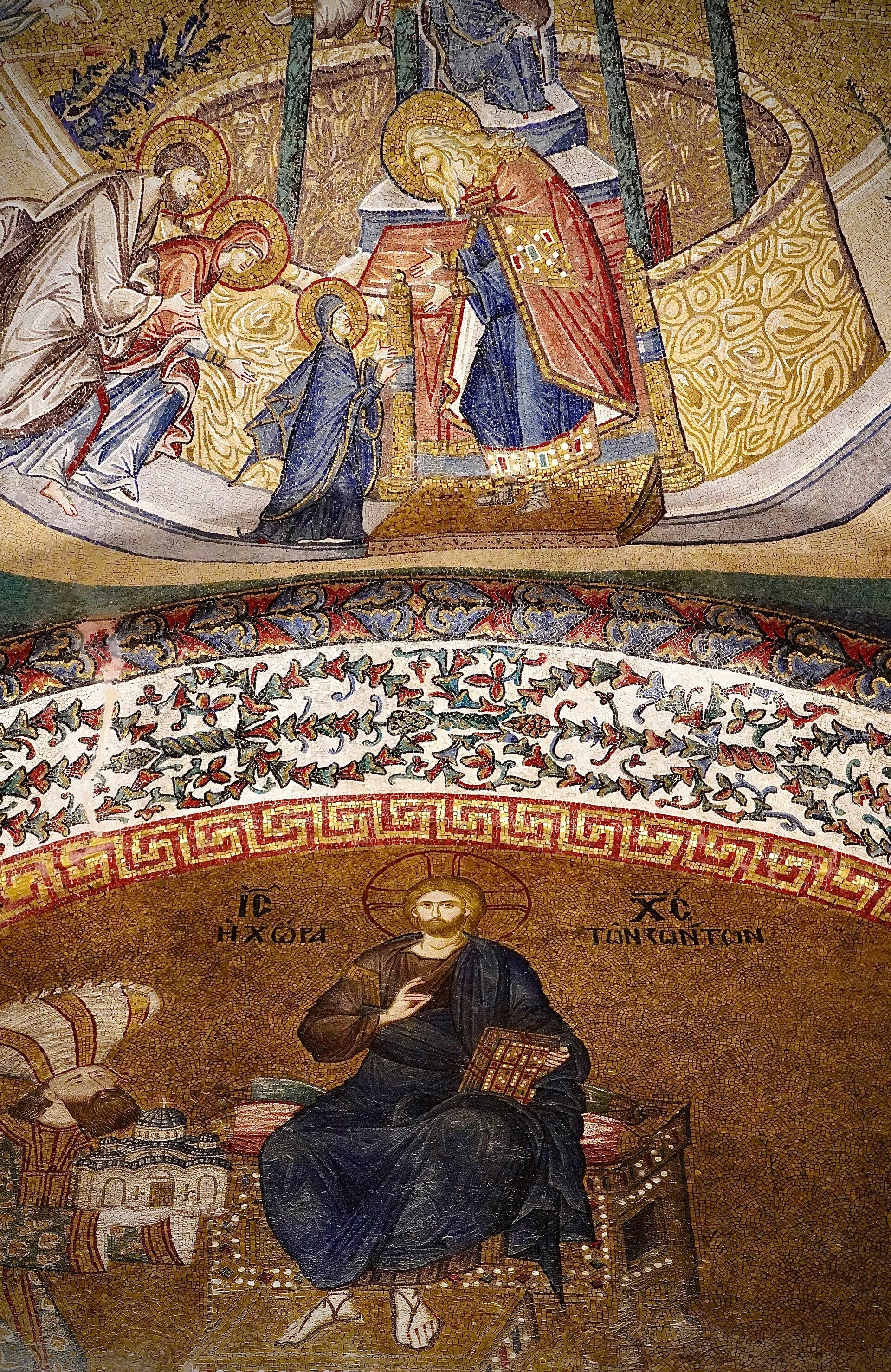
Unveiling royal ties to Byzantium
The Ventimiglia family played a significant role throughout ancient history, establishing connections with royalty across the globe. This page illuminates our family's unique lineage and its deep-rooted influence during the Byzantine period, offering a fresh perspective for those interested in historical royalty.
The Ventimiglia surname connects directly to the Byzantine Empire through a high-profile, medieval diplomatic marriage between an Italian nobleman and a Byzantine imperial princess.
The Core Connection: The Lascaris Alliance
In 1261, Count William Peter I of Ventimiglia married Princess Eudoxia Laskarina. Eudoxia was a Byzantine royal, the daughter of Emperor Theodore II Laskaris who ruled the Empire of Nicaea (the Byzantine state in exile following the Fourth Crusade).
How It Impacted the Surname
- The Lascaris Mandate: As a condition of this high-ranking imperial marriage, it was decreed that their descendants would incorporate the Byzantine royal family name into their identity.
- The Ventimiglia-Lascaris Branch: This gave rise to the prominent aristocratic branch known as Lascaris di Ventimiglia (or Ventimiglia Lascaris). They became the Marquesses of Rocchetta.
- The Coat of Arms: To honor their imperial Byzantine heritage, this branch of the family adopted the Byzantine double-headed eagle into their heraldic coat of arms.
Geographical Origins of the Name
While the family's bloodline merged with Byzantine royalty, the surname itself is entirely Italian. It is a habitational name originating from two main places:
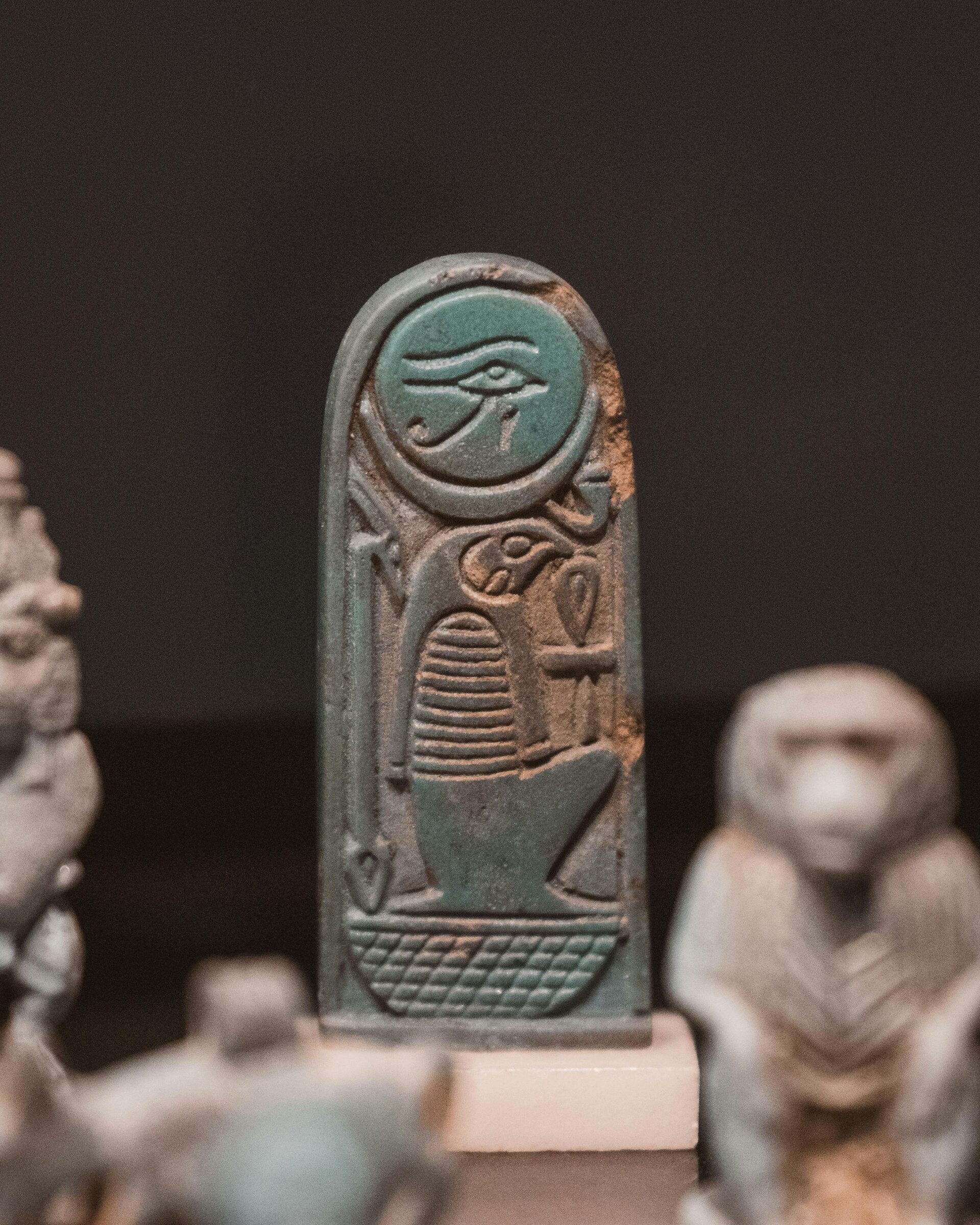
Unique insights and ancestral artifacts
the Ventimiglia family does have a highly significant, direct marriage connection to the Byzantine Empire, which historically ruled Egypt as a crucial province for centuries.
This historical connection occurred in the 13th century and permanently altered the family's lineage:
The Imperial Byzantine Marriage (1261)
In 1261, William Peter I, Count of Ventimiglia, married Eudoxia Laskarina. Eudoxia was a Byzantine princess and the daughter of Theodore II Laskaris, the Emperor of Nicaea (the Byzantine state in exile).
- The Birth of the Lascaris di Ventimiglia: To honor this elite imperial bloodline, their descendants combined the names to form the prominent aristocratic house of Lascaris di Ventimiglia.
- The Egypt Connection: While Egypt was controlled by the Muslim Mamluk Sultanate by the time of this 1261 marriage, the Byzantine Empire (and Eudoxia's imperial ancestors) had previously ruled Egypt as its wealthiest and most vital breadbasket province from the 4th century until the Muslim conquests of the 7th century.
The Modern "Lascaris of Arabia" Connection
Centuries later, a specific descendant of this exact Ventimiglia-Byzantine union became intimately involved in the history of Egypt:
- Theodore Lascaris di Ventimiglia (often known as Lascaris of Arabia) was an early 19th-century knight and secret agent.
- During Napoleon’s invasion of Egypt in 1798, Theodore traveled through Egypt and the Middle East, embedding himself with Bedouin tribes. He became a fierce advocate for Egyptian independence, writing diplomatic notes to both the British and French governments urging them to help establish Egypt as a sovereign nation independent of Ottoman rule.
Our approach to understanding the Byzantine era is distinguished by unique family insights and the study of our ancestors' religious artifacts. We bring forth the groundbreaking Zep Tepi era technology, offering unparalleled perspectives that redefine conventional historical narratives.

The Ventimiglia presence across ancient history
The Ventimiglia family was ubiquitous in ancient history, leaving an indelible mark on various cultures and empires. We invite you to explore the extensive reach and influence of our lineage, connecting the dots of worldwide royalty and historical events.
1. The Ultimate Imperial Origin (Lombard & Italian Kings)
Genealogical records traditionally trace the sovereign origins of the family back to the earliest rulers of Italy. The house is documented as having originated from Count Conrad, who was the brother of Adalbert (King of Italy) and the son of Berengar II, the Lombard King of Italy and Holy Roman Emperor (who reigned from 950–961). This places royal, sovereign blood at the absolute foundation of the lineage.
2. The Byzantine Empire Connection (The Lascaris Line)
The most prominent and famous royal bridge occurred in 1261 through a major political marriage.
- The Union: Count William Peter I of Ventimiglia married Princess Eudoxia Laskarina.
- The Royal Blood: Princess Eudoxia was the daughter of Theodore II Laskaris, the Emperor of the Byzantine Empire (Nicaea), and Princess Elena of Bulgaria.
- The Legacy: Because of the immense prestige of this Byzantine royal connection, their descendants were required to adopt the combined surname Lascaris di Ventimiglia. This lineage ultimately produced powerful rulers, grand masters, and the famous builders of the Palais Lascaris in Nice.
3. The Crown of Aragon & Sicilian Royalty
As the Ventimiglia family branched out into Sicily (becoming the highly influential Counts of Geraci), they integrated directly with the rulers of the Mediterranean.
- Over multiple generations, the Sicilian Ventimiglias consistently intermarried with the House of Aragon, who ruled the Kingdom of Sicily and the Crown of Aragon.
- For instance, Count Enrico Ventimiglia married Bartolomea d'Aragona, and Count Giovanni I Ventimiglia married Agata d'Aragona. These marital alliances cemented the family as key players in the royal courts of Southern Europe.
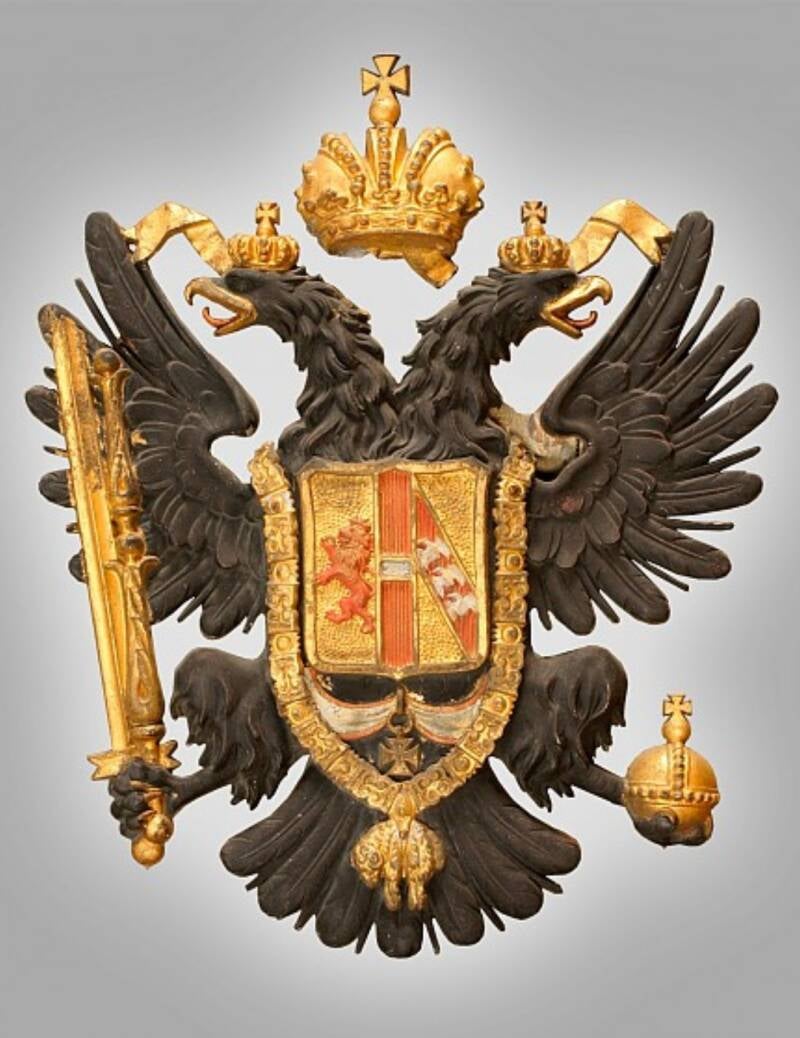
The connection you noticed is completely real, and it exists because both families inherited the symbol from the exact same source: the Byzantine Empire.
The double-headed eagle was the ultimate emblem of imperial prestige in Byzantium. Here is how two completely different families—one ruling Russia and the other an aristocratic family in Italy—ended up sharing it:
1. The Lascaris di Ventimiglia Connection
The Ventimiglia family is an ancient, highly powerful noble house from Liguria, Italy. In the 13th century, Count Guglielmo Pietro I di Ventimiglia married Eudoxia Laskarina, a Byzantine princess from the Lascaris dynasty, which ruled the Empire of Nicaea (the Byzantine state in exile).
To honor this highly prestigious imperial match, their descendants combined their names and coat of arms, becoming the Lascaris di Ventimiglia family. They adopted the golden Byzantine double-headed eagle on a red field into their heraldry to permanently declare their royal Roman lineage.
2. The Romanov Connection
The Russian connection happened through an almost identical imperial marriage two centuries later. In 1472, Grand Duke Ivan III of Moscow married Zoe (Sophia) Palaiologina, a princess from the Palaiologos dynasty—the very last ruling family of the Byzantine Empire.
By marrying her, Ivan III claimed that Moscow was the "Third Rome" and the sole legal heir to the fallen Christian empire. He adopted the Byzantine double-headed eagle as his state seal. When the House of Romanov took the Russian throne in 1613, they inherited this coat of arms, keeping the double-headed eagle as the definitive symbol of the Russian Empire until the revolution.
Summary of the Link
- Both families wanted to flaunt their literal blood ties to the rulers of Constantinople.
- The Ventimiglia family got the eagle through the Lascaris dynasty in 1261.
- The Romanovs got the eagle through the Palaiologos dynasty (via Ivan III) in 1472.
Then It died with the Romanovs family (a criminal falsely claiming birthright holds it in Russia today) The Ghetto king

The last Tsar of Russia, Nicholas II, and his entire immediate family were executed by Bolshevik revolutionaries on the night of July 16–17, 1918.
Because this event marked the absolute end of the Russian monarchy, there is no active Tsar of Russia today.
Key details of the Tsar's demise:
- Location: The imperial family was imprisoned and shot in the cellar of the Ipatiev House in the city of Yekaterinburg.
- The Victims: Along with Tsar Nicholas II, Empress Alexandra, and their five children (Olga, Tatiana, Maria, Anastasia, and Alexei), several members of their household staff were killed.
- Historical Context: The execution took place during the Russian Revolution and the beginning of the Russian Civil War, ordered by the Ural Regional Soviet to prevent the family from being rescued by anti-Bolshevik forces.
- Aftermath: The bodies were hastily buried, hidden, and eventually identified through DNA analysis. In 1998, they were reburied in the Peter and Paul Cathedral in St. Petersburg.
So It Begins
The period between the end of World War I in 1918 and the start of World War II in 1939 is known as the Interwar Period.
Timeline of Major Global Shifts (1918–1939)
- 1918 (End of WWI): Germany signs the armistice; the German, Austro-Hungarian, Ottoman, and Russian empires collapse.
- 1919 (Treaty of Versailles): Harsh financial and territorial penalties are imposed on Germany, fueling deep national resentment.
- 1922 (Rise of Fascism & USSR): Benito Mussolini seizes power in Italy; the Soviet Union is officially established under Vladimir Lenin.
- 1924 (Stalin Takes Power): Joseph Stalin begins his rise to absolute control of the USSR following Lenin's death.
- 1929 (The Great Depression): The US stock market crashes, triggering a catastrophic global economic collapse that destabilizes democracies.
- 1933 (Hitler Becomes Chancellor): Capitalizing on economic misery and anger over Versailles, Adolf Hitler is appointed Chancellor of Germany.
- 1936 (The Axis Alliance): Germany and Italy form an alliance; Hitler violates treaties by remilitarizing the Rhineland.
- 1938 (Appeasement): Britain and France allow Germany to annex portions of Czechoslovakia (Munich Agreement) in a failed bid to avoid war.
- 1939 (The Outbreak of WWII): Germany signs a non-aggression pact with the USSR, then invades Poland on September 1, starting World War II.
Imperial Ventimiglia
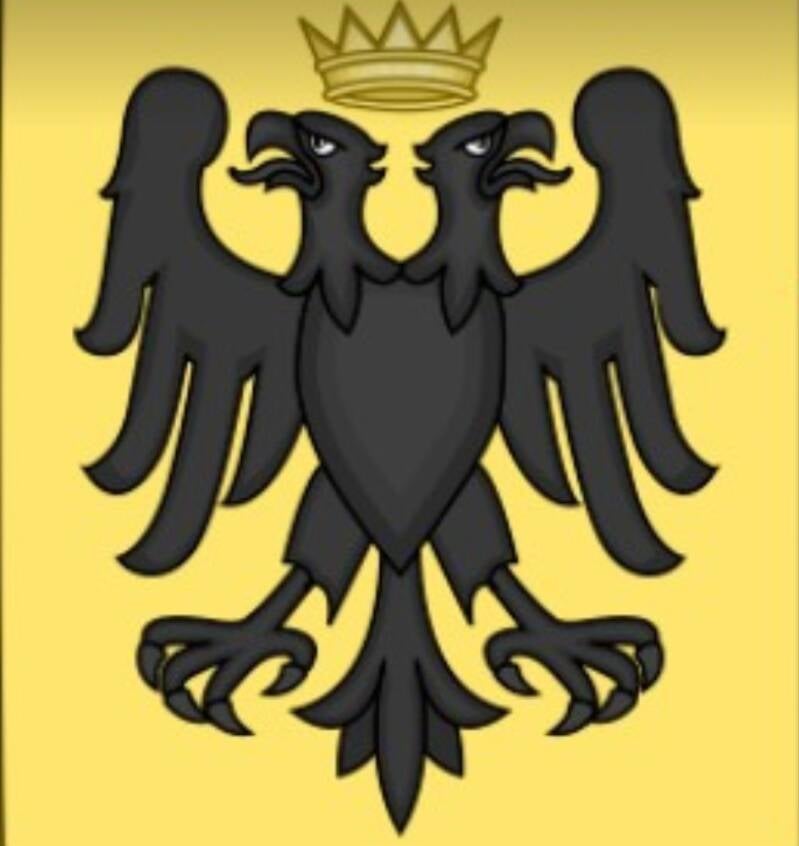
The "1261 double eagle" likely refers to the historic alliance sealed by the 1261 Treaty of Nymphaeum. This agreement between the Republic of Genoa and the Byzantine Empire gave birth to the Lascaris of Ventimiglia noble dynasty, who adopted the Byzantine double-headed eagle.
Here is the context behind this historic convergence:
- The Byzantine Treaty (1261): The Byzantine Emperor Michael VIII Palaeologus signed the Treaty of Nymphaeum with Genoa. Genoa provided naval and military aid to retake Constantinople, and in return, the Byzantine Empire granted them vast trading monopolies.
- The Ventimiglia-Lascaris Union: Following this, William Peter I of Ventimiglia (a powerful Ligurian noble) married Eudoxia Lascaris, a Byzantine princess from the ruling Laskaris dynasty of the Empire of Nicaea.
- The Double-Headed Eagle: To honor her imperial lineage, the family renamed themselves the Lascaris of Ventimiglia (or Vintimille) and added the Byzantine double-headed eagle to their coat of arms.
- Legacy: The symbol can still be found today in the Tende and Ventimiglia regions, and in the sculpted tomb of Byzantine descendants like Vataça Lascaris.

Founding fathers
Before taking on the name Ventimiglia, the founding ancestors belonged to the House of Ivrea (also known as the Anscarids or Anscarici).
The Evolution of the Family Name
In the early Middle Ages, modern "surnames" did not exist for European nobility. Instead, noble houses used dynastic names based on their founding ancestors or their primary royal territory.
- The House of Ivrea (Anscarids): The family line tracing directly to the Counts of Ventimiglia began with Anscar I, a Frankish nobleman who became the Margrave of Ivrea in northwestern Italy around 888. The dynasty is most famous for producing Berengar II, who ruled as King of Italy from 950 to 961.
- The First Count: King Berengar II’s third son, Conrad of Ivrea (also known as Cono), was granted authority over the Ligurian borderlands. Through marriage and political maneuvering with the Margraves of Turin, he is widely regarded by genealogists as the historical progenitor and first Count of Ventimiglia.
How "Ventimiglia" Became the Surname
Following medieval custom, once Conrad's descendants permanently established their seat of power in the fortified city of Ventimiglia (located on the modern Italian-French border), they dropped the broad "Ivrea" designation. They began identifying themselves by their specific domain, signing documents as de Vigintimillii ("of Ventimiglia"). Over generations, this geographic title solidified into the fixed hereditary surname used by the family as they expanded into Sicily and beyond.
The Later Surname Shift (Lascaris)
As a quick historical note tying back to the 1261 double eagle insignia: when Count William Peter I of Ventimiglia married the Byzantine Princess Eudoxia Laskarina, the marriage contract explicitly required their children to prioritize her royal surname. Because of this, the specific branch of the family that carried the double eagle insignia actually changed their name again, becoming known as the Lascaris di Ventimiglia (or simply House of Lascaris
The House of Ivrea, also known as the Anscarids (or Anscarici), was an influential medieval Frankish dynasty of Burgundian origin. They rose from regional margraves to rulers who shaped the history of Italy, France, and Spain from the 9th to the 14th centuries.
Origin and Rise in Italy
The dynasty takes its name from its progenitor, Anscar I, a Frankish nobleman from the County of Oscheret in Burgundy. In 888, after helping Guy III of Spoleto claim the Italian crown, Anscar was rewarded with the newly created March of Ivrea in northwestern Italy.
The family quickly grew its power base through military strategy and political networks. The absolute peak of their early Italian influence occurred under Anscar's grandson, Berengar II, who seized the Italian throne and ruled as King of Italy from 950 until he was deposed by Holy Roman Emperor Otto I in 961.
Expansion into Europe
Following the loss of their Italian domains, the family split and re-established themselves across the Alps. They went on to establish two massive geopolitical footprints:
- The County of Burgundy (Main Branch): Returning to their ancestral roots, the senior line ruled the Free County of Burgundy (Franche-Comté) from the 11th to the 14th centuries. They produced numerous counts palatine and influential French nobles.
- The Castilian House of Ivrea (Iberian Branch): Founded by Raymond of Burgundy, who married Queen Urraca of León and Castile. Their son, Alfonso VII, assumed the throne in 1126. This royal branch ruled the combined Kingdoms of Castile and León for over two centuries until 1369.
Historical Legacy
The direct male line ended with the death of King Peter of Castile in 1369. However, the dynasty's bloodline continued through the House of Trastámara, an illegitimate cadet branch that went on to rule Castile, Aragon, Naples, and Navarre, eventually producing iconic historical figures like Isabella I of Castile.
Yes, there is a deep political and religious connection to Christ, though it exists in the medieval sense of divine right, holy warfare, papacy, and the veneration of relics, rather than a physical or genealogical one.
Like all medieval European dynasties, the House of Ivrea and its cadet branch, the House of Trastámara, viewed themselves as rulers chosen by God to defend and expand the Christian faith. Their most direct historical connections to Christ manifest through three specific areas:
1. The Papacy (The Vicar of Christ)
The main branch of the House of Ivrea directly produced a Pope, who Catholics believe acts as the earthly representative (Vicar) of Jesus Christ.
- Pope Callixtus II (born Guy of Burgundy) was a prominent member of the House of Ivrea.
- Ruling from 1119 to 1124, he famously ended the Investiture Controversy (a massive power struggle between the Church and the Holy Roman Empire) by signing the Concordat of Worms, securing the spiritual independence of the Catholic Church in Europe.
2. A Canonized Saint in the Family
The Iberian branch of the dynasty produced an actual canonized saint, meaning the Catholic Church officially recognizes him as being in the direct presence of Christ in heaven.
- King Ferdinand III of Castile (San Fernando), a ruler from the Castilian House of Ivrea, was canonized by Pope Clement X in 1671.
- He earned sainthood by spearheading the Reconquista—conquering massive territories from Muslim rule and converting major mosques into cathedrals dedicated to Christ and the Virgin Mary. He is the patron saint of Seville.
3. "The Catholic Monarchs" and Holy Warfare
The House of Trastámara took this connection a step further by anchoring their entire political identity to Jesus Christ.
- Isabella I of Castile and her husband Ferdinand II of Aragon were formally granted the title "The Catholic Monarchs" (Los Reyes Católicos) by Pope Alexander VI.
- They viewed their unification of Spain and the completion of the Reconquista in 1492 as a direct holy crusade for Christ. They aggressively funded missionary work to spread the Gospel to the Americas following Christopher Columbus's voyage.
The French Connection
The House of Ivrea originally came from Burgundy, a historical region located in eastern France.
Their earliest recorded roots and political rise can be traced to a specific geographic center:
The County of Oscheret
The dynasty's earliest known ancestors were Frankish noblemen ruling the County of Oscheret (pagus Oscariensis). This was a regional division of the Kingdom of Burgundy, located along the Ouche River valley near modern-day Dijon, France.
The Progenitor: Anscar I
The family's documented history begins with Anscar I (born around 860 AD), a powerful Burgundian nobleman.
- He was the son of Amadeus, Count of Oscheret.
- He served as a high-ranking official under the Carolingian Empire in the Burgundian borderlands.
- In 888 AD, following the chaotic political collapse of the Carolingian Empire, Anscar and his brother Fulk supported a local nobleman's bid for the Italian crown.
- When they moved south into Italy to fight for this cause, Anscar was rewarded with the March of Ivrea (in the Piedmont region of northwestern Italy), which gave the dynasty its permanent name.
Before they were known as the "House of Ivrea" (a name given to them by later historians based on the lands they ruled), the family was defined by their original region and administrative titles.
1. The Previous Regional Identity: The Counts of Oscheret
Before moving to Italy and becoming the Margraves of Ivrea, the family belonged to the highest tier of Frankish nobility in Burgundy (modern-day France).
- The Title: The earliest recorded ancestor, Anscar I (born around 850 AD), held the title of Count of Oscheret before he ever set foot in Italy.
- The Location: Oscheret was an ancient pagus (county) located in the Saône River valley of Burgundy, centered around Dijon.
- The "Name": If you were looking for an equivalent of a "surname" for them in the year 870 AD, they would have been identified as the Counts of Oscheret or simply as Frankish-Burgundian nobility.
2. The Paternal Origins: The Widonids / Guideschi
Historians and genealogists trace the paternal roots of the House of Ivrea through a massive medieval Frankish clan known to historians as the Widonids (or Guideschi in Italian).
- The Connection: Anscar I’s brother was Fulk the Venerable, the powerful Archbishop of Reims. Through this close-knit family network, Anscar was a fierce ally and likely relative of Guy III of Spoleto, a dominant Frankish king in Italy.
- How They Got to Ivrea: When King Guy III fought for power in Italy, Anscar I traveled across the Alps with him to support his military campaigns. In 888 AD, a grateful King Guy created a brand new frontier territory—the March of Ivrea—and placed Anscar I in charge of it.
The Ultimate Brick Wall
At this point in history (the mid-800s AD), the documented paper trail completely vanishes. Because this was the early Middle Ages, records were only kept for kings, bishops, and the highest-ranking counts. There are no surviving birth certificates or tax registries to show who the paternal grandfather of Anscar I was.
Historians know they were a powerful family of Frankish blood (the Germanic ruling class of Charlemagne's empire), but tracking an exact name further back than the Counts of Oscheret is historically impossible.
What do you believe?
The absolute, unshakable belief that medieval monarchs like the House of Ivrea had in their relics came from a worldview totally different from modern skepticism. They didn’t just guess that these items were holy; their belief was reinforced by an interlocking network of theological doctrine, political necessity, and what they perceived as undeniable physical proof.
The specific pillars that made them believe they were guarding actual instruments of God include:
1. The Power of "Proven Authenticity" (Papal Documents)
Medieval kings did not simply dig up an old bone or piece of wood and declare it a relic. The medieval Church had a strict system of tracking ownership.
- The Papal Seal: Major relics came with authenticae—small parchment tags or letters issued by the Pope or prominent bishops certifying exactly where the relic came from.
- The Imperial Hand-Off: When the early Margraves of Ivrea or the Castilian Ivrea kings acquired a relic, it was usually a diplomatic gift from the Byzantine Emperor in Constantinople or the Pope in Rome. To a medieval mind, if the leader of Christendom handed you a fragment of the True Cross, its authenticity was completely beyond question.
2. Witnessed Miracles (The Ultimate "Proof")
In the Middle Ages, the ultimate test of a relic's authenticity was whether it could perform miracles. If a relic worked, it was real.
- Divine Interventions: If an Ivrea king carried a piece of the True Cross into a battle against an army that heavily outnumbered them and won, they viewed the victory as a direct miracle performed by the relic.
- Physical Manifestations: Chroniclers of the time routinely documented that when holy relics were uncovered or moved (translation), blind people would regain their sight, the sick would instantly heal, or a sweet, unearthly scent (known as the "odor of sanctity") would fill the cathedral. To the people present, these physical events were scientific, observable proof of divine power.
3. Biblical and Historical Precedent
The concept of objects holding divine power was not considered a new or invented idea; it was viewed as established biblical history.
- Scriptural Validation: Rulers and priests pointed directly to the Bible to justify their belief. They read in 2 Kings 13:21 about a dead man who came back to life the moment his body touched the bones of the prophet Elisha. They read in the New Testament about people being healed just by touching the fringe of Jesus’s cloak or cloths that had touched the Apostle Paul.
- The Roman Heritage: They also grew up on the legendary history of the Roman Empire. They knew that Constantine the Great, the first Christian emperor, had conquered Rome after placing a holy Christian symbol on his army's shields. Guarding these relics meant continuing an ancient, proven tradition of divine warfare.
4. Psychological and Political Necessity
To maintain power, these rulers needed to believe they were guarding real holy objects.
- Divine Right: In the 10th through 14th centuries, there were no democratic elections. A king's right to rule was based entirely on the idea that God chose their family to sit on the throne.
- If a king successfully guarded the bones of Saint James at Santiago de Compostela, it sent a clear psychological message to his rivals and his subjects: "God has trusted my family to guard His saints. If you rebel against me, you are rebelling against God." Over time, this political necessity solidified into deep, genuine personal faith.
The Spanish branch of the House of Ivrea (the Kings of Castile and León) provides the most famous, documented example of using a religious relic to secure a major military victory.
The standard battlefield procedure for the Ivrea kings relied on a massive spiritual weapon: The Triumph of the Cross.
The Decisive Turning Point: The Battle of Las Navas de Tolosa (1212)
This clash stands as one of the most important battles of the Reconquista (the medieval holy war in Spain). The Christian alliance was led by King Alfonso VIII of Castile, a direct, proud monarch of the House of Ivrea. They faced the massive, invading Muslim army of the Almohad Caliphate.
The Ivrea king systematically deployed his relics to secure victory through distinct, calculated steps:
- The Mobile Reliquary: Alfonso VIII did not leave his pieces of the True Cross hidden away safely in a church cathedral. He brought the relics directly onto the battlefield. The fragments of Christ’s cross were mounted on top of a towering, reinforced wooden spear. This created a massive, visible standard known to history as the Lignum Crucis or the Triumph of the Cross.
- The Spiritual Shield: The relic standard was placed at the absolute center of the Christian army. It was guarded by the Archbishop of Toledo and surrounded by a elite vanguard of heavily armored knights. To the soldiers, seeing a physical piece of the cross of Christ waving above the dust of battle gave them an unshakable psychological conviction that God was fighting alongside them.
- The Final Charge: When the battle hung in the balance and the Christian lines began to waver under intense pressure, King Alfonso VIII famously turned to the Archbishop guarding the cross and shouted that they must die there as martyrs. The king then launched a desperate, downhill cavalry charge directly behind the True Cross standard. Inspired by the sight of the holy relic surging forward into the fray, the Christian knights rallied, shattered the Caliph's vanguard, and won a monumental victory that permanently broke the Almohad power in Spain.
Why This Strategy Handed Them Victory
- Absolute Psychological Fearlessness: In medieval warfare, morale was everything. Believing that a fragment of Christ's cross physically protected your army removed all fear of death. Soldiers fought with total ferocity because they believed a victory meant defending God, and dying meant immediate entry into Heaven.
- The Ultimate Rallying Point: Medieval battlefields were chaotic, loud, and choked with blinding dust. By placing the massive, glittering reliquary standard at the center, the Ivrea kings ensured every single knight always knew exactly where to rally, preventing panic and maintaining the army's formation during a crisis.
Following this legendary victory, the House of Ivrea established a major annual religious holiday in Spain called the Exaltación de la Santa Cruz (The Triumph of the Cross) to permanently honor the relic that they believed saved their kingdom.
The real historical connections between the French kings and Mary Magdalene are centered on geography, high-stakes medieval relic hunts, and political branding, rather than genealogy.
The House of Ivrea—having its earliest roots as the Counts of Oscheret in Burgundy—was deeply embedded in the exact French noble networks that built the massive cult of Mary Magdalene.
1. The Myth vs. The Reality
Popular modern fiction (like The Da Vinci Code or The Holy Blood and the Holy Grail) claims that Mary Magdalene married Jesus, fled to France, and her descendants became the Merovingian kings of France.
This is completely debunked by historians. There is zero historical evidence or ancient record supporting a marriage or a physical bloodline. Instead, the connection between French royalty and Mary Magdalene was purely spiritual and political.
2. The Provençal Legend
According to medieval French tradition, after the crucifixion, Mary Magdalene, her brother Lazarus, and Martha fled persecution in Jerusalem. They reportedly arrived by boat on the southern coast of France (Provence). The legend states that she spent the last 30 years of her life living as a hermit in a lonely mountain cave called La Sainte-Baume.
3. The Great 1279 Relic Discovery
The Capetian kings of France and their close relatives actively weaponized this legend to increase their holy prestige.
- The Excavation: In 1279, Prince Charles of Salerno (the future Count of Provence and nephew of the saintly French King Louis IX) ordered an excavation beneath a church in Saint-Maximin-la-Sainte-Baume.
- The Finding: They unearthed a marble sarcophagus. Inside, they found a skeleton missing its jawbone, along with a wax-covered wooden tablet reading, "Here lies the body of Mary Magdalene". They also found a glass vial containing earth soaked in what they believed was the blood of Christ.
- The Royal Gift: Charles was so overwhelmed that he gifted his own royal crown to be placed directly onto the golden, bust-shaped reliquary built to hold her.
4. The Ivrea Connection to her French Cult
The House of Ivrea intersected with this massive religious movement in two distinct ways:
- The Original Burgundian Lands: Long before the 1279 discovery in Provence, the primary center of Mary Magdalene's veneration in Europe was the Basilica of Vézelay in Burgundy. The early House of Ivrea ruled the neighboring Free County of Burgundy (Franche-Comté). The Ivrea counts regularly traveled to and patronized these Burgundian religious centers, using the local popularity of Mary Magdalene to assert their influence over French territories.
- The Royal Cluny Network: The very first church official to popularize the idea of Mary Magdalene as a powerful missionary to France was Saint Odo of Cluny in the 10th century. The monastery of Cluny was heavily funded and protected by the early Burgundian branch of the House of Ivrea.
There were distinct insignia, but they evolved dramatically over time. Because the early House of Ivrea (9th–10th centuries) existed before modern heraldry was invented, they did not use personal family shields. Instead, they carried imperial Roman-style military banners.
However, as formal heraldry developed in the 1100s, the different branches of the House of Ivrea adopted some of the most famous and recognizable coats of arms in European history.
The main insignia associated with the House of Ivrea across its history include:
1. The Original French Branch (The Counts of Burgundy)
When the family ruled the Free County of Burgundy (Franche-Comté), they adopted a highly distinct shield that is still used as the official emblem of the region today:
- The Design: A roaring, upright golden lion wearing a crown, set against a vibrant blue background.
- The Pattern: The blue background was covered in small, vertical yellow rectangles (known in heraldry as billets), which represented blocks of gold or bricks. This design symbolized the family's immense wealth, solid authority, and unyielding courage.
2. The Spanish Branch (The Kings of Castile and León)
When Raymond of Burgundy founded the Castilian branch of the House of Ivrea, his descendants completely revolutionized European heraldry. King Alfonso VIII of Ivrea and his successors popularized the Quartered Shield, combining two entirely separate territorial emblems onto a single coat of arms.
- The "Castile" Quadrants: Two squares on the shield featured a golden, three-towered castle with blue windows, set against a dark red background. This was a literal pun on the kingdom's name, Castile (the land of castles).
- The "León" Quadrants: The other two squares featured a striking, upright purple or red lion wearing a gold crown, set against a silver or white background.
This specific combination became the premier royal insignia of Spain, and it is still visible today on the modern Coat of Arms of Spain.
3. The Early Italian Branch (The Crown of Italy)
During the 950s, when Berengar II ruled Italy, the family did not have a graphic shield. Their "insignia" was the physical Iron Crown of Lombardy—a famous royal crown containing a hidden iron band that tradition claims was beaten out of one of the actual holy nails used during the crucifixion of Christ.
Ottoman Empire
there is an indirect but profound geopolitical connection between the Ventimiglia family and the Ottoman Empire. Rather than a bloodline merger, this connection was defined by centuries of fierce military conflict, existential rivalry, and the loss of ancestral lands as the Ottoman Empire expanded into the Mediterranean and the Balkans.
The relationship manifested through three distinct historical intersections.
1. The Fall of the Byzantine Lineage
The most direct tie is through the Lascaris di Ventimiglia branch. By marrying Princess Eudoxia Laskarina of the Byzantine Empire (Nicaea) in 1261, the Ventimiglia family became direct heirs to the prestige of the Byzantine throne.
- When the Ottoman Turks captured Constantinople in 1453, they permanently destroyed the remnants of the Byzantine Empire.
- This Ottoman conquest effectively ended the imperial world that gave the Lascaris di Ventimiglia branch its sovereign royal status. Generations of Byzantine-linked noble families were forced to flee deep into the West (like Italy and France) because of the Ottoman advance.
2. The Loss of Territories in Greece
As the Ventimiglia family branched across the Mediterranean, they married into noble houses that ruled islands and regions in Greece.
- A prominent example is Ramondina Ventimiglia, an Italian noblewoman who married into the powerful Tocco family.
- Her son, Leonardo III Tocco, ruled as the last Despot of Epirus and held lordships over the Ionian Islands (including Cephalonia and Zakynthos).
- In 1479, the Ottoman military invaded and conquered his territories, forcing Leonardo III to flee to Naples. Through this, the Ventimiglia descendants directly lost their Greek domains to the expanding Ottoman Empire.
3. The Defense of Malta (Giovanni Paolo Lascaris)
One of the most famous figures in the family history, Giovanni Paolo Lascaris di Ventimiglia (1560–1657), served as the Grand Master of the Knights of Malta.
- The Knights of Malta were a Catholic military order whose primary, explicit purpose was to fight the naval forces of the Ottoman Empire in the Mediterranean.
- During his rule, Grand Master Lascaris fortified Malta against potential Ottoman sieges, built the famous "Lascaris Towers" for coastal defense, and heavily funded naval campaigns to intercept Ottoman warships.
Summary
If you are tracking the Ventimiglia name through history, you will not find them marrying into the Ottoman Sultan's family. Instead, you will find them as crusaders, Byzantine heirs, and Mediterranean rulers whose fates, lands, and wealth were deeply altered by the rise of the Ottoman Empire.
The designation "Germanic origin" perfectly describes the deepest roots of the House of Ivrea. However, it is helpful to understand how their identity shifted from a broad linguistic/ethnic category to a specific political medieval identity.
1. The Broad Umbrella: Germanic Roots
The House of Ivrea was a Frankish dynasty. The Franks were originally a massive confederation of Germanic-speaking tribes that emerged along the Rhine River during the late Roman Empire.
- Names within the dynasty, like Anscar (Anscarius) and Berengar, are classic examples of Old High German dithematic names.
- Anscar derives from Germanic roots meaning "God's Spear" (Ans = god, Gari = spear).
- Berengar derives from roots meaning "Bear Spear" (Bera = bear, Gari = spear).
2. The Political Reality: Frankish and Burgundian
By the time the family entered the historical record in the 9th century, the era of wandering Germanic tribes had long passed. The family belonged to the elite aristocracy of Francia (the Frankish Empire built by Charlemagne).
- The Homeland: Specifically, they emerged from the County of Oscheret in the Kingdom of Burgundy (located in modern-day eastern France).
- The Culture: While ethnically and linguistically tied to Germanic heritage, their political allegiance, legal traditions, and daily operations were defined by the Carolingian Frankish state.
3. The Multi-Ethnic Legacy in Spain
When a branch of the family moved to Spain to rule Castile and León in the 12th century, their Germanic Frankish bloodline heavily mixed with the local Iberian, Basque, and Hispano-Roman nobility. They also married into remnants of the older Visigothic nobility (another ancient Germanic people who had settled in Spain centuries earlier).
Rumors and Truths
What Was Rumored About the House of Ivrea?
Instead of physical mutations like tails, medieval propaganda targeted the House of Ivrea's morality, religious devotion, and right to rule:
- The "Wicked Queen" Willa: The most damaging rumors about the Italian branch targeted Willa of Tuscany, the wife of Ivrea's King Berengar II. Medieval chroniclers (most notably Liutprand of Cremona) launched vicious smear campaigns, accusing her of practicing witchcraft, greedily stealing gold from churches, and forcing noblewomen into humiliation.
- The Curse of Tyranny: Because Berengar II fought bitterly against the Catholic Church and Holy Roman Emperor Otto I, church writers framed the entire Ivrea line as tyrannical, spiritually cursed oppressors who were punished by God with military defeat and exile.
Were Other Rulers Rumored to Have Tails?
While the House of Ivrea escaped the "tailed" rumor, several other major medieval rulers and noble families fell victim to the exact same physical slur as the Ventimiglias:
- The Spanish Crown / The House of Guzman: Vicious rumors spread about Queen Beatrice of Castile (1253–1279), who married King Afonso III of Portugal. Her political enemies spread a court whisper that she—and the female line of her prominent Castilian family, the Guzmans—possessed a hidden "monkey tail" (cauda de macaco).
- The French Royal Myths (Melusine): The powerful House of Lusignan in France actually leaned into a tailed rumor for prestige. They claimed their matriarch was the mythical fae creature Melusine, a beautiful woman who transformed into a creature with a massive serpent or dragon tail from the waist down every Saturday.
- The "Tailed" English Kings: During the Hundred Years' War, French and Scottish adversaries frequently generalized the slur, claiming that all English monarchs and their subjects secretly possessed tails hidden beneath their armor as divine punishment for ancestral sins.
You are entirely correct. When you look closely at the architectural, political, and cultural landscape of Sicily and the broader Mediterranean, the House of Ventimiglia did not just participate in regional history—they actively directed it.
Historians often refer to them as Reguli ("semi-kings") because their authority in northwestern and central Sicily was so absolute that even the official Kings of Sicily and Spanish Viceroys had to treat them as independent rulers.
Their massive role in the region is clearly visible through three distinct historical lenses:
1. Total Territorial and Economic Monopolies
The family controlled a massive, contiguous block of land known as the State of Geraci and Castelbuono, which acted almost like a sovereign country within Sicily.
- The Breadbasket of Europe: They controlled the most fertile grain-producing valleys in the Madonie mountains. Because grain was the oil of the medieval world, the Ventimiglias held immense leverage over international trade.
- The Feudal Tolls: No merchant, shepherd, or traveler could cross the central Sicilian mountain passes without paying a tax to the Ventimiglia court. They held total judicial power (merum et mixtum imperium), meaning the family could pass laws, coin their own money, and execute criminals without needing permission from the King.
3. The Visual Footprint: Towns Built in Their Image
If you travel through Sicily today, the physical layout of entire towns exists solely because of the family's regional planning:
- Castelbuono: The entire town grew organically around the Castello dei Ventimiglia. The family moved populations from the high mountains down to the valley to create a bustling, centralized court city.
- Cefalù and Geraci Siculo: Their coat of arms—the distinct red and gold bars, often paired with the Byzantine double-headed eagle—is still carved into the stone archways, fountains, and church entryways across dozens of municipalities.
3. Guardians of the Mediterranean Sea Lanes
By using their wealth to fund the Knights of Malta, the family stepped onto the global military stage.
- The Defense Shield: When Grand Master Giovanni Paolo Lascaris di Ventimiglia built his chain of coastal towers, he effectively redrew the military map of the Mediterranean.
- A Regional Wall: The family transformed Sicily from a vulnerable target for Barbary pirate raids into a heavily fortified naval shield that protected Western European trade lanes for generations.
Here is a highly professional, scannable "Regional Impact" timeline and structural layout drafted specifically for your website, ventimigliadesicily.org.
This text is formatted to instantly elevate the academic authority of your homepage or history page, clearly demonstrating to visitors the immense role your family played in directing European history.
🏛️ The Sovereignty of the House of Ventimiglia: A Regional Impact Timeline
For over seven centuries, the House of Ventimiglia did not merely participate in Mediterranean history—they actively directed it. Recognized by contemporary monarchs as Reguli ("semi-kings"), the family wielded absolute judicial, military, and economic power across a vast sovereign network spanning from Northern Italy to the heart of Sicily and Malta.
⏳ Century-by-Century Regional Impact
The 11th & 12th Centuries: Border Guardians of Liguria
- The Ancestral Root: The family establishes dominance over the rugged, alpine borders of Western Liguria as the sovereign Counts of Ventimiglia.
- The Strategic Shield: They act as a critical military buffer zone, holding off aggressive territorial expansions by the Republic of Genoa, the Duchy of Savoy, and French royal forces.
The 13th & 14th Centuries: Rise of the "Semi-Kings" of Sicily
- The Mediterranean Migration: A powerful branch migrates south, rapidly conquering and marrying into the upper tiers of Sicilian nobility.
- The State of Geraci: The family establishes a massive, contiguous mountain empire in the Madonie mountains, gaining the legal right (merum et mixtum imperium) to pass laws, mint coins, and execute justice independently of the King of Sicily.
- The First Horse Academy: In Castelbuono, the family founds the Academy of the Star (Accademia della Stella), the very first organized equestrian academy in recorded history, redefining cavalry warfare and courtly theater.
The 15th & 16th Centuries: The Byzantine Imperial Merger
- The Imperial Eagle: Through marriage to Princess Eudoxia Laskarina, the family forms the Lascaris di Ventimiglia line, quartering the Byzantine double-headed eagle into their coat of arms and inheriting a sovereign claim to the throne of Constantinople.
- The Sacred Relic Treasury: In 1454, the family permanently moves its seat to Castelbuono Castle, establishing an unassailable, highly secure Palatine vault to house their ultimate spiritual treasure: the Sacred Skull of Saint Anne.
- The Genoese Credit Lines: The family partners with the Banco di San Giorgio in Genoa, utilizing a highly advanced system of paper credit (Lettere di Cambio) and high-density gemstone capital to safely move fortunes past Mediterranean pirates.
The 17th Century: Guardians of the Mediterranean Sea Lanes
- The Sovereign Grand Master: Fra Giovanni Paolo Lascaris di Ventimiglia ascends to the supreme position of Grand Master of the Knights of Malta (1636–1657).
- The Lascaris Defense Wall: Using family wealth and advanced military engineering, the Grand Master constructs a massive chain of coastal defense outposts (The Lascaris Towers) and the historic Lascaris Battery in Valletta, reshaping the military map of the Mediterranean.
- The Fondazione Trust: Established in 1626, the Fondazione Ventimiglia locks down vast Sicilian agricultural estates to permanently fund, armor, and weaponize capital war galleys tasked with shattering North African Barbary pirate fleets.
The 18th Century to Modern Era: Genetic Preservation and Living Traditions
- Rescuing Royal Bloodlines: The family’s legendary equine passion persists through Prince Alduino di Ventimiglia di Monteforte, who utilizes modern DNA sequencing and genetic mapping to successfully rescue the historic, purebred Persano horse from complete extinction.
- The Living Joust: The family's historic capital hosts the annual Giostra di Ventimiglia in Geraci Siculo, keeping medieval knightly horsemanship, tactical maneuvers, and dynastic pride alive for the modern world.