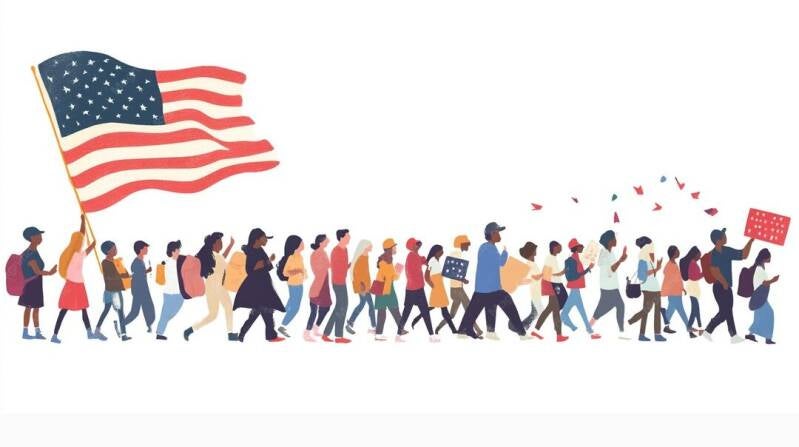
The pledge of elegance: A critical look
Explore the history and complexities of the Pledge of Allegiance. We aim to understand its origins, changes, and the ongoing debate surrounding its meaning and place in American society. Join us in a thoughtful examination of this significant national oath. Learders of faith and Political kings start WARS claiming God is with them , what God ? Who's God ? Your God ? My creator doesn't recognize any of those gods as anything more than false prophets false idols God is used as a weapon in his name they starve the poor rape the children destroy enter civlicstions in the name of some unrealistic concept "God" Greek gods Roman gods Jewish gods Islamic gods Egyptian gods who's God ? It's "CREATOR" NOT A GOD .
The brainwashing begins early in life with no freedom of choice

Unpacking the 31-word oath
The Pledge of Allegiance, a 31-word oath of loyalty to the United States flag and the republic it represents, is typically recited with a hand over the heart. Written by Francis Bellamy in 1892, its original purpose was for school celebrations. However, its meaning and context have evolved significantly over time, particularly with the controversial addition of "under God" in 1954. This change was largely a response to the Cold War and a perceived need to distinguish the U.S. from communist nations. Understanding this history is crucial to grasping the pledge's full impact and the ongoing discussions surrounding it.

With no chance of ever being treated equal
For whom is this pledge?
This discussion of the Pledge of Allegiance is for anyone interested in American history, civics, and the separation of church and state. It's particularly relevant for those who, as children, recited the pledge daily and may now question its implications. The aim is to highlight how elements like "under God" can be perceived as brainwashing when presented to children without proper context or critical discussion, leading to a misguided interpretation of our reality and potentially violating the principles of religious freedom.

The problematic addition of "God"
What makes this version of the pledge problematic is the inclusion of "God." Once "God" is entered into the equation, especially within a pledge to one's country, it can render the oath meaningless to those who do not share the same religious beliefs, or any religious beliefs at all. This addition transforms a civic expression of loyalty into a quasi-religious declaration, blurring the lines between state and faith. Such an amendment, without clear and inclusive reasoning, can make the pledge feel like a joke rather than a solemn commitment to the nation, alienating citizens rather than unifying them.

Understanding the truth
After engaging with this discussion, we hope you will gain a deeper understanding of the truth about the separation of church and state and how it has been violated within the Pledge of Allegiance. The goal is to encourage critical thinking about national symbols and their historical evolution, prompting a re-evaluation of what loyalty and patriotism truly mean in a diverse and secular society. This understanding is crucial for fostering an informed citizenry capable of upholding constitutional principles.