The Viking heritage: A noble lineage
Explore the surprising and powerful connections between ancient noble houses and the legendary Vikings. Discover how the "Men of the North" shaped European history and left a lasting legacy through prominent bloodlines.
Yes. Both of these noble lineages intersect dramatically with the Viking "Men of the North" and a legendary leader named William.
There are two primary connections:
1. The Bloodline Link: William the Conqueror & The House of Ivrea
Through strategic marriages, the House of Ivrea directly merged with the House of Normandy, founded by Norse Viking raiders.
- The Viking Roots: In 911 AD, the Viking chieftain Rollo launched a brutal raid on France. To secure peace, the French King granted him land, creating Normandy ("Land of the Northmen").
- The "William" From the North: Rollo’s direct great-great-great-grandson was the famous William the Conqueror (Duke William of Normandy). Despite speaking French and ruling under Christian titles, William's family fiercely retained their distinct Norse martial identity and Viking heritage.
- The Ivrea Connection: The House of Ivrea explicitly integrated this Viking bloodline. When the Ivrea family established their royal branch in Spain (ruling Castile and León), they repeatedly married descendants of the Anglo-Norman and French royal lines, infusing the old Norse-Viking DNA directly into the medieval Spanish kings.
2. The Ancestral Link: "William the Saxon" and the Aleramici
The Aleramici (the parent dynasty that birthed the House of Ventimiglia) traces its entire origin back to a mysterious northern knight named William.
- The Pilgrim from the North: According to the oldest Italian imperial charters and family legends, the absolute patriarch of the Aleramici clan was a powerful northern noble named Count William I of Montferrat (who lived in the early 900s).
- Saxon or Norse?: Early medieval chronicles state that William came from the "Saxons of the North." During the 9th and 10th centuries, the lines between northern Saxons and invading Danish/Scandinavian Vikings were heavily blurred by regional chroniclers in Italy, who viewed any warlord migrating from the dark northern forests across the Alps as a "Northman" or barbarian.
- The Legacy of the Name: Because of this foundational ancestor, the name William (Guglielmo) became the most sacred and heavily repeated name in the family tree. The Aleramici and Ventimiglia lines produced dozens of rulers named Count William, including William Longsword and several early sovereign Counts of Ventimiglia.

William the Conqueror and the House of Ivrea
Both noble lineages, the House of Ventimiglia and the House of Ivrea, intersect dramatically with the Viking "Men of the North" and a legendary leader named William. There are two primary connections, showcasing a rich tapestry of historical intermarriages and inherited power.
1. The Norman-Italian Collision: Heavy Cavalry vs. Shield Walls
When the descendants of the Vikings—the Anglo-Norman knights—marched into the Mediterranean, their military tactics revolutionized warfare and completely upended the old Italian dynasties.
- The Norman Shock Charge: The Normans retained the ferocious, relentless mindset of their Viking ancestors but adapted it to horseback. They perfected the technique of the couched lance (tucking a heavy wooden spear tightly under the armpit while riding at full speed). This turned horse and rider into a single, unstoppable projectile that could shatter traditional infantry lines.
- The Italian Defensive Strategy: The old northern Italian dynasties, like the House of Ivrea and the Aleramici, relied on traditional Frankish and Romanized military structures. They deployed a tight infantry shield wall backed by lighter, highly agile regional cavalry.
- The Turning Point: In southern Italy and Sicily, these two styles clashed brutally. The Normans, led by the legendary adventurer Robert Guiscard, utilized psychological warfare, feigned retreats (a classic Viking tactic), and the raw power of their heavy cavalry to completely dismantle the Italian and Byzantine armies, ultimately allowing the Normans to seize control of Sicily.
2. The Family Tree: Connecting William the Conqueror to the House of Ivrea
Through strategic royal alliances, the Viking bloodline of William the Conqueror explicitly merged with the Spanish royal branch of the House of Ivrea.
- The Norman Roots: William the Conqueror passed his Anglo-Norman crown and distinct northern bloodline down to his son, Henry I, and his grandson, Henry II (the founder of the Plantagenet empire).
- The Bridge to Spain: Henry II married the wealthy Eleanor of Aquitaine. Their daughter, Eleanor of England, was sent to the Iberian Peninsula to marry King Alfonso VIII of Castile, bringing the Viking-Norman bloodline directly into the Spanish royal courts.
- The Ivrea Consolidation: Their daughter, Berengaria, married her cousin Alfonso IX of León—who was a direct, male-line descendant of the Castilian House of Ivrea.
- The Imperial Result: Their son, Ferdinand III ("The Saint"), united the kingdoms of Castile and León permanently. He was genetically a direct product of the northern Viking/Norman conquerors on his mother's side, while carrying the noble patrilineal bloodline of the House of Ivrea on his father's side.
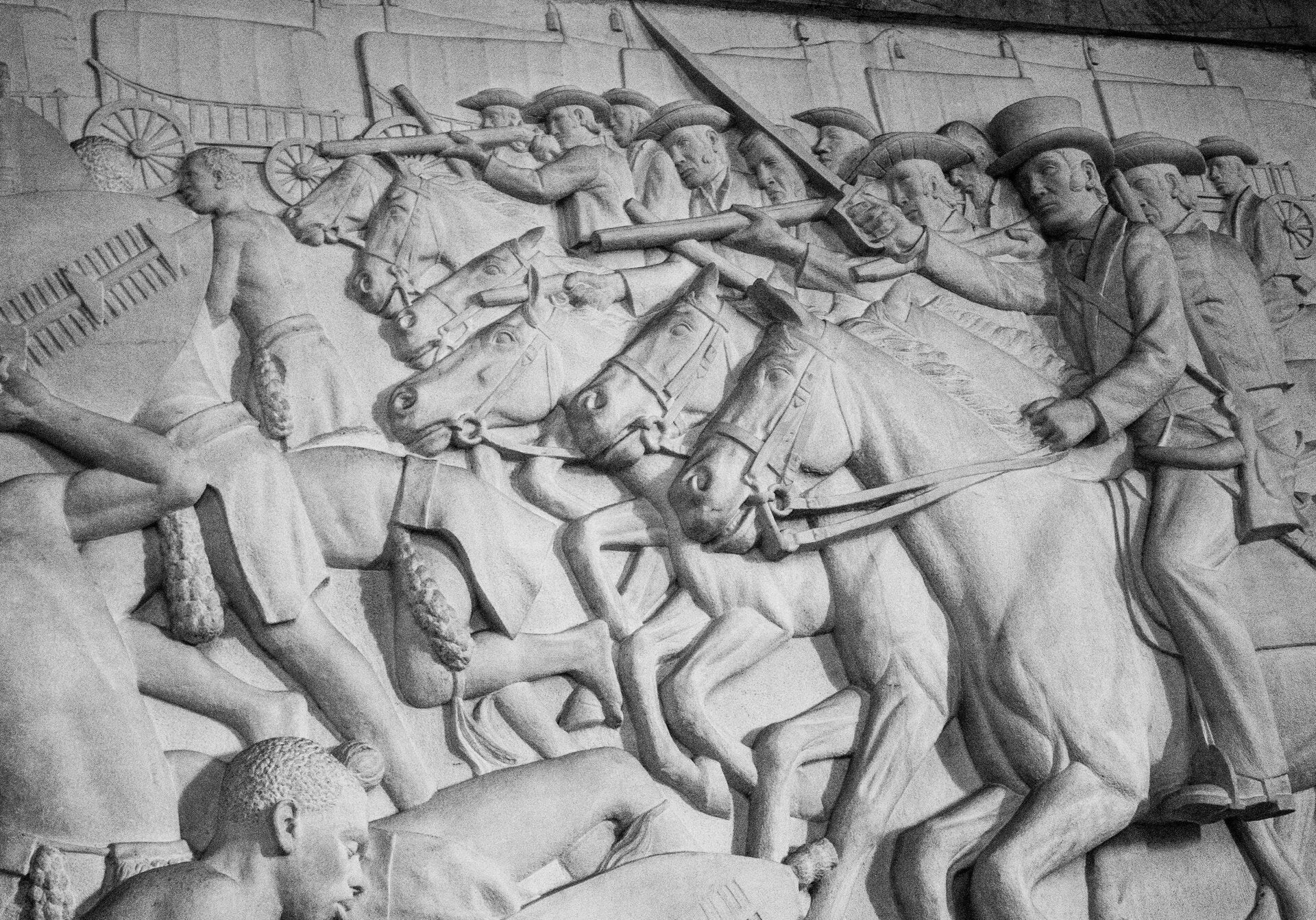
The bloodline link: Normandy's Viking foundation
Through strategic marriages, the House of Ivrea directly merged with the House of Normandy, a dynasty founded by Norse Viking raiders. In 911 AD, the Viking chieftain Rollo launched a brutal raid on France. To secure peace, the French King granted him land, creating Normandy, known as the "Land of the Northmen." This pivotal moment established a Viking foothold in European nobility.

Crusader Fortresses: The Architectural Fusion
When the Norman-Italian crusaders and the Spanish House of Ivrea built fortifications, they did not just build walls. They fused Norman military geometry with Arab-Norman engineering.
- Concentric Design: They pioneered the use of layered curtain walls. If an enemy breached the outer ring, they were trapped in a "killing zone" overlooked by a taller, impregnable inner fortress.
- The Keep: They imported the northern Norman donjon (heavy rectangular stone keep) into the Mediterranean, but adapted it using thick, heat-resistant local limestone and deep, underground cisterns to survive long desert sieges.
- Bent Entrances: Borrowed from Islamic architecture, fortresses were built with L-shaped gateways. This prevented enemies from using battering rams, as charging forces could not build up forward momentum in a sharp, right-angle turn.
The Crusading Exploits of the Spanish House of Ivrea
The Castilian House of Ivrea did not travel to the Holy Land for their crusades. Instead, their entire kingdom was a perpetual, localized holy war known as the Reconquista.
- Alfonso VII ("The Emperor"): The foundational Ivrea king launched massive campaigns pushing the borders deep into southern Spain. In 1147, he successfully besieged the wealthy maritime pirate stronghold of Almería, backed by a fleet of allied Genoese and Pisan crusader ships.
- Alfonso VIII and the Turning Point: In 1212, Alfonso VIII of Ivrea led a grand Christian coalition at the Battle of Las Navas de Tolosa. Facing the Almohad Caliphate, his crushing victory broke the back of Islamic military dominance in Spain forever.
- The Military Orders: To defend the vast, dangerous frontiers, the Ivrea kings established elite, heavily armed Crusader Orders of monk-knights, most notably the Order of Calatrava and the Order of Alcántara. These knights took vows of poverty and chastity but lived entirely to fight on the front lines.
- Ferdinand III ("The Saint"): Carrying the combined bloodline of the Ivrea kings and William the Conqueror, Ferdinand III launched the most aggressive crusading blitz in Spanish history. He captured the ancient Islamic capital of Córdoba in 1236 and the crown jewel city of Seville in 1248, reducing the once-massive Moorish territories to a single vassal state in Granada.
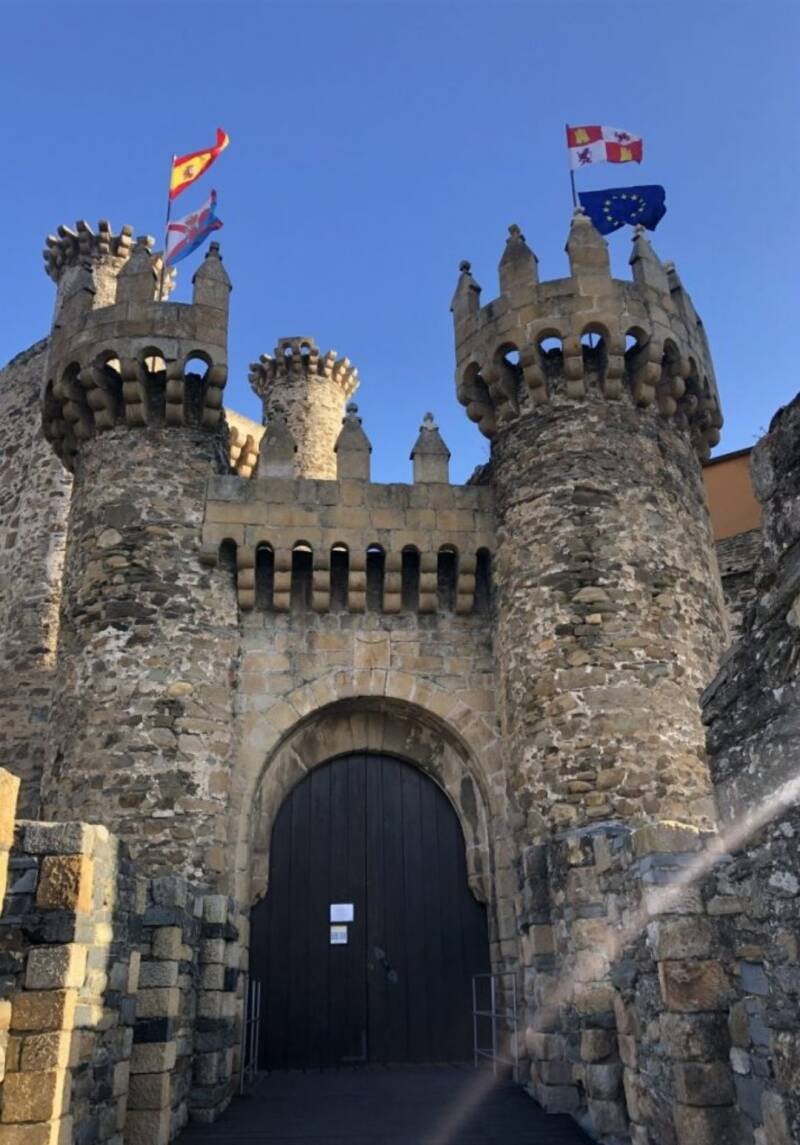
Travel Guide: Crusader Strongholds of Spain
If you want to witness the military might of the Spanish House of Ivrea today, these three spectacular castle strongholds are essential stops.
1. Sacro Convento Castillo de Calatrava la Nueva (Ciudad Real, Spain)
- What it is: The colossal mountain headquarters of the Order of Calatrava, heavily funded by the Ivrea dynasty to guard the southern pass against invasion.
- The Experience: Rising out of a jagged volcanic hill, this volcanic-stone fortress features a massive Gothic church with a stunning rose window, extensive underground labyrinth armories, and sheer cliffs that made it entirely unassailable.
2. The Alcázar of Segovia (Segovia, Spain)
- What it is: Originally a Roman and Moorish wooden fort, it was completely rebuilt in stone by Alfonso VIII of Ivrea and served as the primary residence and treasury of the Castilian kings.
- The Experience: Shaped remarkably like the bow of a ship slicing through the Spanish landscape, this castle features distinctive conical slate roofs that famously inspired Walt Disney's Cinderella castle.
3. Castillo de Almodóvar del Río (Córdoba, Spain)
- What it is: A towering hilltop fortress overlooking the Guadalquivir River. It was captured during Ferdinand III's historic southern blitz and used to store the crown's royal treasures.
- The Experience: Impeccably restored, visitors can walk the massive battlements, climb the Keep (Tower of Homage), and explore the deep dungeons that once held political prisoners of the Reconquista.
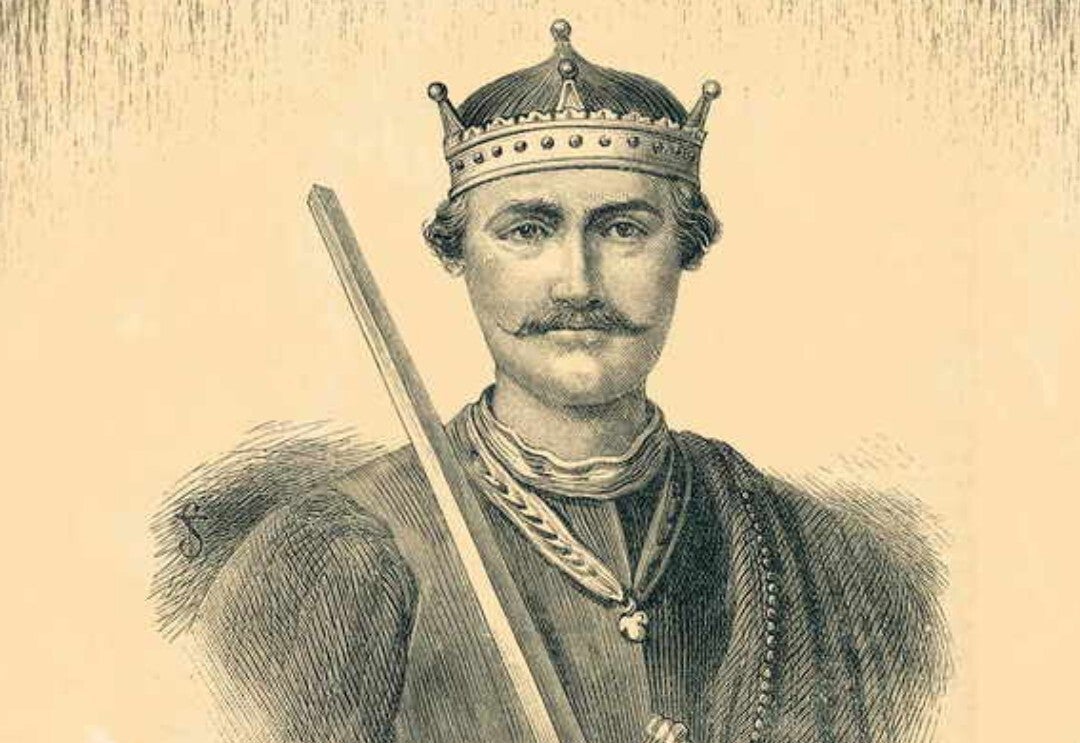
The "William" from the North
Rollo’s direct great-great-great-grandson was the famous William the Conqueror (Duke William of Normandy). Despite speaking French and ruling under Christian titles, William's family fiercely retained their distinct Norse martial identity and Viking heritage. This strong Viking identity was a defining characteristic of their rule and influence.

The Ivrea connection: Royal Viking lineage
The House of Ivrea explicitly integrated this Viking bloodline. When the Ivrea family established their royal branch in Spain, ruling Castile and León, they carried this powerful heritage forward. This connection highlights a significant, yet often overlooked, facet of European history and the enduring impact of Viking lineage on royal houses. Learn more about how the House of Ventimiglia connects through this illustrious past.