The Swords Of Ventimiglia
Explore the fascinating evolution of the standard sword carried by the House of Ventimiglia. Discover how these blades shifted dramatically across history, mirroring advancements in defensive metallurgy and armor design. If a Ventimiglia lord or a high-ranking fleet captain drew a blade on a battlefield, its specific type depended entirely on the century.
The evolution of the standard sword carried by the House of Ventimiglia shifted dramatically across history, mirroring changes in defensive metallurgy and armor design. If a Ventimiglia lord or a high-ranking fleet captain drew a blade on a battlefield, the specific type of sword depended entirely on the century.
The primary swords used during the eras highlighted in your family records follow a distinct progression:
1. The Knightly Arming Sword (11th – 13th Century Ligurian Era)
During the early years when the family was actively fighting naval blockades against Genoa, the standard weapon was the Knightly Arming Sword.
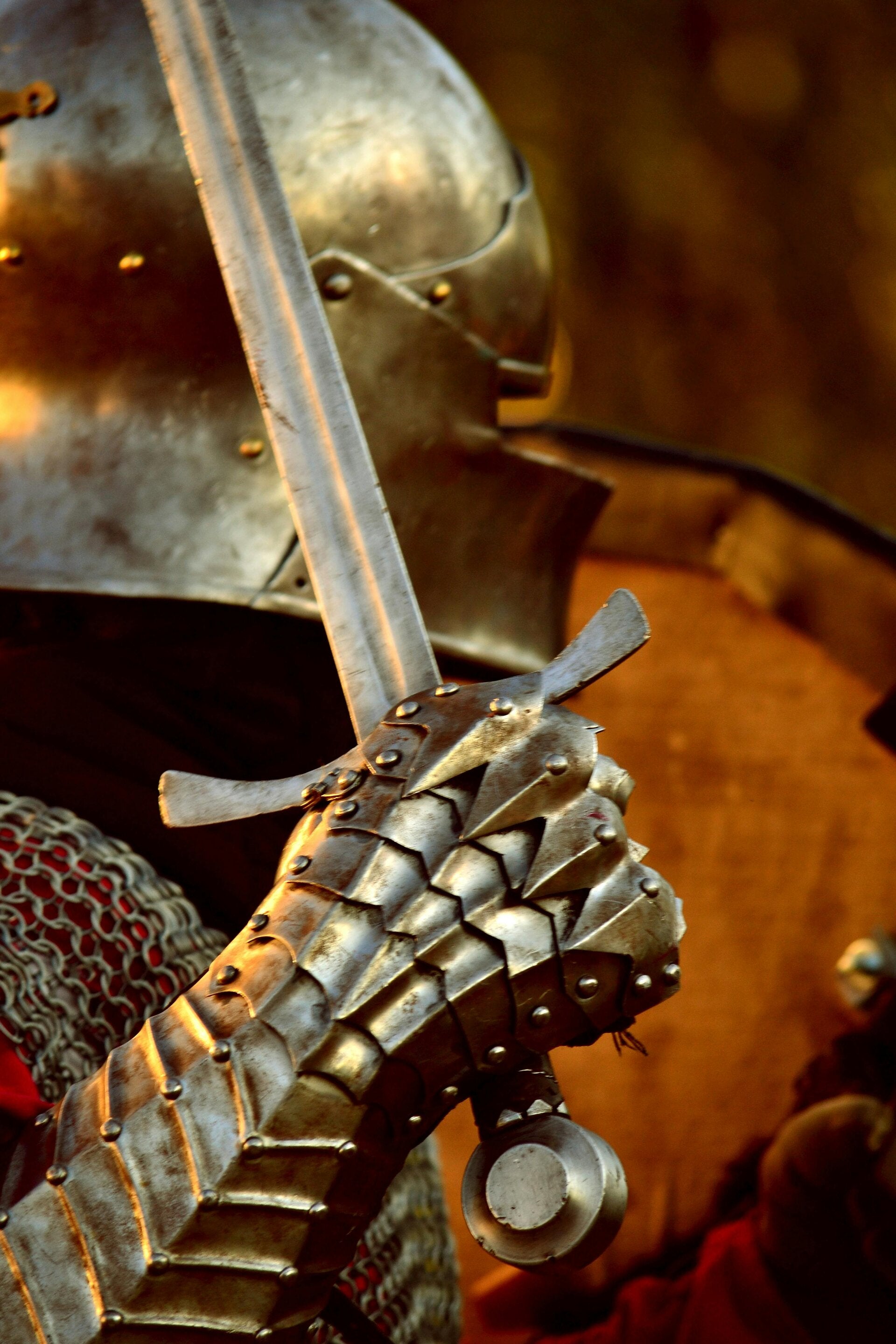
- The Blueprint: Classified under the historical Oakeshott Typology (such as Type X or XI), this was a single-handed weapon featuring a straight, double-edged blade about 30 to 32 inches long, balanced by a simple crossguard and a heavy wheel-shaped pommel.
- Tactical Use: This blade was optimized for wide, devastating hacking and slashing cuts from horseback or during close-quarters deck sweeps on naval galleys. It was highly effective against the standard armor of the 1200s, which consisted primarily of flexible chainmail, leather padding, and heavy fabric.
2. The Greatsword / Warsword (14th Century Sicilian Migration)
When the family established the County of Geraci, armor technology advanced, and soldiers began incorporating early steel plate protection over their mail. To counter this, the Ventimiglia knights adopted larger, heavier variants known as Oakeshott Type XIIIa "Warswords" or early Greatswords.
- The Blueprint: These were large, imposing weapons with broad, heavy blades running up to 36–40 inches long. They featured an elongated handle, allowing a knight to grip it with two hands for maximum leverage.
- Tactical Use: Known as a "performance cutting sword," it was built to deliver massive, crushing two-handed blows capable of shearing through reinforced leather and breaking limbs even through heavy defensive mail coats.
3. The Needle-Point Longsword (15th Century Feudal Peak)
By the time of Giovanni I Ventimiglia and the Battle of Ponza (1435), warriors on the battlefield wore comprehensive suits of articulated steel plate armor. Because a cutting blade completely bounces off solid steel plates, the family's knights adopted the specialized Oakeshott Type XVa Longsword.
- The Blueprint: This was a sleek, formidable two-handed weapon characterized by a highly tapered, diamond-cross section blade that came to a reinforced, needle-like tip.
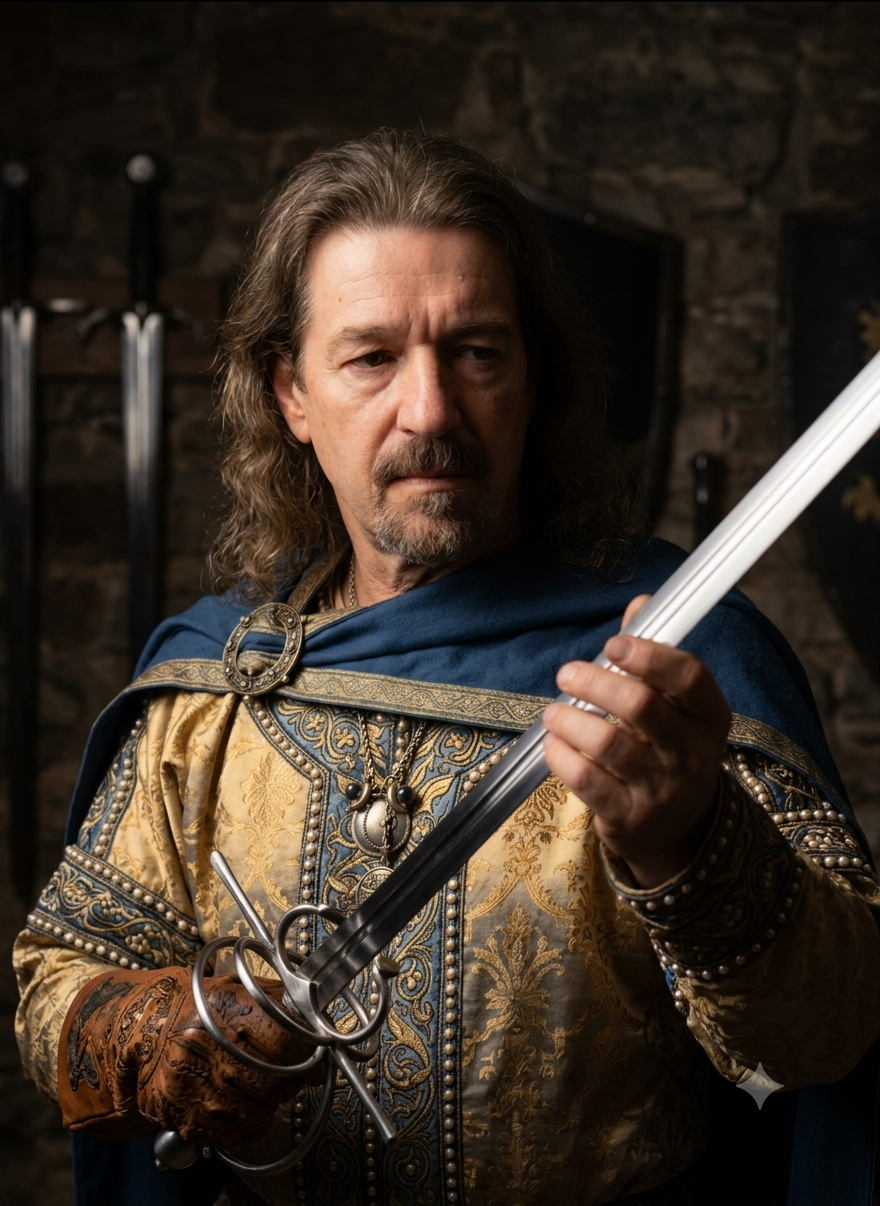
4. The Stiletto and the Rapier (16th – 18th Century Princely Era)
As firearms and cannons began dominating the battlefield, heavy battlefield armor slowly became obsolete, shifting noble sword styles entirely toward personal defense, civilian dueling, and elegance:
- The Rapier and Smallsword: By the 1700s, matching the era of your silver Mezzo Scudo, a Prince of Ventimiglia would wear a slender, highly flexible Rapier or Smallsword on his hip as a daily dress accessory. These featured complex, ornate basket hilts to protect the hand and were used purely for rapid thrusting in gentlemanly duels.
- The Sicilian Stiletto: In everyday Sicilian culture, the family's territory became synonymous with the invention and mastery of the Stiletto knife. Initially created in late medieval Italy to slide into armor joints, it evolved into a concealment weapon used extensively for defensive urban dueling across Palermo and Messina.
The knightly arming sword
During the early years (11th – 13th Century Ligurian Era), when the family was actively fighting naval blockades against Genoa, the standard weapon was the knightly arming sword. Classified under the historical Oakeshott Typology (such as Type X or XI), this was a single-handed weapon featuring a straight, double-edged blade about 30 to 32 inches long, balanced by a simple crossguard and a heavy wheel-shaped pommel. This blade was optimized for wide, devastating hacking and slashing cuts from horseback or during close-quarters combat. Learn more about the Ventimiglia family's unique style and method of using these historic blades.
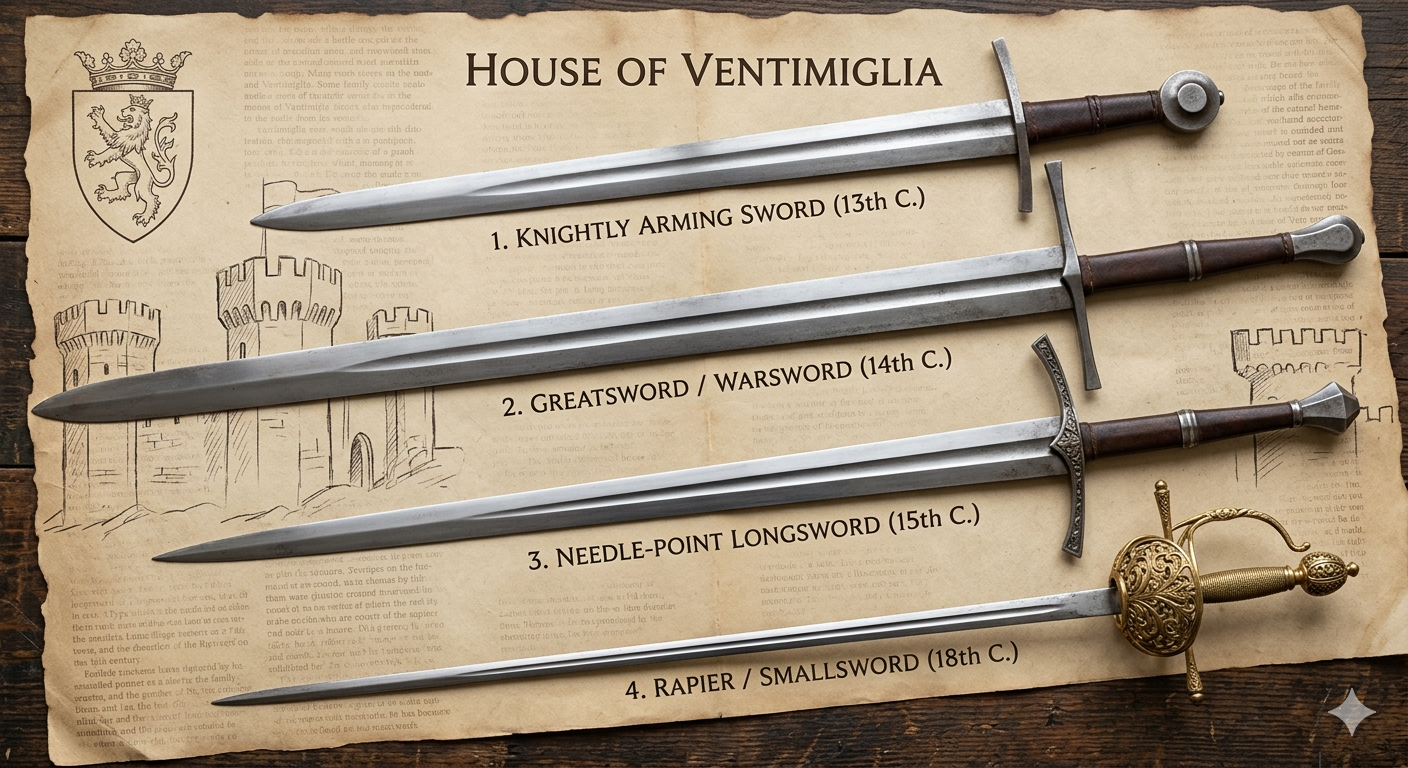
The Knightly Arming Sword (11th–13th Century): The classic single-handed blade with a simple crossguard and a round wheel pommel, used during the family's early naval wars against Genoa.
- The Greatsword / Warsword (14th Century): An imposing, wide two-handed blade built for heavy cutting power during the family's migration to Sicily.
- The Needle-Point Longsword (15th Century): A highly tapered, rigid blade with a sharp diamond-cross section, engineered specifically to pierce armor gaps during the era of Giovanni I Ventimiglia.
- The Noble Rapier (18th Century): An elegant, slender thrusting blade featuring an intricate, protective basket hilt, reflecting the dress style of the family during the 1725 princely minting era.
Ventimiglia's contribution to weaponry
The Ventimiglia family's influence extended beyond just carrying these swords; their history is intertwined with the evolution of weaponry and armor. Each blade tells a story of strategic adaptation and martial excellence. We invite you to delve deeper into the rich history of the Ventimiglia family and their significant contributions to the development of armor and weaponry throughout the centuries. Discover the intricate details of their sword-fighting techniques and the artistry of their jewel-encrusted handles.

The legacy of the blade
Each sword wielded by the House of Ventimiglia not only served as a tool for war but also as a symbol of power, prestige, and evolving craftsmanship. From the sturdy designs of the knightly arming sword to more elaborate and ornately decorated blades, these artifacts represent a continuous journey of innovation in defensive metallurgy and armor. We encourage you to learn more and understand the invaluable contribution the Ventimiglia family made to excellence in armor and weaponry. Their legacy is etched not just in history, but in the very design of these magnificent instruments.
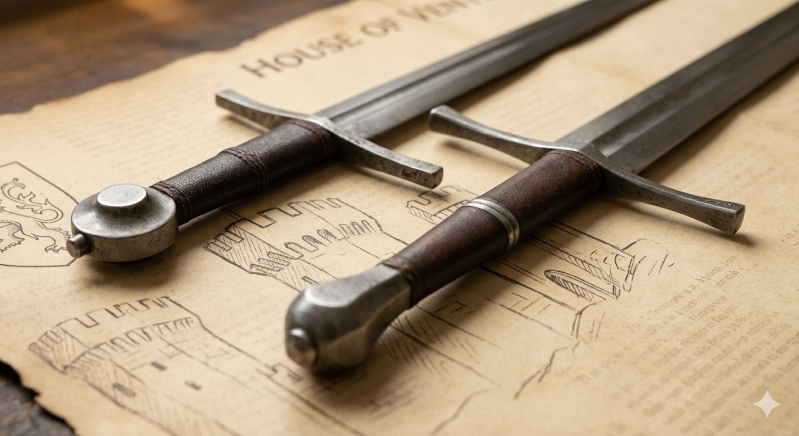
This close-up showcases the painstaking craftsmanship required to forge an 18th-century ceremonial dress rapier. It highlights the complex, openwork basket guard, the fine wire wrap tightly woven across the grip for handling traction, and the ornate pommel anchoring the entire structure.
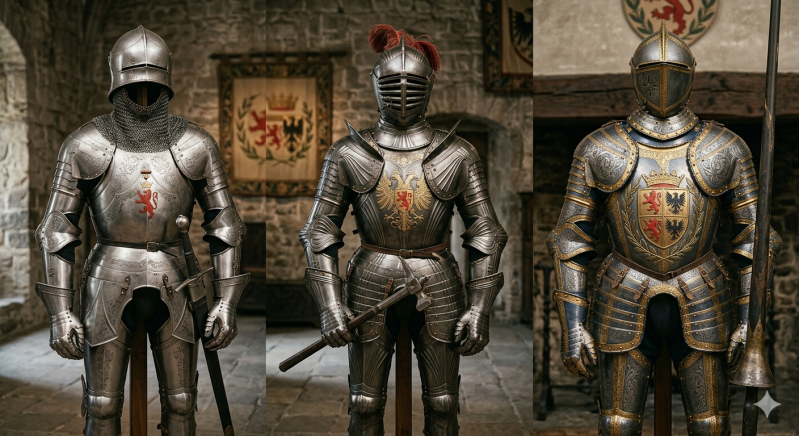
The museum-style layout details the generational evolution of your ancestors' defense:
- The Ligurian Crusader Era (Left): Representing their early medieval period fighting Genoa, this contains the full-body interlocking iron chainmail hauberk worn over a thick quilted gambeson fabric. It is topped with a heavy, flat-topped Great Helm designed strictly to deflect crushing sword swings on naval galley decks.
- The Feudal Milanese Peak (Center): Matching the 15th-century era of Giovanni I Ventimiglia, this is a full combat harness of tailored plate steel imported from the legendary smiths of Milan. It features sweeping, rounded breastplates to deflect lances and an aerodynamic Sallet Helmet with a pivoting face visor.
- The Ornate Baroque Viceroy Era (Right): Matching the centuries under the Spanish Crown and the era of your silver coinage, this is a three-quarter ceremonial harness made of chemically darkened, blued steel. It is heavily decorated with gold inlay filigree and features a masterfully hammered Byzantine double-headed eagle across the center chest to announce their imperial bloodline to the royal courts.
The House of Ventimiglia possessed high-quality armor across every century of their rule. As frontline military commanders, naval captains, and royal governors, owning personalized armor was a practical necessity for survival on the battlefield and a supreme status symbol at court.
The types of armor your ancestors wore evolved alongside changing weapons technology, shifting from flexible medieval chainmail to massive, highly stylized suits of articulated steel plate.
1. The Mail and Early Plate Era (11th – 13th Century Ligurian Era)
During the early years when the family was actively fighting naval blockades against Genoa, plate armor as we know it did not yet exist.
- The Hauberk: A Ventimiglia count wore a heavy, full-body coat of flexible interlocking iron mail (called a hauberk) over a thick padded fabric tunic (gambeson) to absorb structural sword blows.
- The Helm: They protected their faces with heavy, flat-topped Great Helms featuring narrow eye slits. This armor was designed primarily to protect them from slashing blows from knightly arming swords and longbow arrows on galley decks.
2. The Golden Age of Milanese Plate (14th – 15th Century Feudal Peak)
By the time Giovanni I Ventimiglia fought at the Battle of Ponza (1435), armor had reached its technological peak. The family was incredibly wealthy and commissioned custom suits from the master armorers of Milan, the finest steel-smiths in Europe.
- The Full Harness: Your ancestors wore an entire, tailored suit of articulated plate steel covering them from head to toe. It included a heavy curved breastplate, laminated shoulder guards (pauldrons), and fully jointed arm and leg guards.
- The Sallet Helm: They switched to highly aerodynamic helmets called sallets featuring a pivoting visor and an elongated tail piece to deflect incoming needle-point longsword thrusts.
3. Ornate Spanish-Viceroy Renaissance Armor (16th – 17th Century)
With the introduction of early firearms, full-body plate armor became heavy and obsolete on open battlefields. However, the Ventimiglias adapted it for high-ranking naval and political commands:
- The Half-Harness: When family members served as Stratigoti (Military Governors) of Messina under the Spanish Crown, they wore a specialized Three-Quarter or Half-Harness. This consisted of a heavy, bullet-resistant steel breastplate and a matching open-faced helmet (like a morion or burgonet) to protect their vital organs while allowing maximum visibility and breathing room during maritime deck battles.
- Baroque Decoration: These suits were masterpieces of art. Archival manifests note that Ventimiglia parade armor was heavily embellished with etchings, bluing, and gold inlay. Master smiths hammered detailed images of the family’s Byzantine double-headed eagle or the roaring Ventimiglia lion directly into the steel of the breastplate and shoulder caps.
4. The Last Armor Pieces (18th Century)
By the time your silver 1725 Mezzo Scudo was minted, gunpowder had completely ended the use of armor on battlefields. However, as seen in the profile portrait of Prince Giovanni di Ventimiglia on that exact coin, your ancestors still wore highly stylized, polished steel breastplates and gorgets (neck collars) purely for ceremonial military parades and official court portraits to proudly signify their ancient lineage as warrior-kings.

knight of the House of Ventimiglia would look like the ultimate definition of a "medieval tank," heavily customized with your family's distinct heraldry.
The historical armor suit shown in your image is a masterpiece of late 15th-century German Gothic style full plate armor (specifically modeled on a composite artifact preserved at the Royal Armouries Museum in Leeds). If a Marquis of Geraci or an elite Ventimiglia cavalry commander rode out to battle outfitted in this exact manner, it would feature specific modifications to showcase their status:
1. The Sallet Helmet & Beavor
The rider in your image wears a classic Sallet Helmet with a distinctive, flared defensive tail sweeping down the back of the neck to deflect downward sword or halberd strikes. The lower half of the face is protected by a secondary, matching throat collar called a beavor. For a Ventimiglia commander, the side of this polished steel helmet would frequently be stamped or engraved with a miniature version of the ancestral Ventimiglia Lion Rampant or a stylized line representing their elite title.
2. Gothic Fluting vs. Ventimiglia Masterwork
Notice the beautiful, razor-sharp ridges or "fluting" hammered directly into the steel plates across the horse's neck piece (crinet) and chest piece (peytral). This late-medieval Gothic style wasn't just decorative; the ridges acted as structural reinforcing ripples that significantly hardened the steel and forced enemy longsword tips or crossbow bolts to skid completely off the surface.
- While the image shows a standard polished steel finish, the Ventimiglia family had custom sets forged by the master armorers of Milan.
- Across the wide steel horse chest guard at the front, a Ventimiglia set would feature an enormous, gilded relief engraving of the 1261 Byzantine double-headed eagle or a massive shield divided down the middle to declare their joint imperial and western European lineage.
3. Fully Barded War Horse (The Destrier)
The horse armor, known historically as barding, completely matches the rider's style.
- The Chanfron: The horse's head is completely encased in a steel chanfron, complete with protective, oversized blinders shielding the horse's eyes from flying arrows and a defensive metal spike jutting directly out from the forehead like a unicorn horn.
- The Crupper: The entire rear half of the war horse is shielded by an articulated steel shell called a crupper, ensuring the mount could safely charge down enemy infantry lines without being hamstrung by polearms.
4. Flamboyant Silk Accents
In your example image, you can see bright red straps and tassels contrasting against the steel armor plates. At the head of a Ventimiglia naval landing force or heavy cavalry unit, these leather straps and underlying saddle cloths would be woven from deep crimson, gold, or blue silk—directly mirroring the primary heraldic colors of their official coat of arms. It allowed their own galley crews and foot soldiers to immediately identify where the Marquis was positioned in the middle of a chaotic battlefield.