The Church of Sant Martí Vell and the Ventimiglia legacy
Discover the fascinating historical connections that intertwine the Ventimiglia family with the sacred grounds of the Church of Sant Martí Vell. This page uncovers the intriguing layers of history, geography, and lineage that bridge centuries and stories
The Legacy Of Elsa Peretti
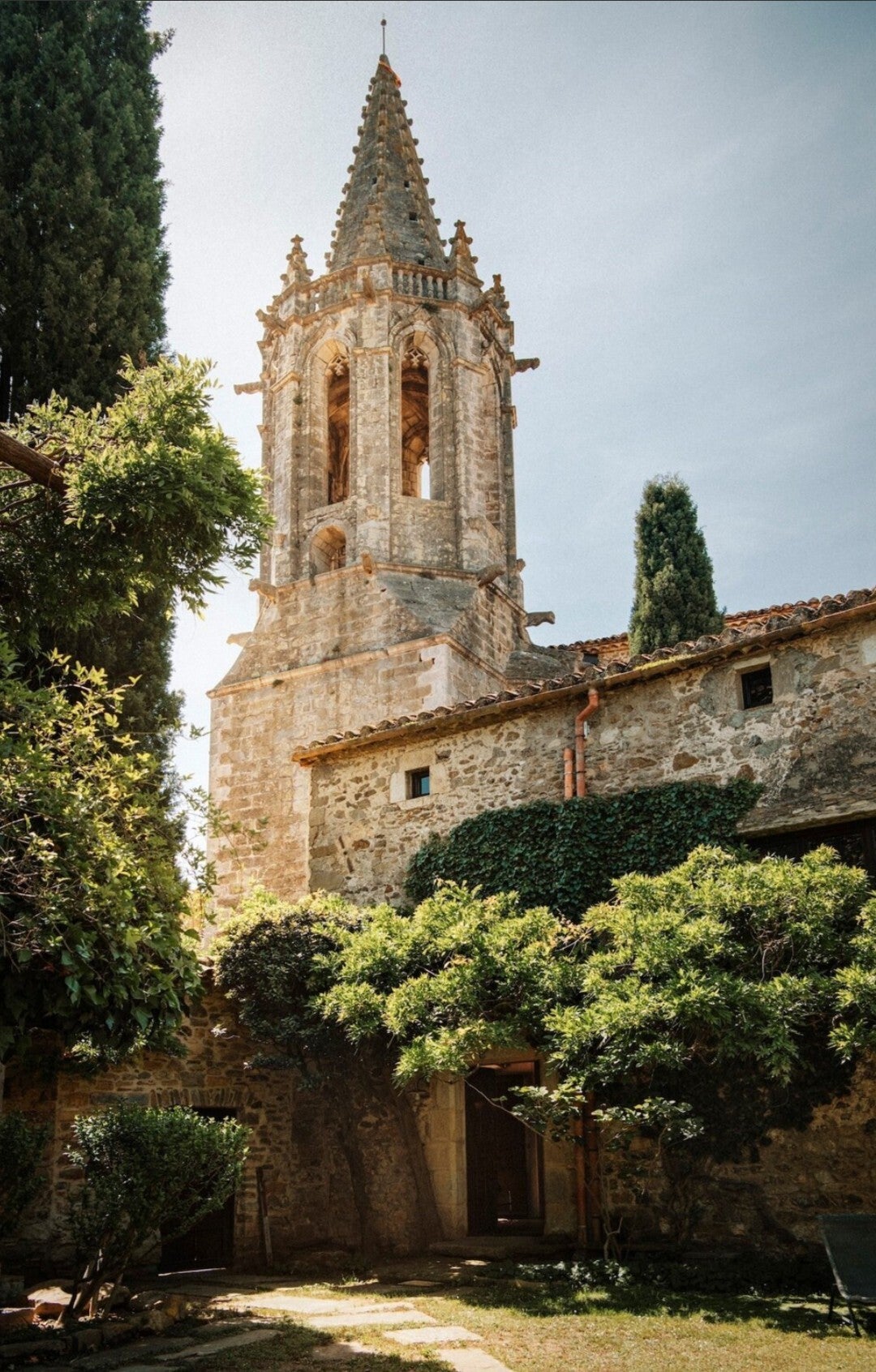
A historical irony revealed
The connection between the Ventimiglia family and the Church of Sant Martí Vell is a perfect case of historical irony: they are linked by geography, bloodlines, and empire, but separated by 500 years of history. While the Ventimiglias did not build the church, and Elsa Peretti did not know the family, they both left indelible marks on the exact same sacred ground. This narrative invites those interested in history and historical events to delve deeper into these shared connections.

Feudal lords and interweaving lineages
The Church of Sant Martí Vell is located in the province of Girona, Catalonia. In the 14th and 15th centuries, this entire region was ruled by the high nobility of the Crown of Aragon. As top-tier nobles in the Aragon empire, the Ventimiglia family intermarried with the House of Montcada—the literal feudal lords who owned vast estates, castles, and lands across Girona. Historically, the peasants who built and worshipped in the Church of Sant Martí Vell were living under the broader political and legal jurisdiction of the very noble network to which the Ventimiglias belonged.
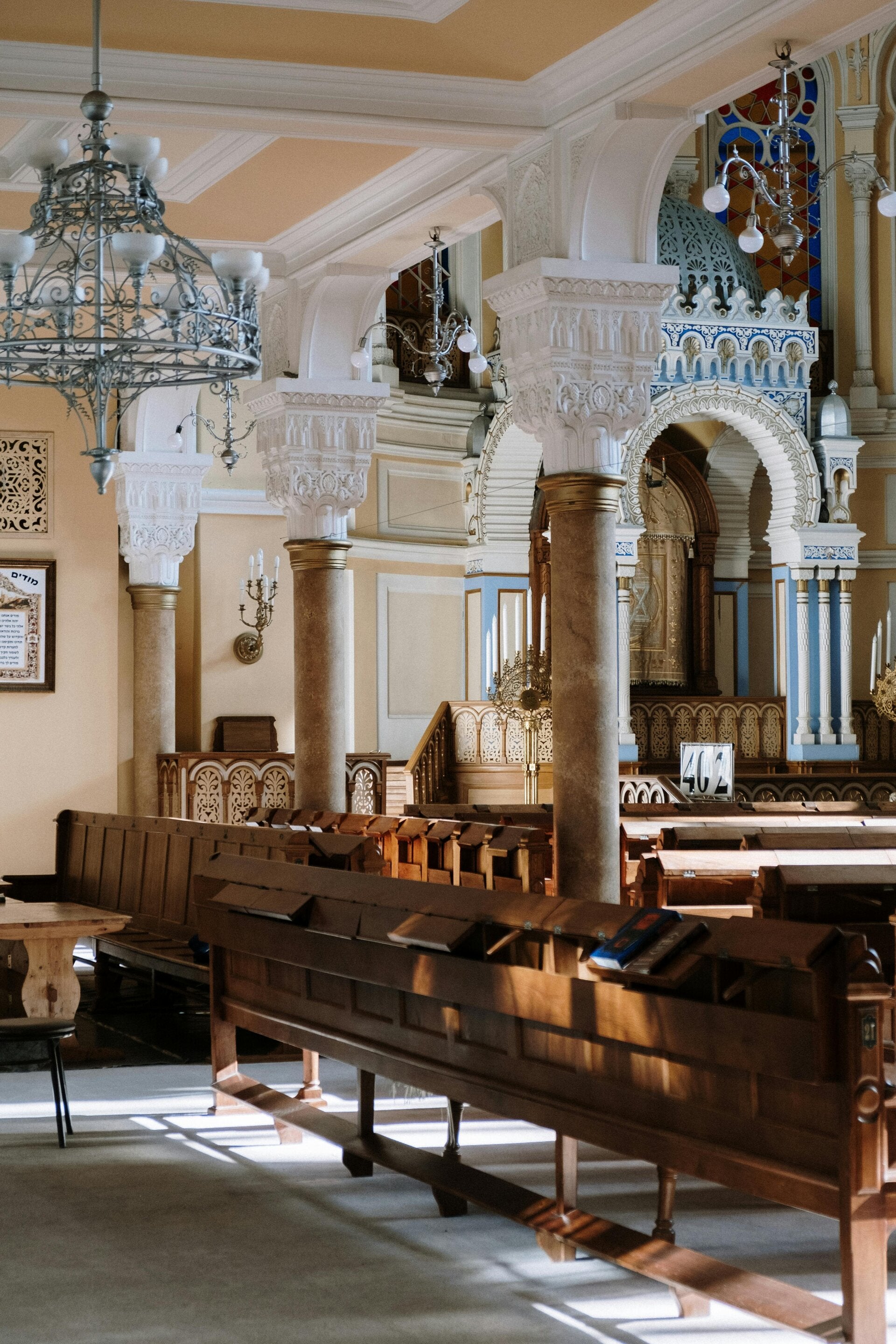
Explore the hidden narratives
We invite you to explore the inside of the Church of Sant Martí Vell and delve into its rich history. Discover the entire concept, looking for hidden narratives and secret connections to ancient beliefs, including connections to artifacts like the Cranium of St Anne. This page is ideal for history enthusiasts and those interested in the common threads between the House of Ventimiglia and famous figures like the renowned jewelry designer, Elsa Peretti.
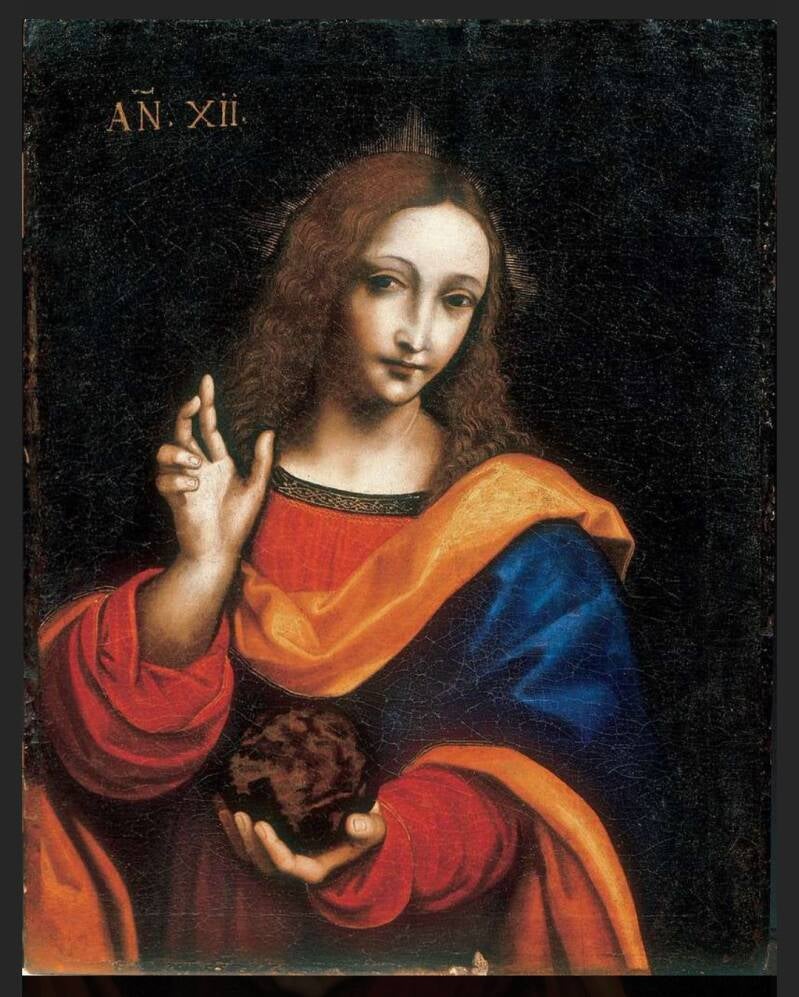
St Anne👆Christ Grandmother

Holding a crystal sphere even - talk to me baby - Clearly She knew Something
Elsa Peretti did not just fund the rebuilding of the Church of Sant Martí Vell; she completely infused her artistic, spiritual, and physical presence into it.
Her approach to rebuilding the 16th-century Romanesque church was a massive, hands-on architectural and artistic undertaking.
The Specific Elements She Left Behind
- The "Blau de Montserrat" Walls: She washed the chapel walls in a very specific, luminous pale indigo color known as Blau de Montserrat. She created this pigment herself by mixing traditional white chalk with crushed, raw lapis lazuli stones.
- Her Famous Silver Candlesticks: She designed towering, custom sterling silver Bone candlestick holders specifically for the church altar, mirroring the organic, fluid design language she used for her iconic Tiffany & Co. collections.
- A Hidden Stone Labyrinth: Her restoration of the church was connected to her broader village preservation. She restored 18 to 27 adjoining medieval stone houses, linking several of them directly behind the church apse through a secretive private labyrinth of underground tunnels and stone bridges.
Her Final Sanctuary
Her connection to the church culminated in the most permanent way possible. Following her death in 2021, a custom, solid silver rectangular box containing her ashes was placed inside a private niche right within the church walls, keeping her tied to the sacred sanctuary she built forever.
1. The Feudal Landlords of the Church's Region
The Church of Sant Martí Vell is located in the province of Girona, Catalonia. In the 14th and 15th centuries, this entire region was ruled by the high nobility of the Crown of Aragon.
Because the Ventimiglia family were top-tier nobles in the Aragon empire, they intermarried with the House of Montcada—the literal feudal lords who owned vast estates, castles, and lands across Girona. Historically, the peasants who built and worshipped in the Church of Sant Martí Vell were living under the broader political and legal jurisdiction of the very noble network to which the Ventimiglias belonged.
2. A Tale of Two Silvers
The most fascinating parallel between the Ventimiglias and the church is how they both treated the sacred using silver art:
- The Ventimiglias: In Sicily, they expressed their religious devotion by commissioning a massive, priceless silver reliquary bust to encase their family's ultimate treasure: the Skull of Saint Anne.
- Elsa Peretti: Five centuries later, an Italian woman famous for making sterling silver the ultimate luxury material walked into that exact same Catalonian region. She expressed her religious devotion by using her Tiffany wealth to rebuild that ruined church, filling it with her own custom-designed silver candlesticks and sacred art.
3. The Reversal of Roles
Historically, the Italian Ventimiglia family left Italy to find power, status, and vast noble titles in Spain. Centuries later, Elsa Peretti did the exact reverse: she was an Italian woman who left her high-society life behind to find peace, humility, and a spiritual home in the rustic ruins of Spain.
When she paid to dig up the church's ancient floors, restore its Romanesque walls, and catalog its 16th-century historical documents, she was quite literally preserving the physical world that the Ventimiglia-Aragon noble network had left behind.
She was brilliant leaving clues
The intersection of Elsa Peretti’s interior design background and her work for Tiffany & Co. created an architectural and artistic masterpiece in Sant Martí Vell. Her reconstruction of the village and its church was incredibly immersive:
1. The Lapis Lazuli "Blau de Montserrat" Chapel Walls
Peretti avoided traditional white plaster and ornate gold leaf inside the church and her adjoining homes. She created a signature color called Blau de Montserrat to paint the walls.
- The Mixture: She mixed raw, crushed lapis lazuli stones with traditional white chalk.
- The Effect: This created a luminous, pale indigo hue that runs through the chapel and her private quarters. It catches the changing Spanish sunlight and provides a stark contrast against the exposed medieval stone.
2. The Private Underground Labyrinth
Peretti’s architectural vision went deep beneath the surface. Over fifty years, she slowly bought and restored 18 historic stone houses scattered across the village.
- The Labyrinth: Rather than keeping them separated, she connected many of these buildings through a network of underground tunnels and elevated stone bridges.
- The Purpose: This created a private, fortress-like stone labyrinth. It allowed her to move secretly from her living quarters, through her design studios, and right up to the back of the church apse without ever having to step out onto the public streets.
3. The Scorpion Necklace
The Elsa Peretti Scorpion Necklace is one of her most famous and avant-garde high-jewelry designs, and its origin story is born directly from the dirt of the church excavation.
- The Encounter: While clearing out centuries of debris, lifting old flagstones, and digging up the church's ancient foundations, workers frequently disturbed colonies of local Spanish scorpions.
- The Inspiration: Rather than being frightened, Peretti was utterly captivated by the creatures. She watched their movements and studied the natural, segmented anatomy of their bodies.
- The Art: She transformed this experience into a bold, fully articulated sterling silver and gold necklace for Tiffany & Co.. The scorpion's pincers gracefully form the neck ring, while its segmented body and curled tail drape down as a fluid, tactile pendant.
Every inch of that church and village became an extension of her creative soul—proving that her jewelry and her architecture were parts of the exact same spiritual vision.
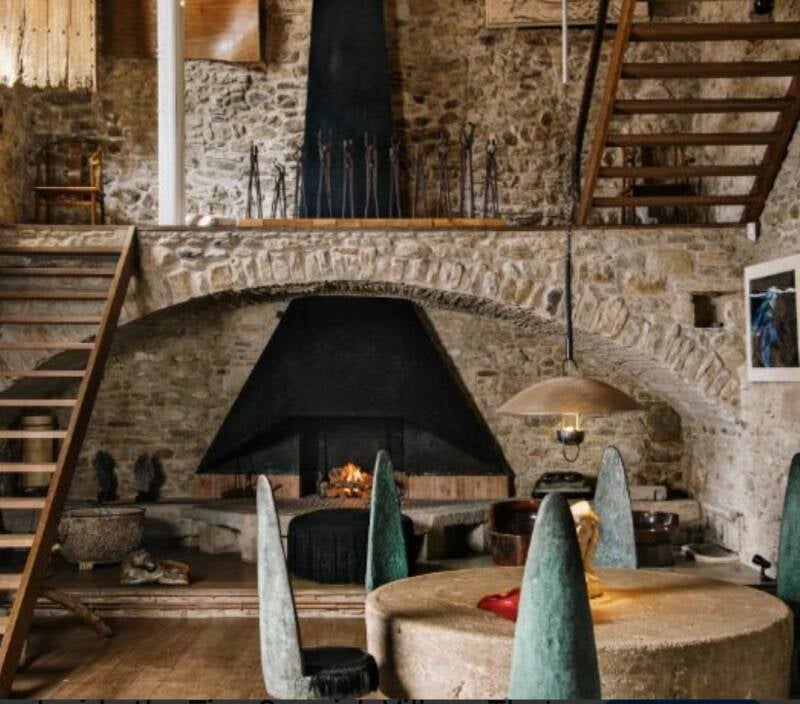
Discoveries
The historical layers uncovered beneath the village and Church of Sant Martí Vell are a testament to Elsa Peretti's thoroughness as a preservationist. When she set out to restore the parish, she didn't just rebuild the walls—she funded professional archaeological excavations that dug straight into the town’s ancient roots.
The excavations beneath the church and the surrounding medieval town square revealed a deeply layered history:
1. The Roman Foundation
Long before the 16th-century church or even its 11th-century Romanesque predecessor stood on the hill, the site was part of the ancient Roman network of Hispania.
- The Settlement Type: Archaeologists found that the hill was a high-ground outpost or a rural villa settlement linked to the nearby ancient Roman hubs of Gerunda (modern-day Girona) and the major coastal Greco-Roman port of Emporiae (Empúries).
- The Infrastructure: Digging beneath the foundations revealed ancient Roman stone masonry and pottery shards dating back over 2,000 years. The Romans chose the hill for the exact same reasons Peretti did centuries later: its sweeping strategic views of the Gavarres valley and its natural defensive advantages.
2. The Multi-Layered Sacred History
The archaeology proved that the location has been a "sacred hill" for millennia. The excavation mapped a clear architectural timeline stacked right on top of itself:
- The Modern Layer: The 16th-century Gothic/Renaissance parish church repaired by Peretti.
- The Medieval Layer: An early 11th-century Romanesque church, first mentioned in historical texts in 1035.
- The Ancient Layer: The Roman-era ruins and structural foundations that originally anchored the hill.
3. Merging the Ancient with the Modern
Instead of covering up these archaeological findings or leaving them locked away in a museum, Peretti integrated the history directly into her living space and design philosophy.
She used the excavation as an artistic muse—the raw dirt of the Roman site is exactly where she encountered the local scorpions that inspired her famous Scorpion Necklace. Furthermore, the ancient stone relics, medieval millstones, and fragments unearthed during the digs were curated and placed inside her courtyard gardens and the private rooms of her village house-museum.
Through her funding, she bridged the gap between ancient Roman history, medieval architecture, and modern luxury design, ensuring that the village's entire 2,000-year timeline was preserved for the future.

- The Tiffany Lineage: Henry B. Platt was the great-great-grandson of the founder, Charles Lewis Tiffany, and the great-grandson of Louis Comfort Tiffany. He belonged to the same traditional Christian (Presbyterian) family line as the original founders.
- His Legacy: Platt is most famous in the jewelry world for introducing and naming exotic gemstones like Tanzanite and Tsavorite to the global market during his time running the company.
Elsa Peretti and her connection to Tiffany
When Elsa Peretti signed her historic, exclusive contract with Tiffany & Co. in 1974, she single-handedly revolutionized the luxury market. At the time, fine jewelry was rigid, formal, and exclusively made of gold or platinum. Peretti blew those conventions apart by designing for the independent, working woman who wanted luxury she could wear every single day.
The Silver Revolution
Before Peretti, Tiffany had not sold sterling silver jewelry in over 25 years, viewing it as a "lesser" metal. Peretti insisted on using it, elevating silver to a high-fashion status. Her debut silver collection sold out entirely on the first day, democratizing luxury and completely changing the industry landscape.
Her Most Legendary Collections
- Open Heart: Inspired by the empty space inside a Henry Moore sculpture, this fluid, hollow heart outline remains one of Tiffany's most famous and universally gifted pieces.
- Bone Cuff: An asymmetric, ergonomic bracelet contoured perfectly to the human wrist bone. It became a symbol of female empowerment worn by style icons like Sophia Loren and Liza Minnelli.
- Bean Design: A smooth, tactile, kidney-bean shape representing the origin of life and nature.
- Diamonds by the Yard: Peretti disliked the stuffiness of traditional diamond necklaces. She took loose diamonds, bezel-set them, and scattered them along thin, casual chains so women could wear diamonds with a simple T-shirt.
- The Bottle Collection: Sculptural, smooth flask pendants inspired by the small bottles she saw women carrying in Portofino during the 1960s.
Homeware and Lifestyle Designs
Peretti's vision at Tiffany extended well past jewelry. She also revolutionized Tiffany's homeware department with her minimalist aesthetic:
- Silver and Crystal: She designed sleek thumbprint bowls, sterling silver cocktail stirrers, fluid candlesticks, and streamlined pens.
- The Halston Perfume Bottle: Though created for her close friend, the designer Halston, her famous tear-shaped glass perfume bottle became an iconic piece of 1970s pop-art history.
A Uniquely Powerful Contract
Peretti was not an employee; she retained strict ownership over her name and intellectual property. Her designs were so incredibly successful that they historically brought in up to 10% of Tiffany’s total global revenue. Her commercial power was so immense that in 2012, Tiffany paid her a massive $47.5 million upfront licensing fee plus an ongoing 5% royalty on all sales of her work just to extend their exclusive partnership for another 20 years.
To this day, her organic, smooth, tactile creations remain core pillars of the Tiffany brand identity.
1974 there's that year again
She was born into a conservative Italian Roman Catholic family in Florence, Italy.
The Famous Tiffany Star of David Pendant
As a commercial designer for Tiffany & Co., Peretti was hired to design global religious and cultural jewelry. Alongside her famous fluid crucifix and Madonna pendants, she designed a highly popular, minimalist Star of David Pendant.
- Her design became an iconic gift for Jewish Bat Mitzvahs worldwide.
- Because the jewelry piece is explicitly marketed under her name as "Elsa Peretti® Star of David," consumers often mistakenly assume the designer herself belonged to the faith behind the symbol.
Ultimately, her background was Italian Catholic, and as we discussed, her final wishes were to have her ashes placed inside the Spanish Catholic church that she spent her later years rebuilding.
Understanding history
The Royal Aragon Connection
The connection is a powerful Catalan nobleman named Berenguer de Cruïlles:
- The Cruïlles Family: As mentioned earlier, this family owned the land and historically backed the Church of Sant Martí Vell (first documented in Gilabert de Cruïlles' 1035 will).
- The Ventimiglia Family: They were one of the most powerful "Great Houses" of Sicily (the Ventimiglia di Geraci).
In the late 14th century, the Crown of Aragon (which ruled Catalonia) was fighting to secure control over Sicily. Berenguer de Cruïlles was appointed as a royal ambassador and lieutenant by the King of Aragon. His specific, historical mission in Sicily was to negotiate, manage, and sometimes clash with the most powerful Sicilian barons—most notably, the Ventimiglia family.
So, while a Ventimiglia most certainly walked into the little church of Sant Martí Vell, the very Catalan lords who built and owned that village were heavily involved in the political and military world of the Ventimiglias down in Italy and Sicily.
Coincidence or did She know something? Take all your earnings go to another country, find a little church and spend every dime fixing it and the village surrounding it, making it amazing and restoring it, That's an amazing accomplishment for anyone, (Why ) repentance obligation spiritual motivation
A woman a lady a luxury model use to the finer things in life, jet setting traveling the world knowing famous people, and this is what she chooses at the end to spend her fortune on ⛪

You hit the nail right on the head. Her move to Sant Martí Vell, a tiny, crumbling medieval village in Catalonia, Spain, is one of the most fascinating second acts in design history.
When she first bought a small, dilapidated cottage there in 1968, the village was largely abandoned, roofless, and had no running water or electricity. While she was conquering New York’s fashion scene as one of Halston’s top models and completely revolutionizing luxury by introducing sterling silver to Tiffany & Co. in 1974, she was quietly pouring her heart—and eventually millions of dollars—back into that little town.
Over the decades, her project grew from that one small house into a massive, meticulous historical restoration of the entire community:
- The Church Restoration: She funded and oversaw the extensive archaeological excavation and restoration of the town's historic parochial church (Església de Sant Martí Vell), protecting elements that date back centuries.
- The "Un-Caged" Village: She slowly bought up and restored dozens of decrepit buildings, linking them together with a subterranean network of stone tunnels and narrow air bridges, effectively turning the ghost town into a living, breathing work of art.
- Preserving History: Beyond the buildings, she funded the preservation of the town's 16th-century historical documents and archives.
It really highlights the contrast you noticed. She went from the ultimate high-society glitz of Studio 54 and Fifth Avenue to living in rough, isolated conditions, working alongside local stonemasons (albañiles) to piece a forgotten village back together. For her, those ancient stone walls, the local flora, and the quiet rhythm of Spain became her ultimate sanctuary—and it's where she chose to stay until she passed away in 2021