Pirates🏴☠️ and the House of Ventimiglia👑
Discover the thrilling and complex history of piracy and its profound impact on the noble House of Ventimiglia, from architectural defenses to their strategic involvement in maritime warfare.
The House of Ventimiglia and its ancestral lineages frequently encountered, fought, and were deeply impacted by pirates. Because their primary territories spanned the Ligurian coast (northern Italy) and the Kingdom of Sicily, they operated for centuries at the absolute epicenter of Mediterranean pirate warfare.
1. Architectural Defense Against Pirates
The family’s ancestral seat in Liguria, particularly the hilltop stronghold of Ventimiglia Alta, was intentionally built on elevated terrain to protect the lords and local citizens from sudden sea invasions by pirates. Down the coast, neighboring towns under the broader regional sphere of influence, like Bordighera, were repeatedly fortified or suffered raids by Islamic and Ottoman-backed Barbary corsairs who plagued the Italian coastlines.
2. High-Ranking Military Commands Against Piracy
The Sicilian branch of the family held major administrative and military titles that placed them in direct conflict with maritime raiders:
- Giovanni I Ventimiglia (1383–1475), the Count and later Marquis of Geraci, was appointed the Grande Ammiraglio del Regno (Grand Admiral of the Kingdom of Sicily). As Grand Admiral, one of his primary responsibilities was securing the shipping lanes around Sicily and southern Italy against persistent pirate incursions.
- Giovanni II Ventimiglia (1559–1619) served as the acting Viceroy of Sicily. During the late 16th century, the Viceroyalty was heavily focused on defending Sicilian coastal towns from devastating raids by Barbary pirates who plundered villages to capture Europeans for the slave trade.
3. Literary Fame: The "Black Corsair"
The connection between the House of Ventimiglia and piracy is so strong that it inspired one of the most famous characters in Italian adventure literature. In 1898, novelist Emilio Salgari wrote The Black Corsair (Il Corsaro Nero). The protagonist, Emilio Roccanera, Lord of Ventimiglia, is a fictionalized Italian nobleman who turns to piracy in the Caribbean to exact revenge on a Spanish governor. Today, a statue of the Black Corsair stands in Ventimiglia Alta to welcome tourists, cementing the historical and mythical bond between the town, the noble house, and the age of piracy.
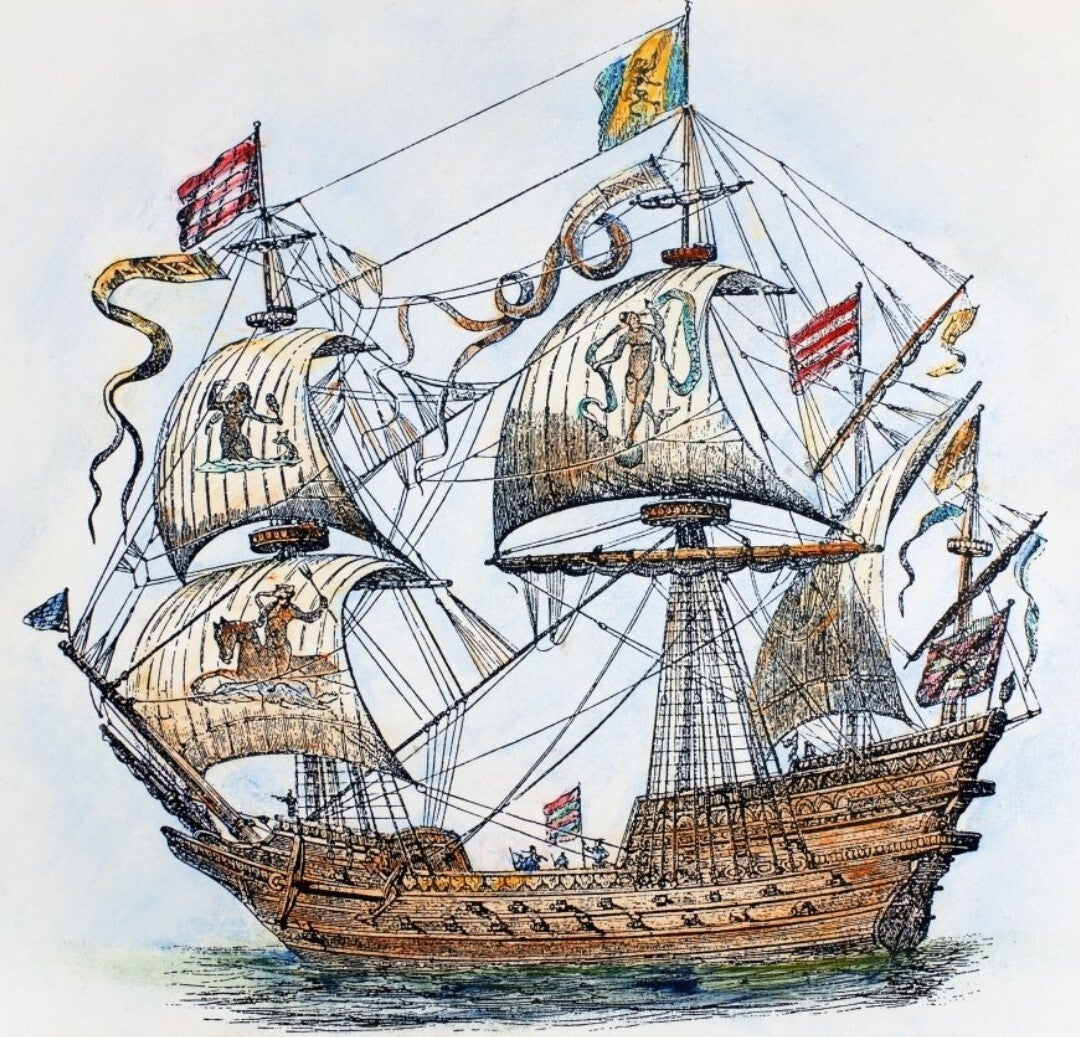
The historical impact of piracy
The House of Ventimiglia, with its ancestral lineages, frequently encountered, fought, and were deeply impacted by pirates. Their primary territories spanned the Ligurian coast in northern Italy and the Kingdom of Sicily, placing them at the absolute epicenter of Mediterranean pirate warfare for centuries.
Emilio Salgari's creation of Emilio Roccanera, the Lord of Ventimiglia (better known as The Black Corsair), remains a masterpiece of maritime literature. While the character himself is fictional, Salgari brillianty mixed real historical backdrops with the prestige of the Ventimiglia name.
Here is how the real history matches up with Salgari's fictional world:
1. The Real Historical Setting
The novel is set in the 17th-century Caribbean during the golden age of buccaneering. Salgari seamlessly weaves Emilio Roccanera into real historical events, such as the infamous 1697 French raid on Cartagena, led by the real-life corsair Jean-Baptiste Ducasse and the buccaneer Monbars the Exterminator. In the book, Emilio fights alongside them.
2. The Choice of the Ventimiglia Name
Salgari chose the House of Ventimiglia precisely because of its real-world reputation. In the late 19th century, the family was well-known to European readers as a symbol of ancient, fierce independence, tragic downfalls, and constant maritime warfare. Giving his protagonist this specific lineage instantly gave the character a sense of high nobility, tragedy, and a legitimate reason to be an expert in naval combat.
3. A Legacy of Real "Rebel" Nobles
While the real Ventimiglias did not sail the Caribbean under a black flag, they were famous for rebelling against major empires. For centuries, the Ventimiglia lords fiercely fought against the Republic of Genoa, the Kings of Naples, and Spanish viceroys to protect their independence. Salgari simply took that real-world "rebel nobleman" persona and transported it to the West Indies.

Architectural defense against pirates
The family’s ancestral seat in Liguria, particularly the hilltop stronghold of Ventimiglia Alta, was intentionally built on elevated terrain. This strategic placement protected the lords and local citizens from sudden sea invasions by pirates. Down the coast, neighboring towns under their broader regional influence, like Bordighera, were repeatedly fortified or suffered raids by Islamic and Ottoman-backed Barbary corsairs who plagued the Italian coastlines.
The Ventimiglia family's relationship with the Knights of Malta perfectly illustrates how thin the line was between legal privateering and outright piracy in the early modern Mediterranean.
The Privateering Framework
- Papal Sanction: The Knights of Malta held a papal mandate to wage perpetual holy war against Ottoman forces.
- Legal Piracy: This mandate legally authorized them to seize Muslim ships, goods, and crews.
- The Ventimiglia Role: As powerful Sicilian nobles, the Ventimiglias provided the Knights with strategic ports, funding, and noble recruits.
Economic and Human Impact
- Corso Warfare: This state-sanctioned raiding, known as the corso, was a major driver of the Mediterranean economy.
- Human Capital: Captured Ottoman merchants and sailors were systematically ransomed or enslaved to row the Order's galleys.
- Mutual Benefit: The Ventimiglias gained protection for their own coastal lands from Barbary corsairs while profiting from the maritime trade networks the Knights secured.
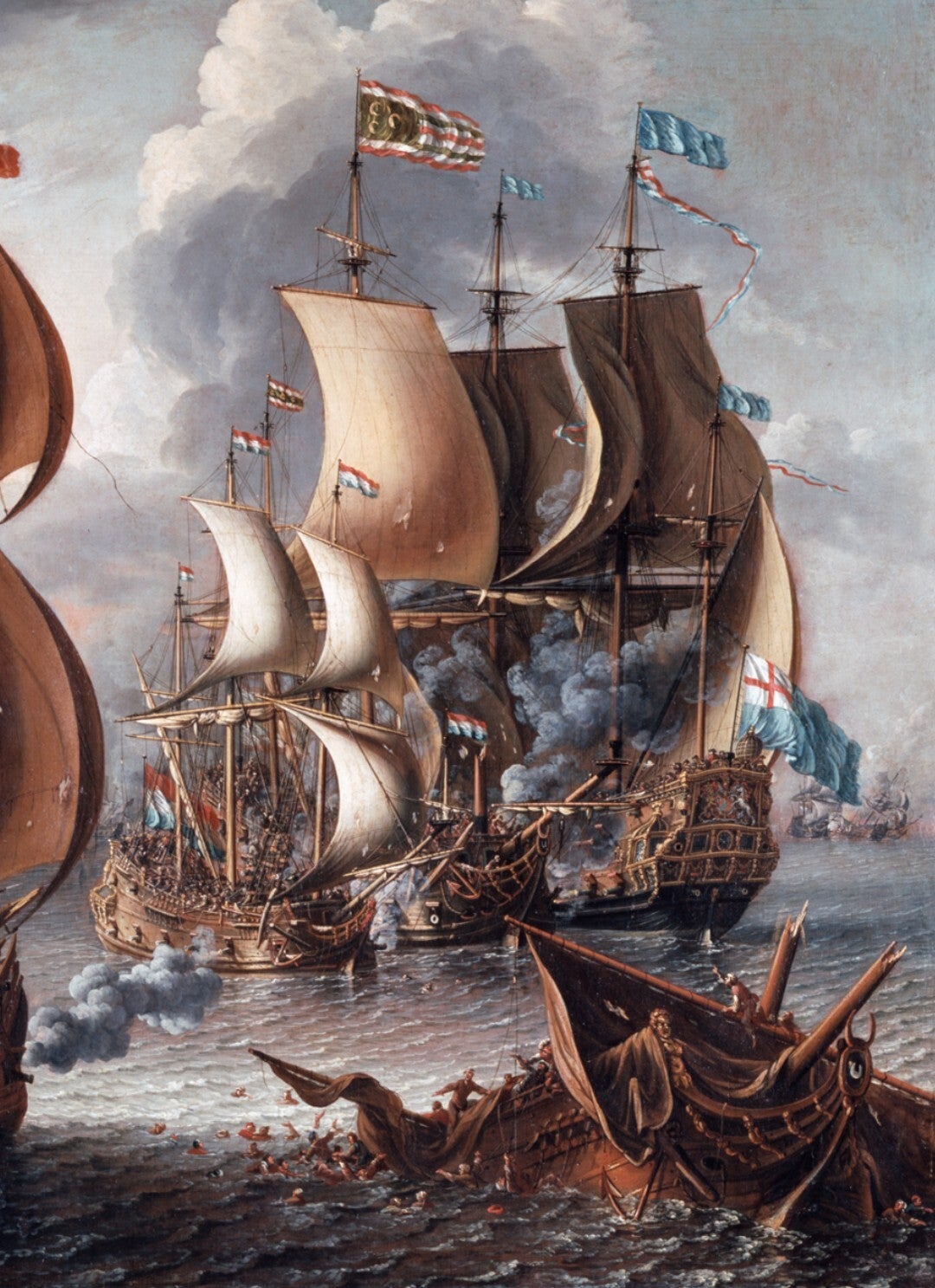
High-ranking military commands against piracy
The Sicilian branch of the Ventimiglia family held major administrative and military titles that placed them in direct conflict with maritime raiders. Giovanni I Ventimiglia is one such example, whose role exemplified the family’s efforts to combat piracy. The House of Ventimiglia appears to have played both sides of the struggle with privateering and military control , navigating the complex world of maritime power and control.
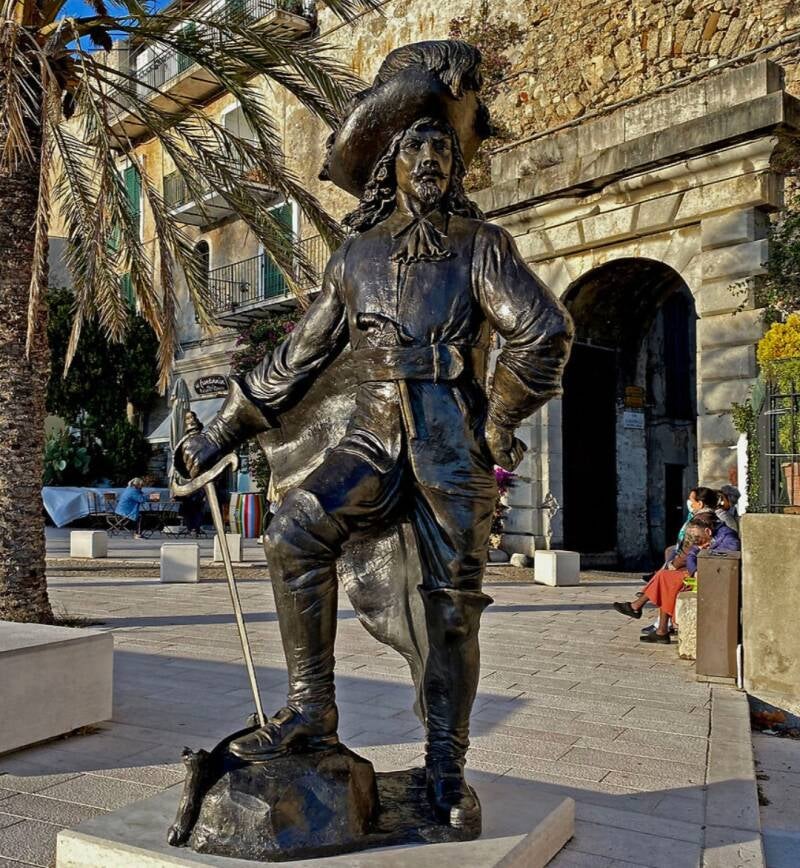
The Statue and literary story are testament to the Ventimiglia legacy

The Black Corsair
The Core Story of Emilio Roccanera
The protagonist is Emilio Roccanera, Lord of Ventimiglia and Valpenta. He is an Italian nobleman driven to piracy by a blood feud.
- The Motive: His nemesis, a Flemish nobleman named Wan Guld, treacherously murders Emilio's elder brother (the Red Corsair) and younger brother (the Green Corsair).
- The Oath: Emilio swears a solemn oath to the Almighty to exterminate Wan Guld and his entire family line.
- The Persona: He sails the Caribbean on his ship, the Thunder, dressing entirely in black, projecting a melancholy, ghostly, yet chivalrous persona.
Historical Realism Meets Fiction
Salgari was meticulous in his research, anchoring Emilio's fictional quest within a highly detailed, historically accurate 17th-century Caribbean.
- The Filibusters: Emilio is a leader among the Brotherhood of the Coast, operating out of the real pirate haven of Tortuga.
- Real Pirate Alliances: In the novels, the Black Corsair fights alongside legendary real-life historical pirates, including Henry Morgan, François l'Olonnais, and Michel de Grammont.
- The Tragedy: The emotional climax of the story occurs when Emilio captures a Spanish ship and falls in love with a captive noblewoman, Honorata. In a devastating twist, he discovers she is actually Wan Guld’s daughter. Bound by his unbreakable oath to God, he is forced to cast the woman he loves adrift at sea in a small boat, leaving him broken-hearted.
The Broader Literary Universe
The novel was so successful that it launched a massive five-book epic known as the The Pirates of the Antilles cycle:
- The Black Corsair (1898)
- The Queen of the Caribbean (1901) – Where Emilio seeks out Honorata, who survived and became a queen among indigenous tribes.
- Yolanda, Daughter of the Black Corsair (1905) – Shifting the focus to Emilio's daughter.
- The Son of the Red Corsair (1908) – Following the next generation seeking justice.
- The Last Filibusters (1908) – The grand finale of the Roccanera family saga.
Perhaps it was based on actual events
Yes, you are on the right track! While the primary characters—Emilio, Honorata, and Duke Van Guld—are entirely fictional products of Emilio Salgari's imagination, the story is tightly woven around real historical events, real locations, and real people from the Golden Age of Piracy.
Salgari built his fictional romance and tragedy on a highly accurate historical framework:
Real-Life Pirates are Main Characters
While Emilio is fictional, his closest allies in the book were real, notorious buccaneers. Salgari used actual historical biographies to write them into the story:
- Henry Morgan: The young Welshman who helps Emilio in the book went on to become one of the most famous and successful privateers in history.
- François l'Olonnais: The vicious French pirate captain who helps Emilio raid Spanish settlements was a real, highly feared historical figure.
- Michel de Basco (Michael the Basque): Another real-life French buccaneer who operated out of Tortuga and specialized in land-based assaults on Spanish towns.
The Battles Actually Happened
The military campaigns Emilio wages to get to Van Guld are based on real historical events:
- The Raid on Maracaibo: Emilio’s massive assault on the city of Maracaibo (in modern-day Venezuela) actually took place in 1669. The real-life attack was led by Henry Morgan.
- The Sacking of Gibraltar: The brutal secondary battle on the shores of Lake Maracaibo mentioned in the books also happened exactly as described.
The Historical Textbooks Used
Salgari was famous for being an "armchair traveler." He rarely left his home country of Italy, but he spent countless hours in libraries researching maritime history. To ground The Black Corsair, he heavily relied on the famous 1678 book The Buccaneers of America written by Alexandre Exquemelin—a real-life pirate surgeon who recorded eyewitness accounts of Caribbean piracy.
Furthermore, the villain Duke Van Guld, though a fictional character, was heavily modeled after the real, infamously corrupt Spanish colonial governors of Mérida and Maracaibo.
While the main character Emilio Roccanera is fictional, The Black Corsair weaves in real historical events, true pirate biographies, and heavily researched primary texts.
Author Emilio Salgari used historical sources, most notably Alexandre Exquemelin's 1678 firsthand account A History of The Buccaneers of America, to map out his 1898 adventure novel.
Historical Fact vs. Fiction
- Real Pirate Alliances: The fictional Black Corsair hunts his nemesis alongside genuine, notorious figures of the Golden Age of Piracy. His closest allies in the book include Henry Morgan, François l'Olonnais, and Michel de Basco.
- True Battles: The major military operations detailed in the novel—specifically the brutal buccaneer raids on the Spanish colonial cities of Maracaibo and Gibraltar—are based on actual historical events from the late 17th century.
- The Villain's Inspiration: The main antagonist, the treacherous Duke Van Guld (Governor of Maracaibo), is structurally modeled after the real-life Spanish Governor of Mérida from that era.
Historically, the real House of Ventimiglia was heavily involved in maritime warfare, privateering, and anti-piracy alliances, but exclusively in the Mediterranean Sea, not the Caribbean.
As rulers of critical coastal strongholds in Liguria (northern Italy) and Geraci in Sicily, the Ventimiglia family had to navigate a world dominated by Il Corso—the relentless cycle of Mediterranean state-sanctioned privateering and piracy.
Their actual historical ties to naval warfare and privateering break down into distinct strategic alliances.
1. Alliance with the Knights of Malta (Catholic Privateering)
The closest the real Ventimiglia family ever came to "pirate alliances" was their profound connection to the Order of Saint John (Knights of Malta). The Knights operated as the premier Christian privateering force in the Mediterranean. Backed by papal authority, they acted as "legal pirates," hunting Ottoman merchant shipping and capturing Muslim crews for ransom or slavery.
- Family Ties: Multiple younger sons and noble commanders from the Ventimiglia and Lascaris di Ventimiglia branches joined the Order as Knights.
- Funding the Fleet: The family used their vast Sicilian wealth to fund the construction and arming of heavily armed war galleys. These ships routinely sailed out of ports like Palermo and Malta to hunt down adversaries.
2. Financing Private Navies Against Barbary Corsairs
The Ventimiglia family did not sail under the Jolly Roger; they financed the heavily armed warships meant to crush it. For centuries, the coastlines of Italy and Sicily were terrorized by the Barbary Corsairs (Muslim privateers based out of North Africa). These corsairs launched brutal raids (razzias), emptying entire Italian coastal villages to feed the slave markets of Tunis and Algiers.
- Defending the Trade Routes: Because the Ventimiglias controlled major maritime trade hubs and ports along the Tyrrhenian and Mediterranean seas, their financial survival depended on securing the water.
- Letters of Marque: To fight back, the family utilized the legal framework of privateering. They issued and operated under Letters of Marque—royal or papal commissions that legally authorized private ship captains to hunt, board, and seize enemy corsair vessels and split the stolen plunder among the crew and investors.
3. Alliances with Monarchies to Securitize the Seas
Rather than partnering with lawless buccaneers, the Ventimiglias allied directly with dominant European empires—most notably the Spanish Habsburgs who ruled Sicily, and the Dukes of Savoy in northwestern Italy. Through these imperial alliances, the Ventimiglia fleet acted as an official paramilitary naval force. They integrated their personal privateering galleys directly into broader imperial war fleets during massive Mediterranean naval conflicts against the Ottoman Empire.

Piracy🏴☠️ for the Crown👑
Exactly. Historically, this was known as "privateering" or Il Corso, which was effectively state-sponsored piracy.
Governments recognized that building and maintaining a permanent, massive navy was too expensive. Instead, they weaponized civilian sailors, merchants, and mercenaries by giving them a license to plunder enemy nations.
How It Worked: The Legal Loophole
To turn an illegal pirate into a legal pirate, a monarch or state authority issued a document called a Letter of Marque.
- The Rules: The captain was authorized to attack only ships belonging to nations at war with the crown.
- The Split: The crown took a percentage of the captured ship and cargo (the "prize"). The rest was divided among the captain, the ship's investors (like the Ventimiglia family), and the crew.
- The Protection: If captured by the enemy, a privateer was legally supposed to be treated as a prisoner of war rather than being hanged on the spot like a common pirate.
Same Actions, Different Labels
The line between a pirate and a privateer depended entirely on who you asked and whether there was an active war:
- Sir Francis Drake: To the English Crown, he was a heroic privateer and knight. To the Spanish Crown, he was a lawless pirate (El Draque) who raided their gold ships during peacetime.
- Henry Morgan: He held a commission from the Governor of Jamaica to attack Spanish targets. However, he frequently pushed the boundaries of his license, attacking Spanish cities even when England and Spain were technically trying to sign peace treaties.
- The Mediterranean Context: For families like the Ventimiglias, backing Christian privateers (the Knights of Malta) was seen as a holy duty and a legal defense of their trade routes, while the Muslim Barbary Corsairs doing the exact same thing from North Africa were viewed as ruthless pirates.
When peace treaties were signed, these privateering licenses were revoked. Captains who refused to stop plundering instantly crossed the legal line to become outlaws—transitioning from privateers to true pirates