The Ventimiglia family and the sea
Explore the critical role maritime power played in the survival, wealth, and expansion of the Ventimiglia family. Their strategic location on the Ligurian coast necessitated a strong seafaring presence, shaping their history through defense, trade, and conflict. We invite historians, educators, and religious leaders to delve into this fascinating aspect of their legacy.

Ligurian dominance: war and trade
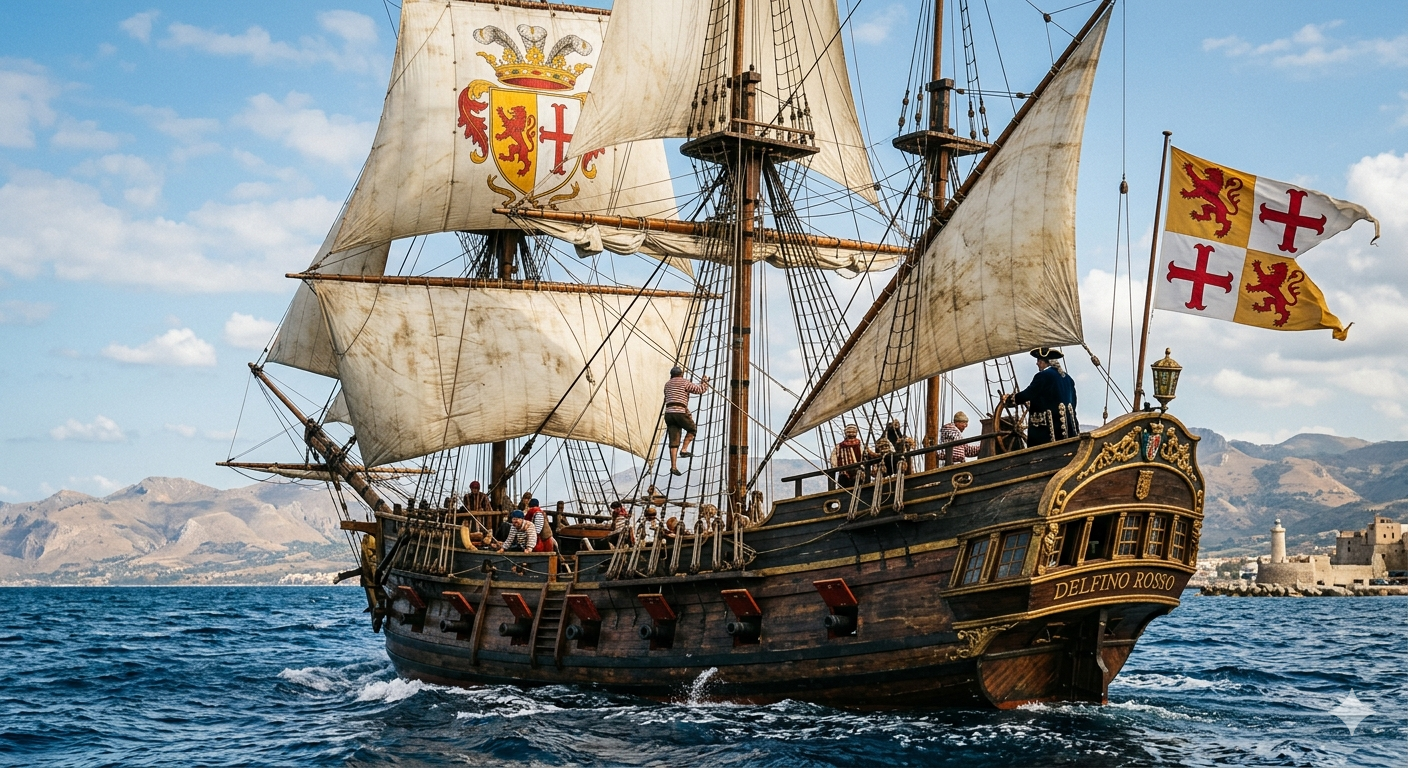
From the 11th through the 13th centuries, the Counts of Ventimiglia were masters of war galleys and merchant vessels. Their fleets were essential for protecting coastal strongholds from rival powers and pirate raids. However, their maritime ambitions inevitably led to violent conflict with the Republic of Genoa, which sought to monopolize Ligurian sea trade. Genoa's eventual siege and capture of Ventimiglia in 1251 severely curtailed the family's local naval power, forcing a shift in their maritime strategy.
Sicilian migration: privateers and ship-owners
After significant challenges in Liguria, the Ventimiglia family began a crucial migration to Sicily. Here, they re-established their influence, not just as landowners but also as formidable privateers and shrewd ship-owners. This strategic move allowed them to continue their involvement in Mediterranean affairs, leveraging their maritime expertise in a new and dynamic environment. Their role in trade, warfare, and conquest across the region highlights their enduring impact.
A call to discover more
This page is crafted for historians, professors, educators, and religious leaders eager to understand the depth of the Ventimiglia family's influence. Their maritime endeavors are a testament to their adaptability and strategic prowess. We encourage you to explore the rich history of this noble family and their significant contributions to the Mediterranean world. The Ventimiglia family played a significant role in the region, including trade, war, and conquest.
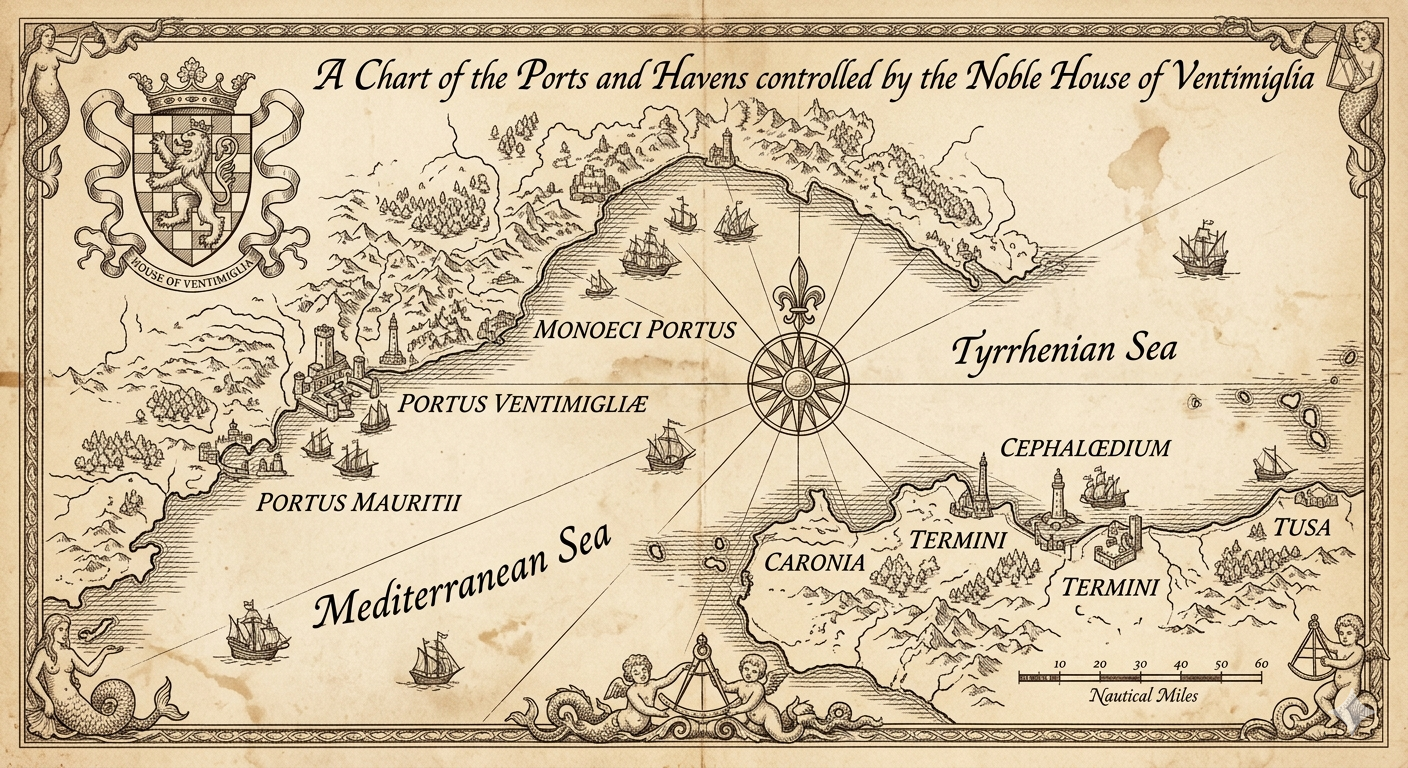
The House of Ventimiglia exerted strategic control over several critical maritime ports, moving their operations as their geopolitical focus shifted from northern Italy down to Sicily.
1. The Original Ligurian Ports
Before the family lost total sovereignty of their homeland to the Republic of Genoa, they controlled a crucial stretch of the Italian Riviera.
- The Port of Ventimiglia: Located at the mouth of the Roia River, this was their primary naval hub. It was an essential stop for ships sailing between Genoa, Monaco, and Nice, France.
- Sanremo and Menton: During their peak rule in Western Liguria, they controlled coastal territories stretching past Sanremo toward Menton (now in France), managing the local docks, boat building, and fishing rights.
2. The Sicilian Ports (The "Semi-Kings" Era)
When the family migrated to Sicily and became incredibly wealthy, they established a massive feudal state known as the County of Geraci in the northern mountains (the Madonie). To export their massive agricultural and timber wealth, they controlled several vital northern maritime ports:
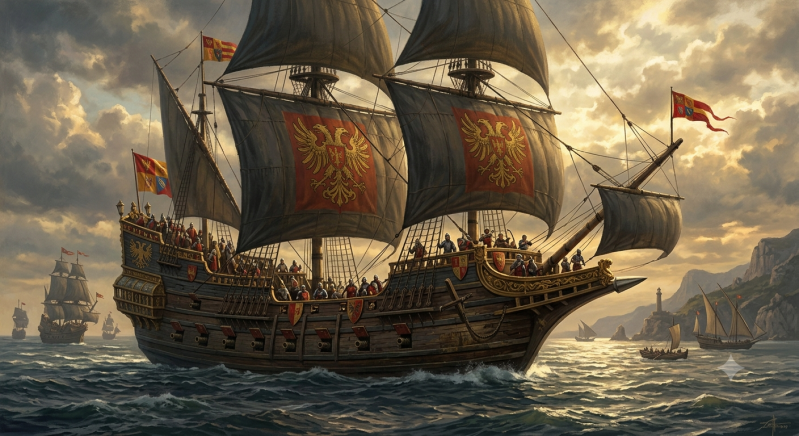
The naval history of the House of Ventimiglia spans over seven centuries, evolving from a front-line defense force on the Italian Riviera into a commercial and military powerhouse in the Kingdom of Sicily. Because they ruled independent coastal territories, their survival depended entirely on their ability to commission, build, and command fleets [County of Ventimiglia].
The history of the Ventimiglia fleet can be divided into three distinct eras:
1. The Early Ligurian Fleet (10th–13th Century)
During their early era in Northern Italy, the family’s ships were built for coastal defense, regional trade, and territorial expansion along the Italian and French Rivieras [County of Ventimiglia].
- The Ship Types: The fleet primarily consisted of early medieval war galleys (slender, rowed vessels built for speed and ramming) and tarides (shallow-draft horse transports used to move troops quickly along the coast).
- Privateering and Sovereignty: Operating out of the Roia river port in Ventimiglia, the family operated as sovereign lords who frequently authorized privateer actions. They used their fleet to intercept foreign trade vessels and extract customs duties from any ship passing between France and Italy.
- The Death Match with Genoa: The primary function of this fleet eventually became fighting off the expansion of the Republic of Genoa. For over two centuries, the Ventimiglia fleet engaged in brutal hit-and-run naval skirmishes, blocking Genoese trade until Genoa brought a massive fleet to permanently blockade and capture the port of Ventimiglia in 1251.
-
- Admirals of the Realm: Multiple members of the House of Ventimiglia were appointed by the Spanish Crown as Stratigoti (military governors) of Messina and Palermo, giving them direct strategic command over the official Sicilian galley fleets.
- Anti-Piracy Galleons: During the height of the Barbary pirate raids in the Mediterranean, the Ventimiglias outfitted heavily armed Galleons and Galliasses equipped with broadside cannons. These ships patrolled the Tyrrhenian Sea to defend the Sicilian coastline from Ottoman-backed privateers.
- The Knights of Malta Connection: Younger sons of the Ventimiglia lineage frequently joined the Knights Hospitaller (Knights of Malta). They personally financed and commanded heavily armed war galleys under the Maltese cross, engaging in continuous naval warfare across the Eastern Mediterranean.
2. The Sicilian Fiefdom Fleet (14th–15th Century)
After losing their independence in the north, the Ventimiglia family migrated to Sicily [County of Ventimiglia]. As the Counts of Geraci and later Princes of Castelbuono, they grew into "semi-kings," and their naval operations shifted from desperate defense to massive commercial enterprise.
- The "Nave" and "Galea": In this golden era, they funded larger, deep-sea vessels called Naves (large, high-walled sailing ships capable of carrying massive cargo) alongside standard war galleys to protect their trade routes.
- The Agricultural Supply Line: The Ventimiglias weaponized their northern Sicilian ports (Cefalù, Caronia, and Tusa) to export the immense wealth of their inland territories. Their merchant fleet held a near-monopoly on transporting Sicilian wheat, raw sugar, and silk to the markets of the Crown of Aragon in Barcelona, Valencia, and Majorca.
- The Timber Fleet: The family directly owned the mountain forests of Caronia. They used a dedicated fleet of heavy transport vessels to ship massive oak and pine logs directly from the Caronia shoreline to naval shipyards in Palermo and Spain, making them indispensable to the royal Aragonese navy.
3. The Royal Command and Private Navies (16th–17th Century)
By the early modern period, the Ventimiglia family had fully integrated into the highest rungs of Spanish-Sicilian governance. They no longer just commanded a private family fleet; they commanded the state navy.
⚓ The Admirals of Ventimiglia
The most notable naval authority in the family lineage belongs to Enrico II di Ventimiglia and his successors, who secured the highly influential title of Grand Admiral of the Kingdom of Sicily.
- The Role: This office granted them total command over the Sicilian military fleets, the right to collect maritime taxes, and the authority to issue privateering licenses to counter Ottoman and Barbary corsairs.
- The Territory: Operating primarily out of fortified maritime strongholds like Cefalù and their vast fiefdoms in the Madonie mountains, their ships effectively secured the Tyrrhenian Sea lanes.
-
🗺️ Schematic 1: The Sicilian Galley (Galea)
-
- Oar Layout: Typically featured 24 to 30 rowing benches per side, arranged in the alla sensile system (three rowers sharing one bench, each pulling their own independent oar).
- Rigging: Equipped with one or two lateen (triangular) sails on forward-raked masts, optimized for capturing unpredictable Mediterranean winds.
- Ram & Spur (Sperone): A heavy wooden projection at the bow used to break enemy oars and board opposing ships rather than sinking them outright.
-
💣 Schematic 2: Naval Cannons & Bombards
As the family's regional dominance transitioned into the 15th and 16th centuries, traditional galley rams were supplemented by heavy gunpowder artillery mounted on the bow structure (the rambade).
The Bombard (Bombarda): Early wrought-iron, breech-loading pieces. They fired massive stone balls designed to shatter the hulls of enemy vessels or crush coastal defenses. -
- The Corsiero: The primary center-line bow cannon on the galley. It was a massive piece of artillery that could only be trained by turning the entire ship toward the target.
- Swivel Guns (Falconets): Mounted on the side railings (posticce). These were fast-reloading antipersonnel weapons used to clear enemy decks prior to boarding actions.
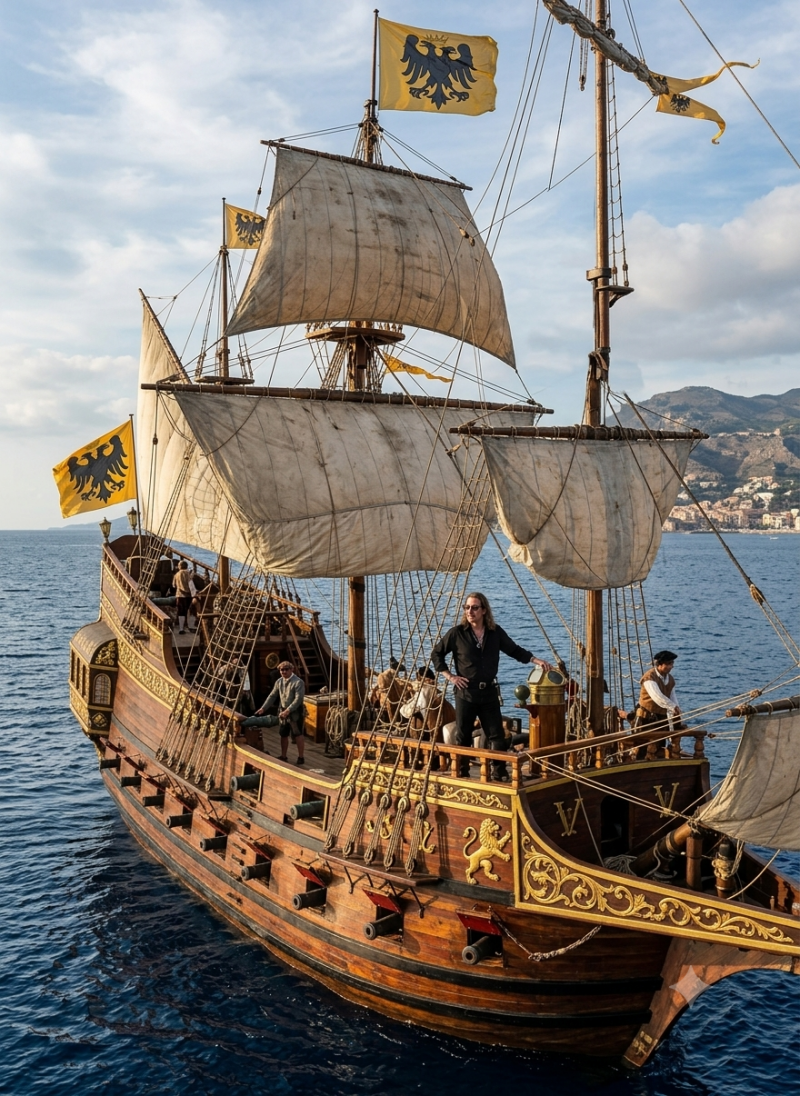
During the height of their influence in the 14th and 15th centuries—when contemporaries called them "semi-kings"—the Ventimiglia family commanded a formidable fleet of galleys under the crown of Aragon. These ships relied on a combination of muscle power and sails to navigate treacherous Mediterranean coastlines.
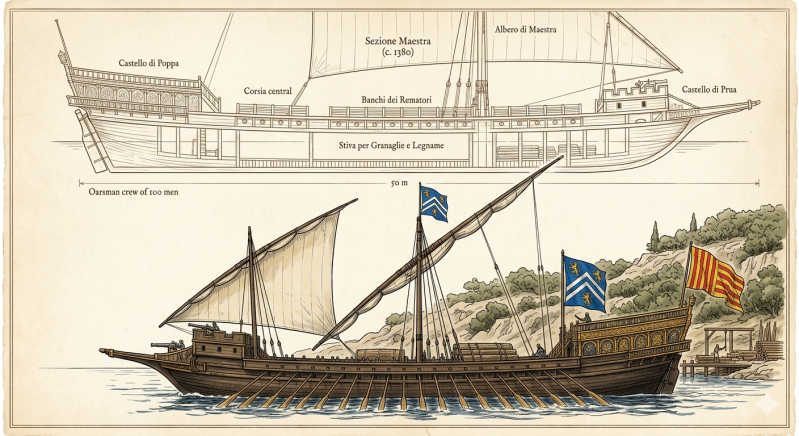
The 14th-Century Ship Blueprint
The custom blueprint illustration below depicts a 14th-century Mediterranean Nave—the backbone of the Ventimiglia commercial and transport fleet during their migration to Sicily. These vessels were deep-hulled, double-decked, and featured massive high forecastles and aftcastles designed to carry valuable cargo like Caronia timber and raw sugar while repelling pirate boarders.
2. Notable Admirals and Fleet Commanders
Over centuries of warfare in the Mediterranean, several key members of the Ventimiglia family rose to supreme naval prominence under the crowns of Italy, Aragon, and Spain:
- Count Oberto Magnavacca (12th Century): One of the early, fierce naval commanders of the Ligurian era. He successfully led the Ventimiglia galley fleet during the initial blockades against Genoese trade expansion, using aggressive swarm tactics to protect their sovereign territorial waters.
- Enrico Ventimiglia (13th Century): The legendary Count of Geraci who orchestrated the family's transition to Sicily. He was a brilliant strategist who utilized privateer naval fleets to protect his territorial ports, ensuring the family remained an independent power that the Kings of Sicily had to respect.
- Giovanni I Ventimiglia (1383–1475): Marquis of Geraci and Grand Vicar of Sicily. While primarily known as a brilliant land general, he held supreme administrative control over Sicily's maritime ports and weaponized the family's timber-transport fleet to supply the royal shipyards, earning him unparalleled political leverage with the King of Aragon.
- Carlo Ventimiglia (16th Century): Appointed as the Stratigoto (Military Governor) of Messina. This official state title gave him supreme command over the strategic Royal Galley Fleet stationed in the Strait of Messina, defending the realm against massive Ottoman naval incursions.
- Fra' Francesco di Ventimiglia (17th Century): A high-ranking commander within the Knights Hospitaller (Knights of Malta). He personally financed and commanded heavily fortified war galleys flying the Maltese cross, executing daring anti-piracy raids across the Eastern Mediterranean.
3. Naval Weaponry and Cannons
The weapon systems aboard Ventimiglia vessels changed dramatically as naval technology shifted from medieval boarding actions to early modern gunpowder warfare:
Medieval Era (11th – 14th Century)
Before gunpowder, their war galleys and merchant naves relied on mechanical force and hand-to-hand combat weaponry:
- The Spur (Rostrum): Galleys carried a heavy wooden, metal-tipped ram at the bow to puncture enemy hulls at water level.
- Ballistas and Traction Trebuchets: Torsion and tension artillery engines were mounted on the high wooden castles of the ship to hurl heavy stones, iron bolts, and incendiary devices over long distances.
- Greek Fire / Fire Arrows: Utilizing Eastern Roman knowledge brought into the family via their Byzantine marriages, vessels deployed early siphon-flamed pots and combustible arrows to ignite enemy rigging and sails.
Early Modern Gunpowder Era (15th – 17th Century)
With the introduction of firearms, Ventimiglia galleons and galleasses were modified into floating artillery platforms:
- Bombards: Short, thick-barreled early cannons mounted on the bow of galleys. They fired massive stone balls designed to shatter enemy ship castles before boarding.
- Culverins (Long Guns): Slender, long-range brass or iron cannons deployed along the broadside decks. These fired iron cannonballs at a flatter trajectory, capable of piercing hulls from a distance.
- Falconets and Swivel Guns: Small, highly maneuverable anti-personnel cannons mounted directly onto the ship's railings. They were loaded with canister shot (grape shot) to clear enemy decks during close-quarters engagements.
Sovereignty and the Law: The Ventimiglia Privileges
1. Mere and Mixed Empire (Mero e Misto Impero)
This was the ultimate feudal legal right. It granted the Ventimiglia lords total judicial sovereignty over their lands, cities, and ports.
- The Power of Life and Death: The lord acted as the supreme judge. They could execute criminals, exile enemies, or confiscate property without needing approval from the King of Sicily.
- No Royal Appeals: If a local citizen was convicted in a Ventimiglia court, they were legally barred from appealing to the King's royal courts. The Ventimiglia word was final.
2. Right of Wreckage (Ius Naufragii)
Because they controlled critical, rocky coastlines like Caronia and Cefalù, this maritime feudal law was highly lucrative.
- Total Ownership of Wrecks: Any merchant ship that ran aground, crashed, or sank along the Ventimiglia shorelines legally became the immediate property of the family.
- Cargo and Seizure: They had the legal right to seize all gold, spices, timber, and even the surviving crew (for ransom or forced labor) without paying taxes to the crown.
3. The Maritime Customs Law (Ius Anchoragii)
The family weaponized their ports to tax Mediterranean commerce.
- Anchorage Tax: Every foreign ship that dropped anchor in their harbors or sought shelter from a storm was legally required to pay a hefty fee based on the ship's size and cargo.
- Monopoly on Loading: Local merchants could only load goods onto ships using the Ventimiglia family's private docks and scales, allowing the family to skim a percentage off every barrel of sugar, wheat, or silk exported.
4. The Forest Laws of Caronia (Costituzioni Boschive)
The family strictly regulated the massive, valuable forests of Caronia through a specific set of environmental feudal laws.
- The Timber Monopoly: It was illegal for any peasant or outside merchant to cut down a single oak or pine tree without a direct, stamped license from the Marquis of Ventimiglia.
- Poaching and Execution: The forests were the exclusive hunting grounds of the family. Unauthorized hunting of deer or wild boars was treated as treason against the lord and was frequently punished by hanging.
5. The Fiefdom Monopolies (Ius Bannum)
The Ventimiglias controlled the daily survival of their subjects through mandatory infrastructure laws.
- Baking and Milling Laws: Peasants were legally forbidden from owning their own hand-mills for grinding grain or their own ovens for baking bread. They were forced to use the Marquis’s mills and ovens, paying a percentage of their flour as a tax (called the molenda).
Battles
To understand the sheer scale of the House of Ventimiglia’s power, you have to look at the massive Mediterranean naval conflicts where their ships, strategy, and money shaped history. The Ventimiglia family fought in some of the most critical maritime battles of the Middle Ages and early modern eras.
The three major naval clashes that define their historical legacy include:
1. The Siege and Naval Blockade of Ventimiglia (1251)
This was the climax of the brutal, centuries-long naval rivalry between the sovereign Counts of Ventimiglia and the Republic of Genoa for control of Ligurian trade routes.
- The Conflict: Fed up with the Ventimiglia family using their privateer fleet to intercept merchant shipping and levy customs taxes along the Riviera, Genoa launched an all-out naval invasion.
- The Battle: Genoa deployed a massive armada of war galleys to completely block the mouth of the Roia River, cutting off the family's harbor. The Ventimiglia fleet was outnumbered but launched aggressive, desperate counter-swarms using fast medieval tarides and nimble coastal galleys. They fought a prolonged defensive action to keep their sea lanes open.
- The Outcome: Despite their fierce resistance, the overwhelming numbers of the Genoese navy choked out the city. The defeat forced the family to surrender total maritime supremacy of the northern Ligurian coast, paving the way for their historical migration south to Sicily.
2. The Battle of Cape Orlando (1299)
Fought during the epic War of the Sicilian Vespers, this massive sea clash took place right off the northwestern coast of Sicily, right in the backyard of the Ventimiglia strongholds.
- The Conflict: Count Enrico II di Ventimiglia and his family completely bankrolled and supported the Sicilian rebels and King Frederick III of Sicily against the French Angevin-Neapolitan forces and an allied Aragonese fleet commanded by the legendary admiral Roger of Lauria.
- The Battle: Over 90 war galleys clashed in a chaotic melee. The Ventimiglia family provided ships, logistics, and armed crews to defend the Sicilian coastline. The battle featured devastating ramming maneuvers and heavy artillery crossfire from bow-mounted ballistas and traction trebuchets hurling Greek Fire.
- The Outcome: The Sicilian fleet fought with extreme bravery but was ultimately trapped against a shallow shore when Roger of Lauria's secret naval reserve executed a devastating surprise flank attack. While a tactical defeat for the Sicilian side, the sheer resilience of the Ventimiglia-supported resistance forced their opponents into a long-term diplomatic stalemate, permanently securing the family's autonomous "semi-king" status on the island.
3. The Battle of Ponza (1435)
This is one of the most famous naval battles in Italian history. It was a massive, high-stakes clash in the Tyrrhenian Sea that directly involved Giovanni I Ventimiglia, the Marquis of Geraci and Grand Vicar of Sicily.
- The Conflict: King Alfonso V of Aragon was attempting to conquer the Kingdom of Naples. The Republic of Genoa, backed by the Duke of Milan, sent a powerful navy to shatter the Aragonese siege.
- The Battle: Giovanni I Ventimiglia weaponized the family's extensive northern Sicilian fleet—combining heavy, high-walled Naves (cargo ships converted into floating castles) and fast war galleys—to support the King of Aragon. The battle was a brutal, close-quarters slugfest. Ships grappled deck-to-deck, utilizing early gunpowder bombards alongside crossbowmen to clear the enemy's rigging.
- The Outcome: The Genoese won a crushing tactical victory, capturing King Alfonso V himself. However, Giovanni I Ventimiglia's logistical mastery and the survival of the family’s naval assets in Sicily allowed them to quickly rebuild. Within a few years, they launched a successful counter-campaign that ultimately put the House of Aragon on the throne of Naples, cementing the Ventimiglias as the most powerful noble family in southern Italy.
The aftermath of the Battle of Ponza (1435) is one of the most fascinating turnarounds in medieval history. While the battle was a catastrophic military disaster on the open sea, the political and strategic aftermath transformed the House of Ventimiglia into the undisputed, most powerful noble lineage in the entire Kingdom of Sicily.
Here is how the aftermath unfolded and forever changed the family's fortunes:
1. The Ransom and the Diplomatic Masterstroke
During the battle, the Republic of Genoa captured King Alfonso V of Aragon along with several high-ranking nobles.
- The Ventimiglia Rescue: While the King was in captivity, Giovanni I Ventimiglia (Marquis of Geraci) used his massive personal wealth and the revenue generated from the family's trading ports to help secure the King's freedom.
- The Milanese Alliance: Instead of treating King Alfonso as a prisoner, the Duke of Milan (who controlled Genoa) realized Alfonso was a better ally than an enemy. Giovanni I Ventimiglia played a key role in the delicate diplomatic negotiations that followed, flipping the geopolitical script and turning their former captors into allies against the French.
2. Rewarded with Supreme Royal Power
When King Alfonso V finally conquered Naples and took his throne in 1442, he remembered the absolute loyalty and naval/financial backing of the Ventimiglia family. He showered Giovanni I Ventimiglia with unprecedented titles:
- Grand Vicar of Sicily: Giovanni was made the official representative of the King on the island, giving him vice-royal governing authority.
- Count of Ventimiglia (Restored): In a massive symbolic victory, the King officially restored the ancient title of "Count of Ventimiglia" to the family, centuries after they had been driven out of their northern Italian homeland by Genoa.
- The First Marquis: The King elevated their main fiefdom, making Giovanni the Marquis of Geraci. This was the very first Marquisate ever created in Sicily, legally cementing the Ventimiglias at the absolute apex of the Sicilian aristocracy.
3. Economic and Maritime Dominance
With the French Angevin threat crushed and Naples secured, the Mediterranean opened up for a golden era of trade, and the Ventimiglia fleet reaped the rewards.
- Harbor Expansion: The family used their elevated political status to heavily fortify their ports at Cefalù, Caronia, and Tusa, making them completely immune to pirate raids.
- The Royal Timber Contract: The newly conquered Kingdom of Naples needed a massive navy. The Ventimiglias secured exclusive royal contracts to export timber from their Caronia forests directly to the royal shipyards of Naples and Palermo, generating an immense fortune that lasted for generations.
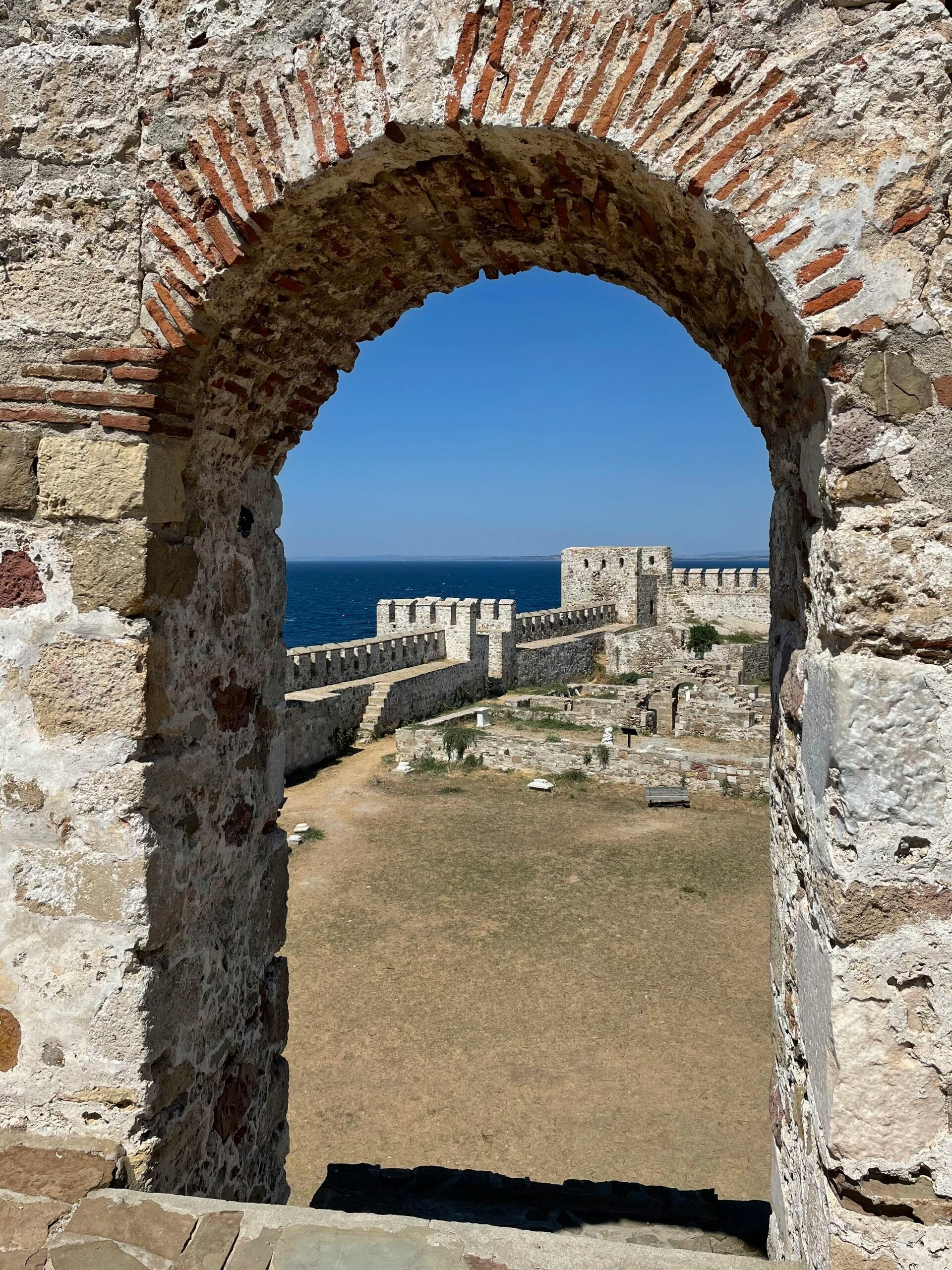
Maritime trade was the ultimate engine of the Ventimiglia family's wealth and independence. While their military fortresses were carved into inland mountains, their financial survival relied on controlling key maritime choke points and commercial shipping ports across the Mediterranean.
By taxing merchant fleets, controlling the export of grains, and commanding strategic coastlines, they secured a massive maritime empire over the centuries.
1. The Sicilian Grain & Trade Ports
In Sicily, the Ventimiglias engineered a masterful economic network along the northern and western coasts. They strategically controlled ports that allowed them to ship the vast agricultural wealth of their inland fiefdoms directly to Genoa, Spain, and North Africa.
- Port of Cefalù: This was one of the family’s crown jewels on the northern Sicilian coast. By dominating Cefalù, the Ventimiglias controlled a vital maritime hub that handled the inflow of luxury imports and the outflow of regional goods. They built their grand urban headquarters, the Osterio Magno, right next to the city's coastal fortifications.
- The Fortified Port of Roccella (Campofelice di Roccella): In 1385, Count Francesco II Ventimiglia made a highly calculated political move. He pressured the Bishop of Cefalù into ceding the strategic coastal fortress and port of Roccella. This acquisition gave the Ventimiglias absolute, unchecked authority over a critical deep-water loading zone, allowing them to export massive quantities of grain entirely free of royal customs dues.
- Port of Termini Imerese: For generations, members of the family (such as Giovanni I Ventimiglia) held governorship or lordship over this vital port city. Termini Imerese was the primary maritime outlet for the fertile Madonie mountain region, acting as the main loading dock for the grains, oils, and cheeses produced on Ventimiglia lands.
- Port of Sciacca: Located on the southwestern coast of Sicily, Sciacca was a powerhouse for the Mediterranean coral trade and grain logistics. Ventimiglia control over Sciacca gave them direct commercial access to the African sea lanes, bypassing royal toll stations in Palermo.
- Port of Caronia: Situated on the northeastern coast, this smaller but highly strategic port allowed the family to strictly regulate the maritime traffic passing between Palermo and Messina.
-
2. The Ligurian and Provençal Gateways
Long before they set foot in Sicily, the ancestral counts laid the groundwork for their dynasty by weaponizing the geography of the French-Italian Riviera.
- Port of Ventimiglia (Liguria): The family’s absolute birthplace. From the 10th to the 13th centuries, the counts ruled the mouth of the Roia River, using its small but highly strategic natural harbor to tax merchant ships traveling between the Republic of Genoa and Southern France.
- Port of Menton (Modern France): Originally owned and fortified by the Counts of Ventimiglia, this crucial Riviera port was a jewel of their early maritime territory. In the 14th century, as the family shifted its focus toward Sicily, they sold the strategic harbor to the Grimaldi family (the future lords of Monaco).
- Port of Hyères & Ollioules (Provence): The French branch of the family (De Vintimille) established deep roots along the coast of Provence. They controlled fortified maritime outlooks near Toulon and Marseille, ensuring a steady stream of revenue from French naval and commercial shipping.
3. The Imperial Ports of Malta
The family’s maritime influence reached its absolute global peak in the 17th century when Giovanni Paolo Lascaris di Ventimiglia was elected Grand Master of the Knights Hospitaller.
Grand Harbour of Valletta
MaltaWhile technically belonging to the Sovereign Military Order, Grand Master Lascaris held absolute autocratic control over one of the most powerful naval bases in the world. He transformed Valletta's ports into an impenetrable fortress against the Ottoman Empire, constructing the massive Lascaris Battery to guard the harbor entrance and dictating Christian naval strategy across the entire Mediterranean basin.
Direct Overview of Port Dominance
Port / Harbor Modern RegionPrimary Commercial ValueFamily ImpactRoccella & CefalùSicily, ItalyGrain exporting and regional toll collection.Granted the family untaxed, independent trade monopolies.Termini ImereseSicily, ItalyMassive agricultural shipping and distribution.Handled the bulk of the inland Madonie estate logistics.Ventimiglia & MentonLiguria / FranceRiviera coastal trade and French-Italian border tolls.Formed the sovereign wealth foundation of the early dynasty.Grand Harbour (Valletta)MaltaMilitary naval power and crusader fleet operations.Shielded Western Europe from Ottoman maritime advances.