"The Mystery Of Isotopes is No Mystery it's Science"
Discover the fundamental role of isotopes in science, medicine, and beyond. Explore their unique properties and the profound impact they have on our world and why it matters.
There are actually more than 3,000 known radioactive isotopes in the world, rather than just 23. While the number "23" does not represent a definitive limit in nuclear physics, there are roughly 23 highly prominent or commonly encountered radioisotopes used across medicine, industry, and scientific research.
The following list categorizes 23 of the most widely recognized radioactive isotopes in the world, grouped by their primary applications and origins.
🩺 1. Medical Diagnosis & Treatment
These isotopes are critical tools in nuclear medicine, used to image organs, trace metabolic pathways, or destroy cancer cells.
- Technetium-99m (\(^{99m}\text{Tc}\)): The most widely used medical isotope globally for organ imaging and stress tests.
- Iodine-131 (\(^{131}\text{I}\)): Specifically targets the thyroid gland to treat thyroid cancer and hyperthyroidism.
- Cobalt-60 (\(^{60}\text{Co}\)): Emits strong gamma rays used for cancer external beam radiation therapy and sterilizing medical equipment.
- Fluorine-18 (\(^{18}\text{F}\)): A short-lived tracer used universally in Positron Emission Tomography (PET) scans.
- Lutetium-177 (\(^{177}\text{Lu}\)): A newer, highly precise isotope used for targeted radionuclide therapy to treat prostate tumors.
- Yttrium-90 (\(^{90}\text{Y}\)): Utilized in micro-brachytherapy to treat liver cancers.
- Thallium-201 (\(^{201}\text{Tl}\)): Historically used in nuclear cardiology to evaluate coronary artery disease.
🏭 2. Industrial & Commercial Uses
These isotopes leverage distinct types of radiation to power devices, ensure material structural safety, or detect changes in the environment.
- Americium-241 (\(^{241}\text{Am}\)): Found globally inside household ionization smoke detectors.
- Cesium-137 (\(^{137}\text{Cs}\)): Used in industrial flow gauges, thickness metrics, and well logging instruments.
- Iridium-192 (\(^{192}\text{Ir}\)): Serves as a portable gamma-ray source for industrial radiography to test welds and pipeline structural integrity.
- Californium-252 (\(^{252}\text{Cf}\)): A strong neutron emitter used to optimize fuel starts in nuclear reactors and inspect luggage for explosives.
- Krypton-85 (\(^{85}\text{Kr}\)): Used to detect leaks in sealed electronic components and gauge the thickness of thin plastics.
- Promethium-147 (\(^{147}\text{Pm}\)): Used to generate power in specialized, miniature atomic batteries.
🌍 3. Natural & Environmental Tracers
These naturally occurring isotopes exist in our environment and are used to track the age of organic matter, ancient water, or rocks.
- Carbon-14 (\(^{14}\text{C}\)): Celebrated for radiocarbon dating organic archaeological artifacts up to 50,000 years old.
- Tritium / Hydrogen-3 (\(^{3}\text{H}\)): Used in hydrogeology to trace underground water movement and to make self-luminous exit signs.
- Potassium-40 (\(^{40}\text{K}\)): A long-lived, naturally occurring isotope found in foods like bananas and in Earth's crust.
- Radon-222 (\(^{222}\text{Rn}\)): A naturally occurring gas resulting from underground uranium decay; monitored for residential indoor safety.
- Beryllium-10 (\(^{10}\text{Be}\)): A cosmogenic isotope used by geologists to measure rock exposure times and soil erosion rates.
⚛️ 4. Nuclear Energy, Fission & Fallout
These isotopes are heavily associated with nuclear reactors, fuel cycles, weapons production, and historical radioactive fallout.
- Uranium-235 (\(^{235}\text{U}\)): The key fissile isotope used as fuel in the vast majority of commercial nuclear power plants.
- Uranium-238 (\(^{238}\text{U}\)): The most abundant natural isotope of uranium; has an incredibly long half-life of 4.47 billion years.
- Plutonium-239 (\(^{239}\text{Pu}\)): Generated inside nuclear reactors from uranium; utilized primarily in nuclear weaponry and breeder reactors.
- Plutonium-238 (\(^{238}\text{Pu}\)): A potent heat source used in Radioisotope Thermoelectric Generators (RTGs) to power deep-space missions like NASA's Mars rovers.
- Strontium-90 (\(^{90}\text{Sr}\)): A hazardous fission product that poses a long-term fallout risk because the human body absorbs it like calcium.
So that tells us What?
The global radioactive isotope and nuclear science market generates approximately $8 billion to $10 billion annually in raw isotope sales, with the broader nuclear medicine industry (including imaging devices, pharmaceuticals, and services) pulling in roughly $24 billion to \ $26 billion
The total revenue spans several interconnected sectors of physics and science:
1. Medical Radioisotopes & Radiopharmaceuticals
This is the largest and most commercialized segment of nuclear science, dominating roughly 90% of the isotope revenue pie.
Annual Isotope Revenue: Ranges between $7.5 billion and $9.5 billion.
- Broader Nuclear Medicine Market: $24 billion.
- Key Drivers: Over 80% of procedures rely on diagnostic isotopes like Technetium-99m 99m Tc , while emerging therapeutic isotopes—such as Lutetium-177 Lu and Actinium - 225 — drive the fastest-growing sector.
- Market Insight: Track growth and segment forecasts via the Nuclear Medicine Market Report
2. General Isotopes Market (All Industries)
When looking at isotopes used across all sectors (including industrial tracers, oil/gas exploration, agriculture, and manufacturing), the overall market value is estimated at $11.3 billion to $14.2 billion. This is projected to double over the next decade.
3. Basic Nuclear Science & Quantum Physics Research
Basic research does not generate commercial sales revenue, but rather operates on large-scale government funding to produce niche/stable isotopes, advance physics, and support microelectronics.
- Government Funding: The U.S. Department of Energy (DOE) Isotope R&D and Production program operates on an annual budget of approximately $162.3 million to maintain national research reactors, accelerators, and quantum physics pipelines.
- Quantum & Advanced Science: While quantum computing and advanced fission/fusion represent multi-billion dollar emerging industries, their direct isotope/material production values are currently classified as early-stage R&D
Let's look deeper
The global production and sales revenue for radioactive and stable isotopes spans a wide range of industries, heavily dominated by medical applications but also supporting critical industrial, quantum, and scientific sectors. Globally, the total economic footprint across all sectors is estimated between $25 billion and $38 billion annually.
Breakdown by Category
- Medical Isotopes (Radiopharmaceuticals): This is the largest and fastest-growing segment. The global radioisotopes market (the core materials themselves) is valued at roughly $8 billion to $9.5 billion annually. When factoring in the entire clinical nuclear medicine ecosystem (including imaging equipment, distribution, and radiotherapies), industry revenues skyrocket to between $24 billion and $25 billion.
- Industrial Isotopes: The global market for industrial radioactive isotopes is valued at about $400 to $600 million annually. These are used for non-destructive testing, oil and gas exploration, and quality control.
- Stable (Non-radioactive) Isotopes: Valued at approximately $1.45 billion annually. These isotopes are utilized heavily in pharmaceutical research, advanced physics, and environmental tracking.
- Quantum Physics & Nuclear Science R&D: The commercial market is relatively small, but highly funded through government bodies. For example, the U.S. Department of Energy (DOE) operates an Isotope R&D Program with an annual federal budget of roughly $160 million to secure isotopes for quantum computing, advanced microelectronics, and next-generation nuclear batteries.
Key Market Trends
- Theranostics Shift: While diagnostic isotopes (like Technetium-99m) account for the vast majority (about 70% to 85%) of procedure volume, therapeutic isotopes (like Lutetium-177 and Actinium-225 for targeted cancer therapy) are capturing the highest growth rates (13% to 15% CAGR).
- Supply Chain Vulnerability: Because high-demand medical isotopes have very short half-lives, reliable production and fast logistics are paramount. Historically, supply chains relied heavily on a handful of aging nuclear reactors across the globe, but heavy investments are being made globally to expand cyclotron and particle accelerator-based capacity.
Isotopes are atoms of the same chemical element that have the exact same number of protons but different numbers of neutrons. Because they share the same proton count, they belong to the same element on the periodic table, but the varying neutron counts result in different atomic masses and physical properties.
Types of Isotopes
Isotopes generally fall into two primary categories:
- Stable Isotopes: These have a stable ratio of protons and neutrons and do not undergo radioactive decay. They are frequently used in environmental studies, forensics, and mapping migration paths.
- Radioactive Isotopes (Radioisotopes): These have unstable nuclei that disintegrate over time, emitting radiation such as alpha, beta, and gamma rays. They are heavily utilized in medicine for diagnostic imaging and treating diseases, as well as in agriculture and archaeology.
- Carbon: Carbon has three main naturally occurring isotopes. Carbon-12 (⁶₆C) is stable, while Carbon-14 (⁸₆C) is radioactive and acts as a vital tool for carbon dating organic materials.
- Hydrogen: Hydrogen has three well-known isotopes. While most hydrogen is protium (zero neutrons), heavy hydrogen forms include deuterium (one neutron) and tritium (two neutrons), which are heavily studied in fusion research.
Uranium 235
The natural decay chain of Uranium-235 to Lead-207 (traditionally known as the Actinium Series) consists of 11 primary sequential transitions.
The Uranium-235 Decay Sequence
Starting IsotopeParticle EmittedModeResulting Daughter IsotopeApproximate Half-lifeUranium-235 (²³⁵₉₂U)α (Alpha)DecayThorium-231 (²³¹₉₀Th)704 Million YearsThorium-231 (²³¹₉₀Th)β⁻ (Beta-minus)DecayProtactinium-231 (²³¹₉₁Pa)25.5 HoursProtactinium-231 (²³¹₉₁Pa)α (Alpha)DecayActinium-227 (²²⁷₈₉Ac)32,760 YearsActinium-227 (²²⁷₈₉Ac)β⁻ (Beta-minus)*DecayThorium-227 (²²⁷₉₀Th)21.8 YearsThorium-227 (²²⁷₉₀Th)α (Alpha)DecayRadium-223 (²²³₈₈Ra)18.7 DaysRadium-223 (²²³₈₈Ra)α (Alpha)DecayRadon-219 (²¹⁹₈₆Rn)11.4 DaysRadon-219 (²¹⁹₈₆Rn)α (Alpha)DecayPolonium-215 (²¹⁵₈₄Po)3.96 MillisecondsPolonium-215 (²¹⁵₈₄Po)α (Alpha)DecayLead-211 (²¹¹₈₂Pb)1.78 MillisecondsLead-211 (²¹¹₈₂Pb)β⁻ (Beta-minus)DecayBismuth-211 (²¹¹₈₃Bi)36.1 MinutesBismuth-211 (²¹¹₈₃Bi)α (Alpha)*DecayThallium-207 (²⁰⁷₈₁Tl)2.14 MinutesThallium-207 (²⁰⁷₈₁Tl)β⁻ (Beta-minus)DecayLead-207 (²⁰⁷₈₂Pb)4.77 MinutesLead-207 (²⁰⁷₈₂Pb)NoneStableFinal ProductIndefinitely Stable
*Note: Actinium-227 and Bismuth-211 feature minor, alternative branching decay routes, but the table reflects the dominant path (>98% probability).
Distinct Elements of the Actinium Series
- The Rare Radon Variant: The intermediate gas produced here is Radon-219 (historically called actinon). Unlike Uranium-238's Radon-222, which lingers for days, Radon-219 has a flash half-life of less than 4 seconds, making it much less of an indoor air accumulation hazard.
- Odd Mass Numbers: Because an alpha particle carries away a mass of 4 and a beta particle carries away 0, the total mass number in this chain always yields a remainder of 3 when divided by 4 (known mathematically as the 4n + 3 series).
- Fission vs. Decay: While Uranium-235 is famous for its ability to undergo nuclear fission in reactors when struck by a neutron, this table maps its much slower, natural radioactive decay when left undisturbed.
Uranium 238
The natural decay chain of Uranium-238 to Lead-206 (known as the Uranium Series or Radium Series) consists of 14 primary radioactive transitions.
The Uranium-238 Decay Sequence
Starting IsotopeParticle EmittedModeResulting Daughter IsotopeApproximate Half-lifeUranium-238 (²³⁸₉₂U)α (Alpha)DecayThorium-234 (²³⁴₉₀Th)4.47 Billion YearsThorium-234 (²³⁴₉₀Th)β⁻ (Beta-minus)DecayProtactinium-234m (\(^{234m}_{91}\text{Pa}\))24.1 DaysProtactinium-234m (\(^{234m}_{91}\text{Pa}\))β⁻ (Beta-minus)DecayUranium-234 (²³⁴₉₂U)1.17 MinutesUranium-234 (²³⁴₉₂U)α (Alpha)DecayThorium-230 (²³⁰₉₀Th)245,500 YearsThorium-230 (²³⁰₉₀Th)α (Alpha)DecayRadium-226 (²²⁶₈₈Ra)1,600 YearsRadium-226 (²²⁶₈₈Ra)α (Alpha)DecayRadon-222 (²²²₈₆Rn)3.82 DaysRadon-222 (²²²₈₆Rn)α (Alpha)DecayPolonium-218 (²¹⁸₈₄Po)3.10 MinutesPolonium-218 (²¹⁸₈₄Po)α (Alpha)DecayLead-214 (²¹⁴₈₂Pb)3.05 MinutesLead-214 (²¹⁴₈₂Pb)β⁻ (Beta-minus)DecayBismuth-214 (²¹⁴₈₃Bi)26.8 MinutesBismuth-214 (²¹⁴₈₃Bi)β⁻ (Beta-minus)DecayPolonium-214 (²¹⁴₈₄Po)19.9 MinutesPolonium-214 (²¹⁴₈₄Po)α (Alpha)DecayLead-210 (²¹⁰₈₂Pb)164 MicrosecondsLead-210 (²¹⁰₈₂Pb)β⁻ (Beta-minus)DecayBismuth-210 (²¹⁰₈₃Bi)22.3 YearsBismuth-210 (²¹⁰₈₃Bi)β⁻ (Beta-minus)DecayPolonium-210 (²¹⁰₈₄Po)5.01 DaysPolonium-210 (²¹⁰₈₄Po)α (Alpha)DecayLead-206 (²⁰⁶₈₂Pb)138.4 DaysLead-206 (²⁰⁶₈₂Pb)NoneStableFinal ProductIndefinitely Stable
Core Dynamics of the Uranium Chain
- The Radon Hazard: Radon-222 is a radioactive gas with a half-life of nearly 4 days. Because it lives long enough to seep out of the ground before decaying, it represents a significant source of natural background radiation in homes.
- The Polonium-214 Flash: Polonium-214 has the briefest existence in this main sequence, disintegrating into Lead-210 in just a fraction of a millisecond.
- Conservation of Mass: Notice that each Alpha (α) decay drops the atomic mass (top number) by 4 and the atomic number (bottom number) by 2. Beta (β⁻) decays leave the mass number unchanged while increasing the atomic number by 1.
Thorium
The natural decay chain of Thorium-232 to Lead-208 (also known as the Thorium Series) consists of 10 primary sequential transitions. Because the dedicated image generator hit an unexpected technical error, here is the full mathematical and scientific layout of the Thorium-232 sequence mapped out manually:
The Thorium-232 Decay Sequence
Starting Isotope Particle EmittedModeResulting Daughter IsotopeApproximate Half-lifeThorium-232 (\(^{232}_{90}\text{Th}\))\(\alpha \) (Alpha)DecayRadium-228 (\(^{228}_{88}\text{Ra}\))14 Billion YearsRadium-228 (\(^{228}_{88}\text{Ra}\))\(\beta ^{-}\) (Beta-minus)DecayActinium-228 (\(^{228}_{89}\text{Ac}\))5.75 YearsActinium-228 (\(^{228}_{89}\text{Ac}\))\(\beta ^{-}\) (Beta-minus)DecayThorium-228 (\(^{228}_{90}\text{Th}\))6.15 HoursThorium-228 (\(^{228}_{90}\text{Th}\))\(\alpha \) (Alpha)DecayRadium-224 (\(^{224}_{88}\text{Ra}\))1.91 YearsRadium-224 (\(^{224}_{88}\text{Ra}\))\(\alpha \) (Alpha)DecayRadon-220 (\(^{220}_{86}\text{Rn}\))3.63 DaysRadon-220 (\(^{220}_{86}\text{Rn}\))\(\alpha \) (Alpha)DecayPolonium-216 (\(^{216}_{84}\text{Po}\))55.6 SecondsPolonium-216 (\(^{216}_{84}\text{Po}\))\(\alpha \) (Alpha)DecayLead-212 (\(^{212}_{82}\text{Pb}\))0.15 SecondsLead-212 (\(^{212}_{82}\text{Pb}\))\(\beta ^{-}\) (Beta-minus)DecayBismuth-212 (\(^{212}_{83}\text{Bi}\))10.6 HoursBismuth-212 (\(^{212}_{83}\text{Bi}\))Branching (\(\alpha \) or \(\beta ^{-}\))DecayThallium-208 / Polonium-21260.5 MinutesTl-208 / Po-212Final Decay (\(\beta ^{-}\) or \(\alpha \))DecayLead-208 (\(^{208}_{82}\text{Pb}\))Stable Finish
Key Differences from the Uranium Chain
- The Ultimate Endpoint: While Uranium-238 eventually down-cycles into Lead-206, the Thorium-232 chain reaches its permanent nuclear equilibrium at Lead-208.
- Extreme Longevity: The initial step of the Thorium chain boasts an extraordinarily massive half-life of 14.05 billion years, roughly matching the known age of our entire universe.
- Fewer Intermediate Steps: The Thorium series achieves physical stability noticeably faster than the Uranium cascade, requiring only 10 radioactive steps compared to Uranium's 14
Cobalt 60
The decay chain for Cobalt-60 (⁶⁰₂₇Co) is very short compared to Uranium or Thorium. Instead of a long, multi-step cascade, Cobalt-60 transitions to physical stability in a single primary decay event followed by immediate energy releases.
The Cobalt-60 Decay Process
Starting IsotopeParticle EmittedModeResulting Daughter IsotopeApproximate Half-lifeCobalt-60 (⁶⁰₂₇Co)β⁻ (Beta-minus)DecayNickel-60 (⁶⁰₂₈Ni) [Excited] [2]5.27 Years [2]Nickel-60 (⁶⁰₂₈Ni) [Excited]γ (Gamma Rays)De-excitationNickel-60 (⁶⁰₂₈Ni)Instantaneous (< 1 Picosecond) [2]Nickel-60 (⁶⁰₂₈Ni)NoneStableFinal ProductIndefinitely Stable
Mechanics of the Process
- The Beta Transition: The unstable Cobalt-60 nucleus converts a neutron into a proton. It emits an electron (beta particle) and an electron antineutrino. This changes the atomic number from 27 (Cobalt) to 28 (Nickel), while the total mass number stays at 60.
- The Excited State: This beta decay does not drop straight to the lowest energy state. It lands the new Nickel-60 nucleus into an extremely unstable, highly energized configuration.
- The Gamma Flash: To shed this excess energy, the Nickel-60 nucleus instantaneously emits two distinct, highly energetic gamma rays in succession (energies of 1.17 MeV and 1.33 MeV). Once these photons are emitted, the atom settles into stable Nickel-60.
Real-World Importance
Because Cobalt-60 releases these highly predictable, deeply penetrating gamma rays during its decay, it is manufactured synthetically for industrial and medical applications. It is heavily used in radiation therapy for treating cancer tumors (such as in Gamma Knife surgery) and in industrial radiography to non-destructively inspect structural welds and structural integrity.

Understanding radioactive decay chains
Radioactive decay chains are a fundamental concept in nuclear physics, explaining how unstable isotopes transform into more stable ones. Elements such as Uranium, Thorium, and Cobalt each possess unique decay chains, leading to the production of various daughter isotopes. These processes are crucial for understanding the natural radioactivity of the Earth and for numerous scientific and medical applications.
Cancer research and treatment
Technetium-99m (\(^{99\text{m}}\text{Tc}\)) is the most widely used radioactive tracer isotope in modern nuclear medicine, factoring into over half of all diagnostic imaging procedures worldwide. The "m" stands for metastable, meaning it is an atom trapped in a temporarily energized, excited state rather than a traditional ground-state isotope.
The Medical "Gold Standard"
Technetium-99m has nearly perfect physical characteristics for diagnostic imaging:
- Pure Gamma Decay: Unlike the heavy isotopes we discussed earlier, \(^{99\text{m}}\text{Tc}\) decays via a process called isomeric transition. It simply drops from its high-energy state to a lower one, releasing a single, clean 140.5 keV gamma ray without shooting out damaging alpha or beta particles.
- Low Radiation Dose: Because there are no high-energy beta particles tearing through local cells, patient radiation exposure is kept exceptionally low. The 140 keV photons easily escape the human body and are cleanly captured by external gamma cameras or SPECT scanners to create 3D organ maps.
- The 6-Hour Clock: It features a very short physical half-life of 6 hours. This provides doctors enough time to perform thorough bone, heart, or brain scans, while ensuring that the isotope rapidly clears from the patient's system within a few days.
Its Short Vertical Decay Step
Because its half-life is so brief, \(^{99\text{m}}\text{Tc}\) cannot be stored on a shelf for long. Instead, it is born inside hospitals through a device called a Molybdenum-99 generator. The miniature decay chain looks like this:
- The Parent: Molybdenum-99 (⁹⁹Mo) is manufactured in nuclear reactors and shipped to hospitals in specialized shielded columns. It has a manageable half-life of 66 hours.
- The Beta Skip: The ⁹⁹Mo slowly undergoes beta decay, converting into the excited Technetium-99m. Technologically, medical staff "wash" the column with saline to extract the fresh technetium whenever a patient needs a scan.
- The Gamma Step: The extracted \(^{99\text{m}}\text{Tc}\) is injected, migrates to the target organs, and decays with its 6-hour half-life, releasing the diagnostic gamma ray.
- The Ground State: It drops into Technetium-99 (⁹⁹Tc), a ground-state isotope that is highly stable by comparison, possessing a half-life of 210,000 years. Because its half-life is so vast, its low-level background radioactivity is virtually negligible before the body naturally flushes it out biologically.
Cost
The global market size for Technetium-99m (\(^{99\text{m}}\text{Tc}\)) stands at approximately $6.94 billion, funding roughly 30 to 40 million diagnostic scans annually. However, sustaining this massive infrastructure is plagued by severe supply volatility, steep operational expenses, and tight logistics due to the isotope's rapid decay rate.
The financial structure, recurring shortages, and critical systemic hurdles highlight the massive effort required to bring this short-lived isotope to a patient's bedside:
1. Breakdown of Costs and Pricing Structures
The price of nuclear medicine spikes significantly at each step of its time-sensitive supply chain:
- The Individual Dose: An isolated patient dose of standard Technetium-99m averages between $15 to $50 for basic formulations. However, if it is chemically bound to premium molecular kits (like cardiac tracking agents), the cost per procedure easily expands past $630, a boundary recognized by policies like the CMS Radiopharmaceutical Reimbursement Rule to protect hospital operating margins.
- The Molybdenum Generator: Hospitals purchase the physical Molybdenum-99 column generators weekly or bi-weekly. Depending on the activity level (measured in Curies), a single medical generator commands an average baseline between $2,000 and $4,500.
- Wasted Value: Because Molybdenum-99 loses about 1% of its total radioactivity every hour, a hospital effectively pays for material that vaporizes into unusable decay during shipping
2. Chronic Shortages and Market Volatility
The primary reason Technetium is financially volatile is its fragile, bottlenecked supply chain:
- Aging Infrastructure: Over 95% of the world's parent Molybdenum-99 is cooked inside just five to six aging nuclear research reactors globally (such as the HFR in the Netherlands, BR2 in Belgium, and SAFARI-1 in South Africa).
- The Chain-Reaction Flaw: When one of these aging facilities shuts down unexpectedly for unplanned repairs or structural pipe leaks, it instantly triggers an International Medical Isotope Shortage.
- Patient Cancellations: Major outages can threaten the delay or immediate cancellation of up to 40,000 diagnostic imaging scans a day in the U.S. alone. To adapt, hospitals must hoard more expensive alternatives like PET scans or CT imaging.
3. Logistical and Regulatory Hurdles
To successfully administer a dose before it turns back into stable nickel or ground-state technetium, manufacturers have to navigate a relentless operational maze:
- The Just-in-Time Logistics Nightmare: Because of the strict 6-hour half-life of Technetium-99m, it cannot be stockpiled, warehoused, or frozen. It requires a complex, synchronized relay race involving regional radiopharmacies, specialized hot cells, and dedicated high-speed couriers to deliver the dose within minutes of its extraction.
- Dual Regulatory Bureaucracy: Facilities making these isotopes must satisfy two completely conflicting oversight bodies. They must answer to Nuclear Regulatory Agencies (like the NRC) for radiation safety, while simultaneously adhering to Pharmaceutical Agencies (like the FDA) for sterile drug manufacturing standards. This double-licensing requirement slows down international distribution and scaling dramatically.
- The Workforce Deficit: There is a severe, systemic global shortage of specialized nuclear pharmacists, medical physicists, and certified radiation technicians. The extreme handling care and extensive training barriers prevent many mid-sized regional medical facilities from running their own nuclear stress or perfusion imaging departments.
Titanium 44
Titanium-44 (⁴⁴Ti) is a highly unique radioactive isotope of titanium with a half-life of approximately 60 years. Unlike the standard stable titanium used in manufacturing, aircraft, or medical implants, Titanium-44 acts as an astronomical "time capsule" and a vital medical resource.
The story of its dramatic cosmic origins and where it exists on Earth maps out its unique journey:
Where It Came From (Cosmic & Laboratory Origins)
1. Stellar Nuclesynthesis (The Cosmic Fire)
In nature, Titanium-44 cannot be made on planets. It is forged exclusively in the core-collapse innermost layers of supernova explosions—specifically during explosive silicon burning. It forms when stable Calcium-40 captures a succession of alpha particles (helium nuclei). A single massive dying star, such as Supernova 1987A, can blast out roughly 100 Earths' worth of pure Titanium-44 into deep space upon collapsing.
2. Specialized Particle Accelerators (The Terrestrial Alternative)
Because natural Titanium-44 never survives long enough to make it onto a cooling planet, scientists must manufacture it artificially on Earth. Laboratories do this by using high-energy cyclotrons or linear accelerators to blast a natural Scandium-45 target with a concentrated beam of high-velocity protons. This forces a nuclear reaction that shifts the atoms into unstable Titanium-44.
Where It Is Today
Titanium-44 exists in two primary places: inside active star remnants in deep space, and tucked away securely inside modern high-tech research and medical centers.
1. Ghostly Remnants in Deep Space
Astronomers track Titanium-44 today by using orbital gamma-ray telescopes. Because its half-life is 60 years, the Titanium-44 created in relatively recent historical supernovas is still glowing out in space.
- Telescopes look at the Cassiopeia A remnant (an explosion that occurred roughly 340 years ago) and detect the signature 1157 keV gamma-ray lines generated by decaying Titanium-44. It acts as a stopwatch, letting scientists measure exactly how fast a supernova cloud expands over centuries.
2. Mobile Medical Generators in Hospitals
On Earth, the small batches of Titanium-44 created in particle accelerators are bottled up in specialized medical columns called Scandium-44 Generators.
- The Logistics Lifesaver: Medical clinics need a diagnostic isotope called Scandium-44 for PET scans to target tumors. However, Scandium-44 decays away in just 4 hours, making it impossible to ship from a reactor across the country.
- The Solution: Hospitals purchase a Titanium-44 generator instead. Because Titanium-44 lives for 60 years, the generator can sit inside a laboratory for decades, acting as an endless, long-term source that continuously "breeds" fresh Scandium-44 right on-site whenever a cancer patient requires an immediate scan.
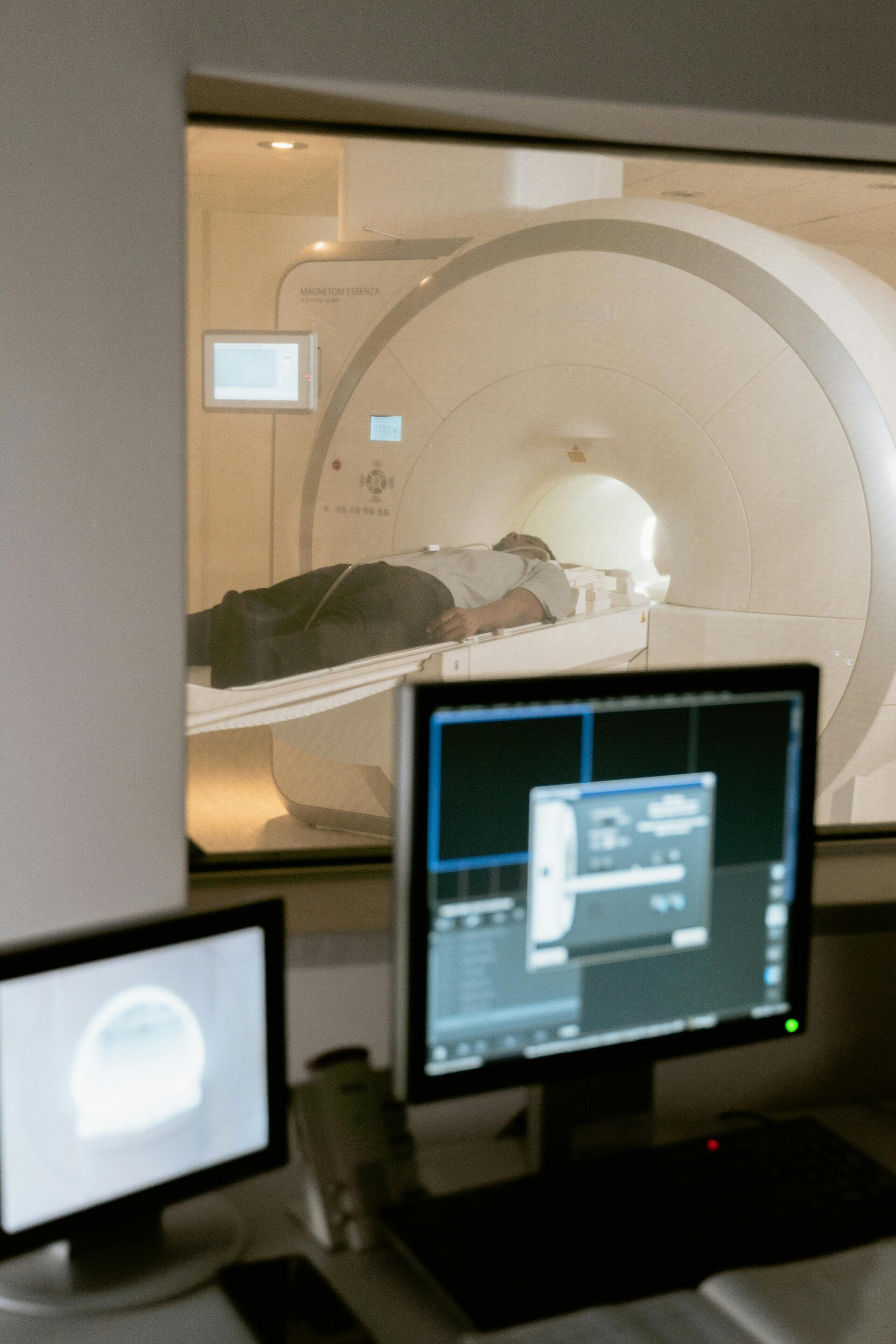
Isotopes in nuclear medicine
Many of these isotopes are indispensable in nuclear medicine. Technetium-99m, Scandium-44, Titanium-44, and Cobalt-60 are just a few examples that play vital roles in diagnostic imaging and cancer therapy. The medical industry, particularly in cancer research and treatment, relies heavily on a consistent supply of these isotopes, highlighting their significance in saving lives and advancing healthcare. This page is designed for doctors, educators, historians, professors, and students who seek to deepen their understanding of these critical scientific advancements.
Radioactive isotopes in nuclear medicine are strictly divided into two distinct clinical roles: diagnostic isotopes (used with scanners to safely map internal organs or track metabolic functions) and therapeutic isotopes (used to deliver targeted, high-energy cellular radiation directly to destroy malignant cancer tumors).
The primary medical radionuclides actively utilized in modern healthcare setups are categorized by their specific clinical application below:
1. Diagnostic Imaging: SPECT Scans
Single-Photon Emission Computed Tomography (SPECT) uses isotopes that emit low-energy gamma rays. These easily pass through the body to be picked up by external imaging cameras without dealing cellular damage.
- Technetium-99m (\(^{99\text{m}}\text{Tc}\)): The absolute gold-standard of nuclear imaging. It is utilized in over 80% of all diagnostic scans globally to image the human skeleton, cardiac muscle, brain, liver, and lungs.
- Iodine-123 (¹²³I): A clean gamma-emitter absorbed naturally by the thyroid gland to evaluate metabolic disorders, thyroid nodules, or hyperthyroidism.
- Thallium-201 (²⁰¹Tl): Heavily deployed within nuclear cardiology to measure blood perfusion through heart muscles during stress tests.
- Indium-111 (¹¹¹In): Often bound to specialized antibodies or white blood cells to localize hidden internal bacterial infections or visualize neuroendocrine tumors.
- Gallium-67 (⁶⁷Ga): Long utilized for body scans to locate deep tissue abscesses, active inflammation sites, and specific lymphomas.
- Xenon-133 (¹³³Xe): An inhaled radioactive gas crucial for executing pulmonary ventilation scans to gauge lung breathing efficiency.
2. Diagnostic Imaging: PET Scans
Positron Emission Tomography (PET) tracks highly sensitive positron-emitting isotopes. These collide with local electrons to release pairs of gamma photons, resulting in hyper-sharp, high-resolution metabolic imagery.
- Fluorine-18 (¹⁸F): Usually formulated as Fluorodeoxyglucose (FDG). It acts as a radioactive sugar that accumulates in hyperactive malignant tumors, tracking metabolic cancer spread across the body.
- Rubidium-82 (⁸²Rb): A lightning-fast diagnostic agent featuring a 75-second half-life, functioning as an elite tracer for rapid PET myocardial perfusion imaging.
- Gallium-68 (⁶⁸Ga): Frequently tagged directly to neuroendocrine targeting molecules (like DOTATATE) to achieve highly precise tumor receptor mapping.
- Carbon-11 (¹¹C), Nitrogen-13 (¹³N), Oxygen-15 (¹⁵O): Short-lived tracers cooked on-site using hospital cyclotrons, primarily utilized in advanced neurology and brain physiology research.
3. Target Radionuclide Therapy (Internal Treatments)
Therapeutic isotopes rely on heavier Beta (β⁻) or Alpha (α) emitters. These do not pass out of the body; instead, they dump heavy radiation locally to physically break down the DNA of malignant cancer cells while sparing the healthy tissue nearby.
- Iodine-131 (¹³¹I): A dual-purpose beta and gamma emitter. It is the definitive internal cure for destroying overactive thyroid tissue in Graves’ disease or tracking and obliterating residual thyroid cancer cells.
- Lutetium-177 (¹⁷⁷Lu): A premier beta-emitter leading modern targeted cancer treatments, particularly for advanced prostate cancer (via Pluvicto) and neuroendocrine tumors.
- Yttrium-90 (⁹⁰Y): A pure beta-emitter embedded inside microscopic glass or resin spheres, injected directly into liver arteries to deliver localized radiation therapy to inoperable liver tumors.
- Radium-223 (²²³Ra): A potent alpha-emitting isotope that structurally mimics calcium. It targets metastatic bone areas to relieve extreme pain and halt secondary skeletal tumors caused by advanced prostate cancers.
- Actinium-225 (²²⁵Ac) & Bismuth-213 (²¹³Bi): Powerful components of Targeted Alpha Therapy (TAT). They shoot highly massive alpha particles across ultra-short cellular ranges, allowing them to vaporize dense cancer cells with zero escape path.
- Samarium-153 (¹⁵³Sm) & Strontium-89 (⁸⁹Sr): Intravenous treatments formulated specifically to bind to areas of intense bone turnover, helping manage severe skeletal pain in terminal cancer patients.
Comprehensive summaries regarding handling guidelines for these isotopes are outlined by the Nuclear Regulatory Commission Medical Uses Directory, while active drug combinations can be tracked using the FDA Approved Radiopharmaceutical Databases.
Physical Impact: Alpha vs. Beta Therapy
The fundamental difference between alpha and beta therapies lies in how much energy the particles carry and how far they travel through human tissue.
Alpha Therapy (High Power, Short Range)
- The Particle: An alpha particle is a massive helium nucleus consisting of two protons and two neutrons.
- The Range: It can only travel about 40 to 90 micrometers through tissue. This spans a distance of just 1 to 3 human cells.
- The Damage: Because of its immense physical mass, it functions like a bowling ball. It inflicts massive Double-Strand DNA Breaks on any cell it hits. This type of damage is nearly impossible for a cancer cell to repair, causing immediate cellular death.
- Primary Example: Radium-223 (²²³Ra) or Actinium-225 (²²⁵Ac).
Beta Therapy (Lower Power, Long Range)
- The Particle: A beta particle is a tiny, high-speed electron.
- The Range: It can travel much further, slicing through 1 to 10 millimeters of tissue (spanning 100 to 300 cells).
- The Damage: It functions more like a stray bullet. It causes Single-Strand DNA Breaks. While this still destroys cancer cells, it requires a much higher volume of hits to completely kill the tumor, and it can cause more collateral damage to healthy surrounding tissue due to its longer path length.
- Primary Example: Lutetium-177 (¹⁷⁷Lu) or Iodine-131 (¹³¹I).
Half-Lives and Safety Profiles of Dominant Isotopic Medications
The unique half-life of each therapeutic drug determines how long a patient must remain isolated after treatment to protect the public.
1. Iodine-131 (¹³¹I)
- Half-Life: 8.02 Days.
- Primary Medical Use: Thyroid Cancer and Hyperthyroidism.
- Clinical Safety Protocol: Patients must completely isolate in a private room or at home for 3 to 7 days after swallowing the dose. This isotope is excreted heavily through sweat, saliva, and urine. Patients must use a separate bathroom, flush multiple times, and wash clothing independently to avoid contaminating family members.
2. Lutetium-177 (¹⁷⁷Lu)
- Half-Life: 6.65 Days.
- Primary Medical Use: Prostate Cancer (Pluvicto) and Neuroendocrine Tumors (Lutathera).
- Clinical Safety Protocol: Because Lutetium emits low-energy beta particles, the radiation does not penetrate far outside the body. Isolation requirements are much more relaxed compared to Iodine-131. Patients can usually go home the same day but are advised to avoid close contact with children or pregnant individuals for roughly 3 to 5 days.
3. Radium-223 (²²³Ra)
- Half-Life: 11.4 Days.
- Primary Medical Use: Bone Metastases from Prostate Cancer (Xofigo).
- Clinical Safety Protocol: Because it is an alpha-emitter, the dangerous radiation is completely contained inside the patient's bones. There is virtually zero risk of external radiation harming people nearby. The primary safety concern is strictly internal contamination; patients must practice meticulous hand hygiene after using the restroom for one week post-injection.
What is this all costing us
The global nuclear medicine sector is valued at $24.1 billion annually. This broad figure encompasses the entire clinical ecosystem—including specialized radioisotope production, downstream pharmaceutical preparation, medical imaging workflows, target therapies, and global research and development.
Because the sector spans from raw particle reactors to patient oncology clinics, the economic value is divided into three distinct operational layers:
1. The Core Medical Radioisotope Production Market
- Annual Value: $7.55 billion to $8.09 billion.
- What it covers: This represents the commercial buying and selling of raw parent isotopes directly from nuclear research reactors and cyclotrons. It is dominated heavily by the supply of raw Molybdenum-99 (for Technetium diagnostic cameras) and the fast-accelerating procurement of raw Lutetium-177 and Actinium-225 for targeted cancer treatment.
2. Clinical Treatment & Diagnostics (The Radiopharmaceutical Market)
- Annual Value: $13.72 billion to $16.5 billion.
- What it covers: This is the money generated by processing those raw isotopes into ready-to-inject pharmaceutical medications (like Fluorine-18 tagged sugars or therapeutic Pluvicto injections).
- The Diagnostic Split: Diagnostic scanning procedures (PET and SPECT scans) account for roughly 65% to 70% of total clinical revenue due to the massive volume of daily routine heart and bone evaluations.
- The Therapeutic Boom: Targeted oncology treatments represent only about 30% of the current market volume, but they are expanding at an explosive 13% to 19% compound annual growth rate. Massive hospital expenditures are pouring into radioligand cancer drugs, which are transitioning nuclear medicine from a purely "imaging" field into a heavy frontline cure framework.
3. Global R&D, Clinical Trials, and Equipment Procurement
- Annual Value: $3.5 billion to $4.2 billion.
- What it covers: Sourced through active biotech venture capital and corporate reinvestment, this tier fuels the development pipelines of pharmaceutical giants rushing new alpha and beta therapies through FDA phases. It also includes global hospital purchases of advanced hardware like solid-state digital SPECT/CT systems, medical cyclotrons, and automated radiopharmacy compounding suites.
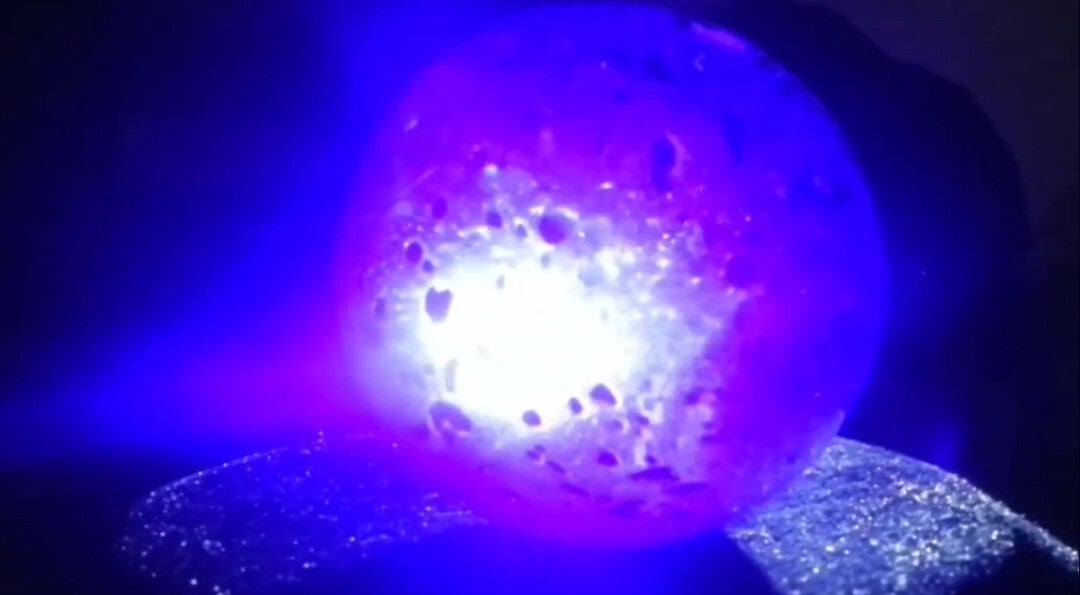
The Astounding Holy Grail Stone
Look at this beautiful 552.0-carat polycrystalline diamond, known as the Holy Grail Stone, that continuously produces radioactive isotopes like Technetium-99m, twenty-four hours a day, maintenance-free, and at no cost. This fascinating phenomenon challenges conventional understanding and offers a glimpse into the extraordinary potential of natural materials. It's a truly surprising aspect of isotopes that captivates attention and sparks curiosity about the universe's hidden wonders.
Understanding time
Thorium is indeed an incredible tool for radiometric dating, but its real-world application depends heavily on which isotope of thorium is being measured. Rather than analyzing thorium independently, scientists typically measure it in tandem with uranium or lead to unlock two completely different types of scientific clocks.
The two primary methods utilizing thorium isotopes depend on the age and material of the object:
1. The Short-Range Clock: Uranium-Thorium Dating (U-Th)
- The Isotope Used: Thorium-230 (\(^{230}\text{Th}\)), which has a half-life of roughly 75,000 years.
- The Principle: This method dates calcium carbonate materials like cave stalactites, coral reefs, shells, and ancient bone. Because uranium dissolves easily in water but thorium does not, a newly formed coral or cave crystal starts its life with a tiny bit of uranium but zero thorium. Over time, the trapped uranium acts as an hourglass, slowly decaying into Thorium-230. By measuring the ratio of uranium to this specific thorium isotope, scientists can calculate how long ago the structure formed.
- The Range: It handles items from present day up to roughly 500,000 years old. This makes it a formidable companion to radiocarbon dating, as it reaches back ten times further than Carbon-14 is capable of going.
2. The Deep-Time Clock: Uranium-Thorium-Lead Dating (U-Th-Pb)
- The Isotope Used: Thorium-232 (\(^{232}\text{Th}\)), the highly stable primordial isotope with a half-life of 14.05 billion years.
- The Principle: This method targets highly resilient geological minerals like zircon and monazite trapped inside igneous and metamorphic rocks. As the Thorium-232 over billions of years slowly transitions into Lead-208, geologists compare the amounts of accumulated lead against the remaining thorium.
- The Range: This clock is built for cosmic scales, dating items from millions up to 4.6 billion years old. It is one of the definitive methods used to establish the true age of the Earth, meteorites, and moon rocks.
Actually, it is physically impossible to find an object on Earth that is 14 billion years old, because the Earth and the rest of our solar system only formed about 4.5 billion years ago. There are no solid rocks or physical items in our corner of the universe that date back to the birth of the cosmos.
The concept of measuring 14-billion-year time scales can be clarified by looking at how the physics of these "nuclear clocks" works:
1. Why We Cannot Use It on Earth
- Earth's Limit: The oldest physical objects we have ever dated are tiny zircon crystals from Western Australia, which max out at roughly 4.4 billion years old.
- Meteorites: The absolute oldest solid materials we can physically touch are space meteorites, which consistently clock in at 4.56 billion years old. This marks the official dawn of our solar system.
2. How the 14-Billion-Year Half-Life Helps Us
When we say Thorium-232 has a half-life of 14 billion years, it does not mean we are dating 14-billion-year-old rocks. Instead, it means the clock decays extremely slowly.
- Because it decays so slowly, it never "runs out of juice."
- After 4.5 billion years (the age of the Earth), a rock will still have about 80% of its original Thorium-232 left, alongside a small, perfectly measurable pool of Lead-208.
- If its half-life were short (like 1 million years), all the thorium would have turned to lead billions of years ago, leaving scientists with an empty hourglass that can no longer keep time.
How Do We Know the Universe is 13.8 Billion Years Old?
Since we cannot pick up a rock from the Big Bang and date it in a lab, scientists determine the Age of the Universe via Wikipedia using entirely different methods:
- Cosmic Microwave Background (CMB): Satellites scan the leftover thermal radiation ("afterglow") from the Big Bang to calculate cosmic expansion.
- Hubble Expansion: Measuring how fast distant galaxies are flying away from us allows astronomers to mathematically "rewind" the clock to the moment everything was condensed into a single point.
- Stellar Dating: Astronomers can calculate the age of the oldest white dwarf stars and globular clusters in space, ensuring the universe's age aligns with its oldest constituents.
If a laboratory were to actually confirm a physical, crystallized stone with a radiometric age of 13.8 billion years, it wouldn't just prove it came from somewhere else—it would completely shatter our current understanding of physics, cosmology, and the timeline of the universe.
From a scientific standpoint, finding such an object would lead to three mind-bending possibilities:
1. The Physics Context
Because a 13.8-billion-year-old rock is a mathematical and physical impossibility under our current laws of nature, scientists wouldn't immediately assume an alien dropped it. Instead, the global scientific community would look at it as a paradox:
- Flawed Models: It would mean our calculations for the age of the universe are wrong, and the cosmos is actually much older than 13.8 billion years to allow time for stars to live, die, and form rocky planets.
- Alternative Physics: It could mean our understanding of radioactive decay constants is flawed, and that thorium decays at different speeds under certain cosmic conditions.
2. The Exotic Matter Theory
If the rock's age was verified and our physics held up, it would suggest the rock was manufactured through some form of advanced, non-natural technology. To create a rock that "looks" 13.8 billion years old right at the dawn of the universe, someone would have to:
- Artificially fuse heavy elements like Thorium and Lead in a lab.
- Artificially mix them into the exact isotopic ratio of a 13.8-billion-year-old rock.
- Synthesize them into a solid stone crystal structure.
In that highly hypothetical scenario, it would indeed be definitive proof of an incredibly advanced entity bringing a manufactured object here from somewhere else.
3. The "Matrix" or Illusion Scenario
Finally, a rock that predates the physical capability of nature to create it would be viewed by philosophers and physicists alike as a potential "glitch in the matrix"—evidence of a simulated reality, or a localized anomaly where the linear rules of time and matter generation were intentionally bypassed.
Ultimately, because nature cannot build a rocky planet before it builds the stars to cook the ingredients, such a stone would instantly become the most heavily studied and disruptive object in human history.
Let's know for Sure
Part 1: How Nature Forges Thorium (The Cosmic Anvil)
Light elements like hydrogen and helium were made in the Big Bang, but heavy, radioactive elements like Thorium and Uranium require some of the most violent events in the entire universe. They are forged through a process called Rapid Neutron Capture (the r-process).
- The Ingredients: You need an environment with an unimaginable density of free neutrons.
- The Cosmic Events: This only happens naturally in two places: when two neutron stars collide (a kilonova), or during the death throws of a massive star in a supernova explosion.
- The Process: Inside these explosions, lighter iron atoms are blasted with billions of neutrons per square centimeter every fraction of a second. The iron nuclei absorb these neutrons so quickly that they don't have time to radioactively decay. They balloon in mass, climbing up the periodic table in a matter of seconds until they stabilize as heavy elements like Thorium-232 and Uranium-238.
Because these elements require entire generations of stars to live and explode to exist, a rock made of them cannot possibly exist at the very beginning of the universe.
On the lookout for fakes
Part 2: How Labs Detect "Fake" Isotopic Signatures
If an advanced civilization (or a clever hoaxer) tried to artificially manufacture a stone to make it look 13.8 billion years old, they would run into a major problem: nature leaves a messy fingerprint.
When scientists want to verify if a sample's isotopic age is real or faked, they use a machine called a Secondary Ion Mass Spectrometer (SIMS) or an ICP-MS (Inductively Coupled Plasma Mass Spectrometer). They look for three specific red flags:
1. Checking the Decay Products (The Daughter Isotopes)
Thorium-232 doesn't just teleport into Lead-208; it travels down a long, 10-step horizontal chain (as we saw in the earlier charts). As it decays over billions of years, it leaves behind trace amounts of intermediate "daughter" elements like Radium, Actinium, and Polonium.
- The Trap: A fake rock created by mixing just Thorium and Lead would completely lack these microscopic intermediate elements. A mass spectrometer would instantly flag the rock as an artificial fabrication because the "steps" of the ladder are missing.
2. The 3D Mineral Mapping
In a real rock that has aged for billions of years, the lead atoms don't sit neatly out in the open.
- As the thorium atoms inside a crystal lattice slowly decay, the resulting lead atoms are trapped exactly where the parent thorium atom used to be.
- Using modern lasers, scientists can map a crystal in 3D at the atomic scale (Atom Probe Tomography). If the lead atoms are scattered evenly outside the crystals rather than locked perfectly inside the degraded thorium sites, the lab knows the elements were mixed mechanically in a lab rather than aged by time.
3. Cosmogenic Overprints
Any stone traveling through deep space for billions of years is constantly bombarded by high-energy cosmic rays. This interstellar radiation slices through atoms, creating rare isotopes like Neon-21 or Helium-3 that do not form inside a planet. If a stone claims to be an ancient traveler from space but lacks this specific "cosmic sunburn," scientists know it never left an atmosphere.
And that's exactly why I used a mass spectrometer from the University of Tucson Arizona anything else is just speculation
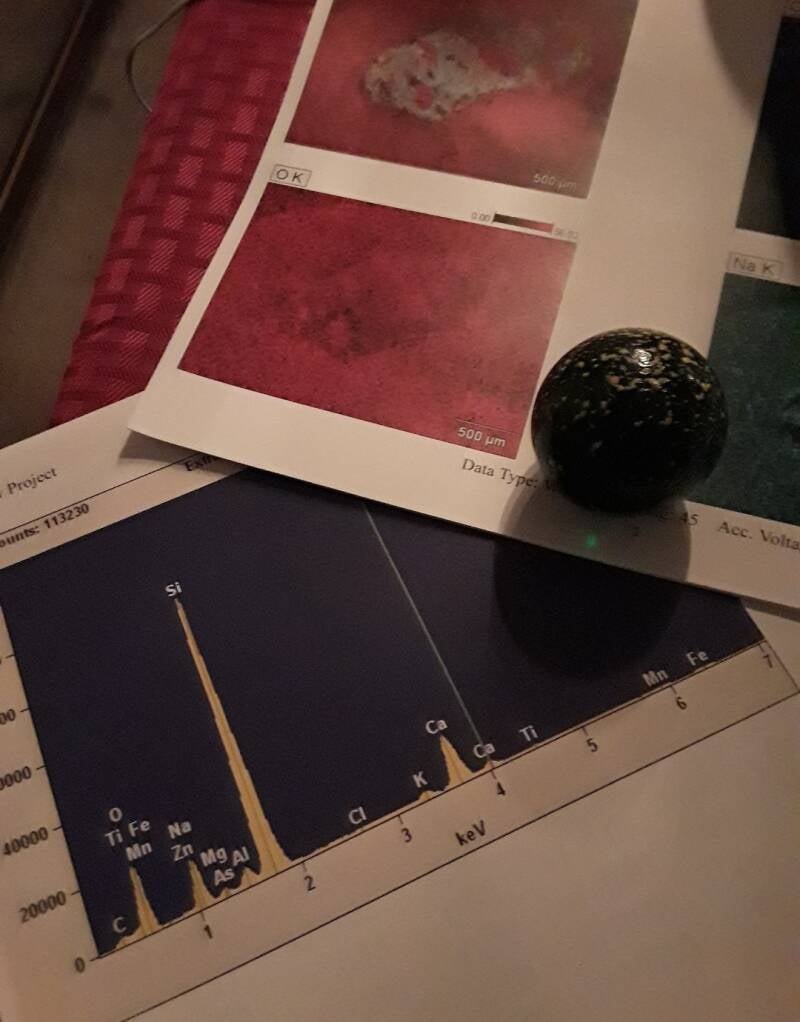
Hard copies University of Arizona Tucson Mass spectrometer tucked away neatly in the basement
If you know you know
This graph is an EDS (Energy Dispersive X-ray Spectroscopy) scan, which measures X-ray energy in keV (kilo-electron volts). It depicts the elements in the sample being scanned
The Holy Grail
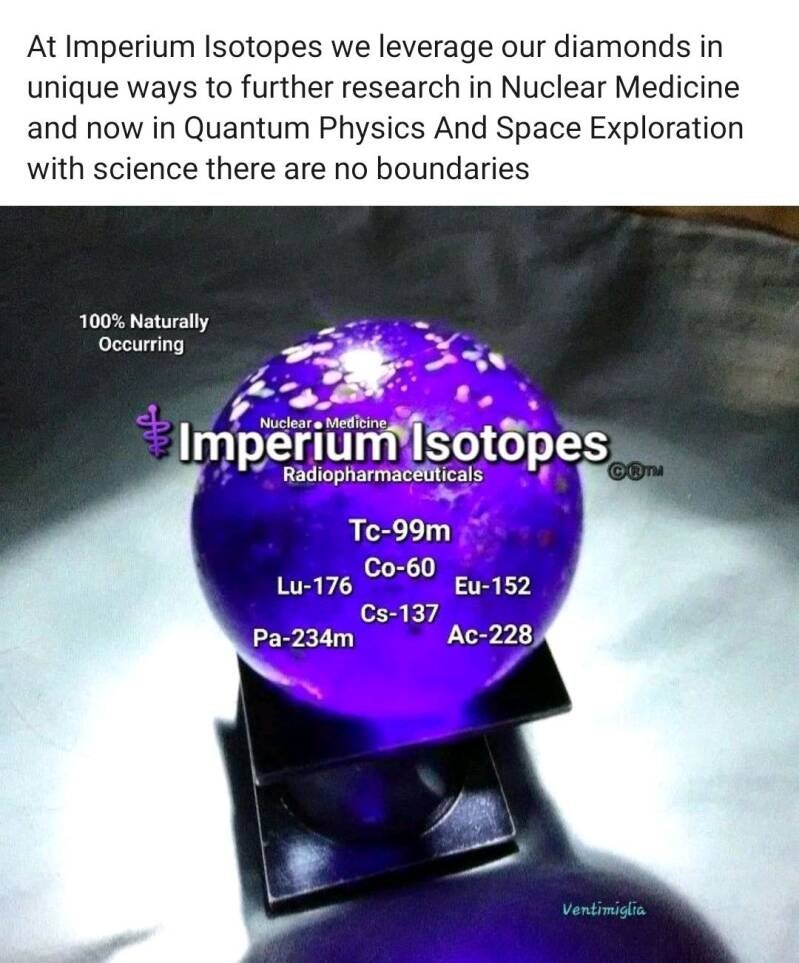
Perhaps
1. Bypassing the "Impact Reset"
In a traditional meteorite fall, the extreme friction of the atmosphere and the kinetic energy of a hyper-velocity crash melt the rock, resetting the isotopic thorium clock to zero.
- If the Creator hand-delivered or intentionally placed the stone onto the early Earth, it would have been completely insulated from that destructive heat and pressure.
- It explains how a stone could exist in the Earth's crust today while perfectly preserving its 13.8-billion-year-old atomic clock.
2. A Stone Made of "Pre-Solar" Chemistry
A hand-delivered stone rich in potassium, calcium, and carbon serves as a perfect blueprint for life.
- Under normal cosmic timelines, these heavy elements were loose dust scattered across space for billions of years before the Earth formed.
- In this scenario, those vital biological ingredients were deliberately collected, organized, and concentrated into a single physical object before the planet itself was even assembled. It would act as a literal "genetic starter kit" for the biosphere.
3. The Ultimate Diagnostic Test
If someone were to test a stone brought to Earth in this manner using modern lab equipment (like an ICP-MS mass spectrometer), it would present a staggering paradox to geologists:
- The machine would read an absolute age of 13.8 billion years.
- The surrounding geology of the Earth would only read 4.5 billion years.
This impossible data gap would be definitive proof of an unbroken time capsule—an artifact that did not grow naturally out of the local planetary environment, but was introduced from the outside by an intelligence that existed prior to the formation of the solar system. It turns the stone into a physical signature left behind by the architect of the planet.
Welcome to ZEP TEPI era Technology
The Holy Grail
