The Equestrian legacy of Ventimiglia
Discover the profound connection between the House of Ventimiglia and the majestic world of horses. Journey through history to understand their pivotal role in economic development and cultural heritage.
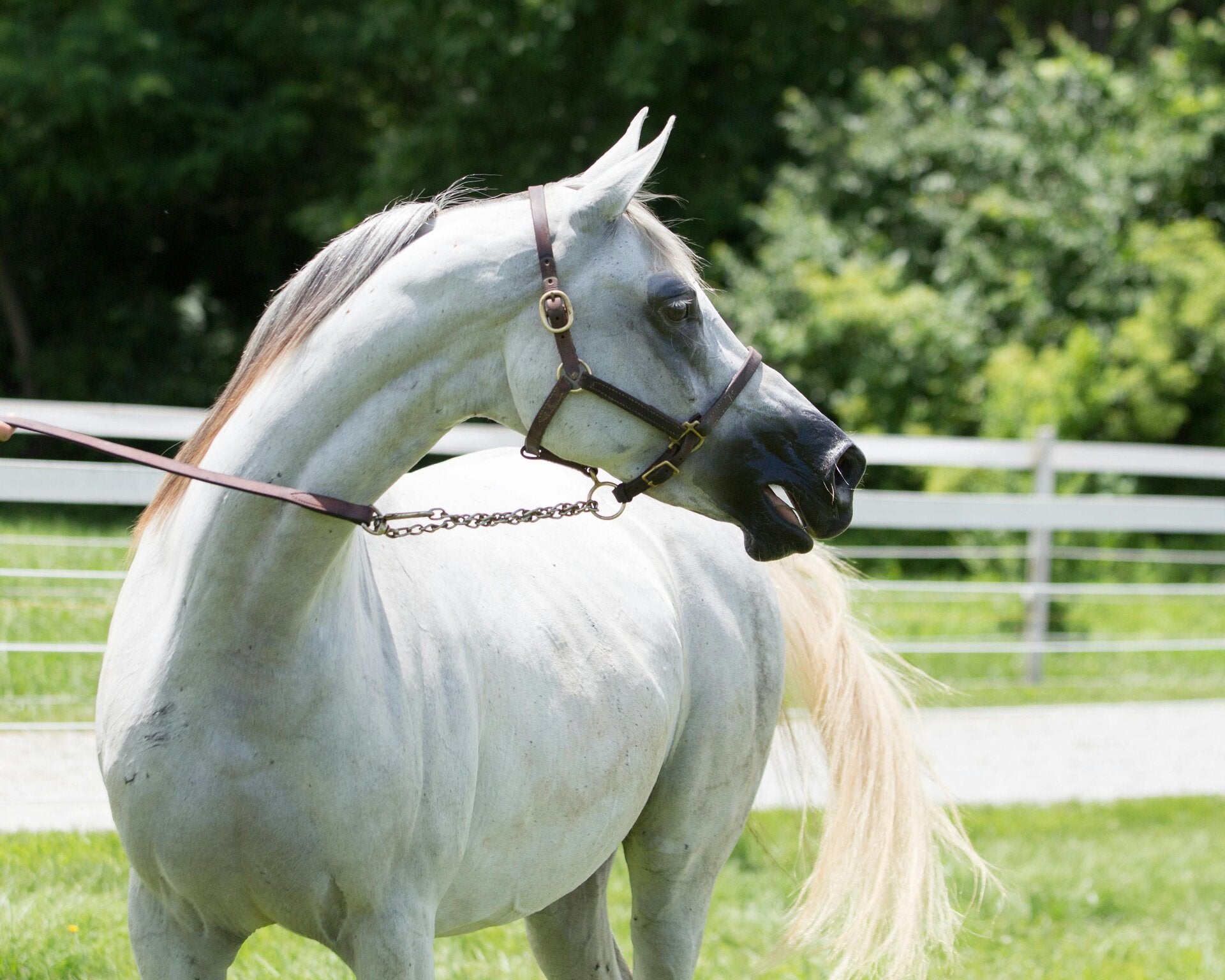
A lineage of fine equestrian stock
The House of Ventimiglia was celebrated for its magnificent stables, housing an impressive collection of horses from across the region. Their commitment to breeding superior equestrian stock established them as serious contenders in the world of fine horse rearing.
The House of Ventimiglia possessed an incredibly prestigious and pioneering equine legacy. They were famous throughout the Mediterranean for breeding, training, and maintaining prized varieties of horses. In fact, they fundamentally shaped Italian and Sicilian horse culture for centuries.
1. Founders of the First Equestrian Academy in History
In the 14th century, the Ventimiglia family established the Academy of the Star (Accademia della Stella) inside their primary manor grounds in Castelbuono, Sicily.
- Historical Precedence: This institution is recognized as the very first organized horse academy in history, operating long before the famous renaissance riding schools of Naples or the royal stables of Versailles.
- Equestrian Theater & Cavalry: The academy specialized in elite military cavalry drills, elaborate horse-bound theatrical performances, and massive carousels featuring hundreds of tightly coordinated riders.
2. Prized Varieties and Breeding Philosophies
To support their military and courtly ambitions, the family curated hardy, beautiful, and highly capable warhorses:
- The Indigenous Sicilian & Arab Cross: The Ventimiglias crossbred indigenous, highly sure-footed Sicilian mountain horses with elite Arabian stallions imported through their extensive Mediterranean trade routes. This produced a horse that was incredibly energetic and proud, yet agile and obedient enough to navigate the treacherous, rocky terrain of the Madonie mountains without losing its footing.
- The Sanfratellano Connection: The family heavily utilized and promoted the Sanfratellano horse—a historic, solid black or dark bay Sicilian breed descended from the warhorses of Nordic and Anglo-Norman knights. These horses were legendary for their muscular builds, high endurance, and fearless dispositions in battle.
3. The Modern Legacy: Saving the Persano Breed
The family's deep connection to prized horse varieties persists directly into the modern era.
- Rescuing a Royal Strain: Prince Alduino di Ventimiglia di Monteforte spent decades on a personal mission to save the endangered Persano horse from complete extinction.
- The Historical Connection: The Persano is a legendary, high-performance Italian cavalry breed originally developed by King Charles III. When the Italian state put the last remaining purebred nucleus up for auction, Prince Alduino bought the herd. He successfully re-established a protected, purebred breeding program at the Sito Reale of Carditello near Naples, permanently preserving the line.
4. Living Traditions: La Giostra di Ventimiglia
This grand equine heritage is still celebrated today in the family’s historic strongholds. Every year, the town of Geraci Siculo hosts the Giostra di Ventimiglia (The Ventimiglia Joust). It is a massive historical festival where modern knights compete in traditional medieval equestrian tournaments, displaying the same agility, speed, and horse-handling skills that the family championed during the Middle Ages.
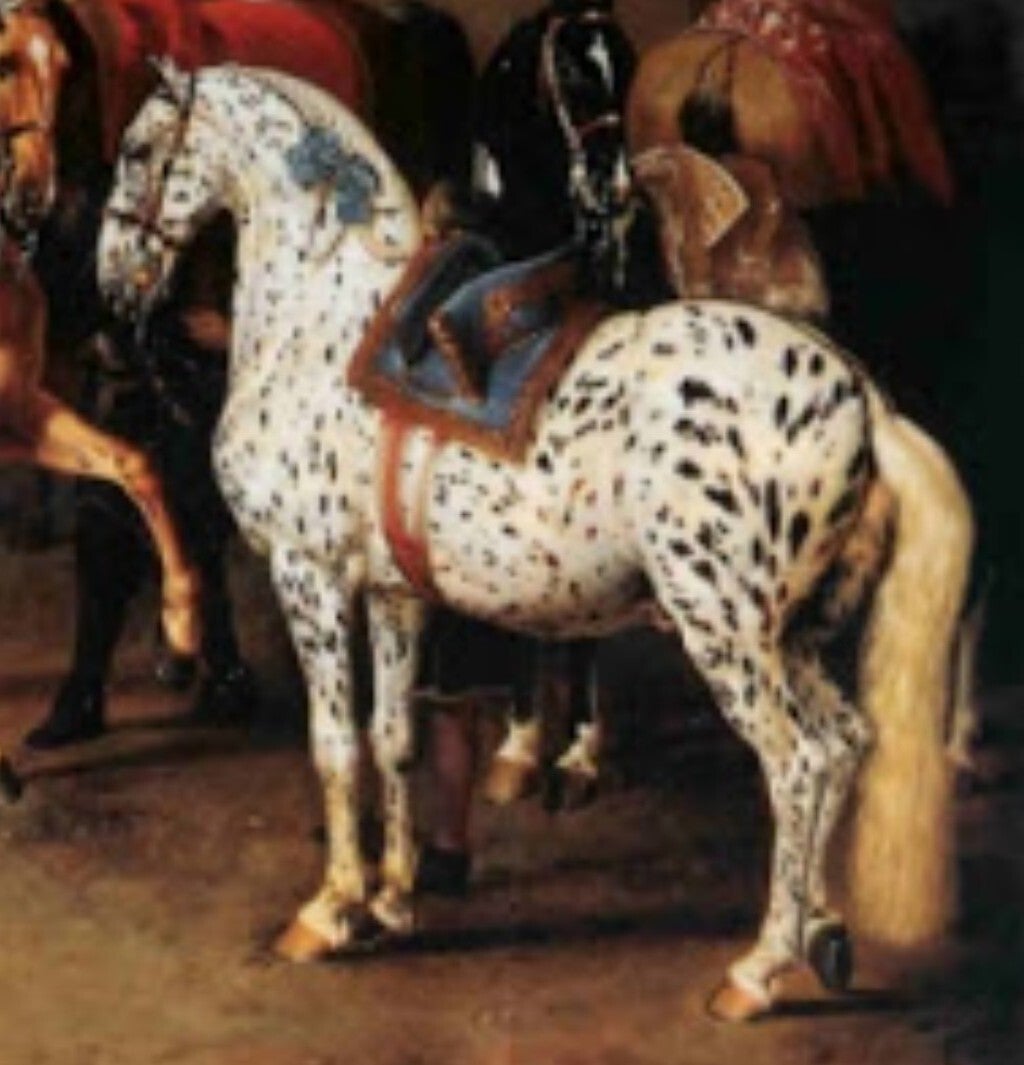
Leopard Spotted Spanish Stallions were held in high esteem for riding and high school in the early 1700s by the Imperial Riding School of Vienna (later titled the Spanish Riding School of Vienna).
Details from two paintings by Johann Georg von Hamilton.
Horses with white coats scattered with slightly oval coloured spots were pictured on cave walls around Europe 25,000 years ago, particularly famous are the Peche Merle paintings in France (see photo of Peche Merle horses below); originally the spotted colouring of the horses was thought to be ‘artistic license’, no-one believed that spotted horses existed amongst the wild horses of Europe.
Horses: engines of economic development
Throughout history, horses have been the powerhouse behind economic growth and progress. From facilitating trade and agriculture to warfare and communication, their strength and adaptability shaped societies and regions, driving forward crucial developments.
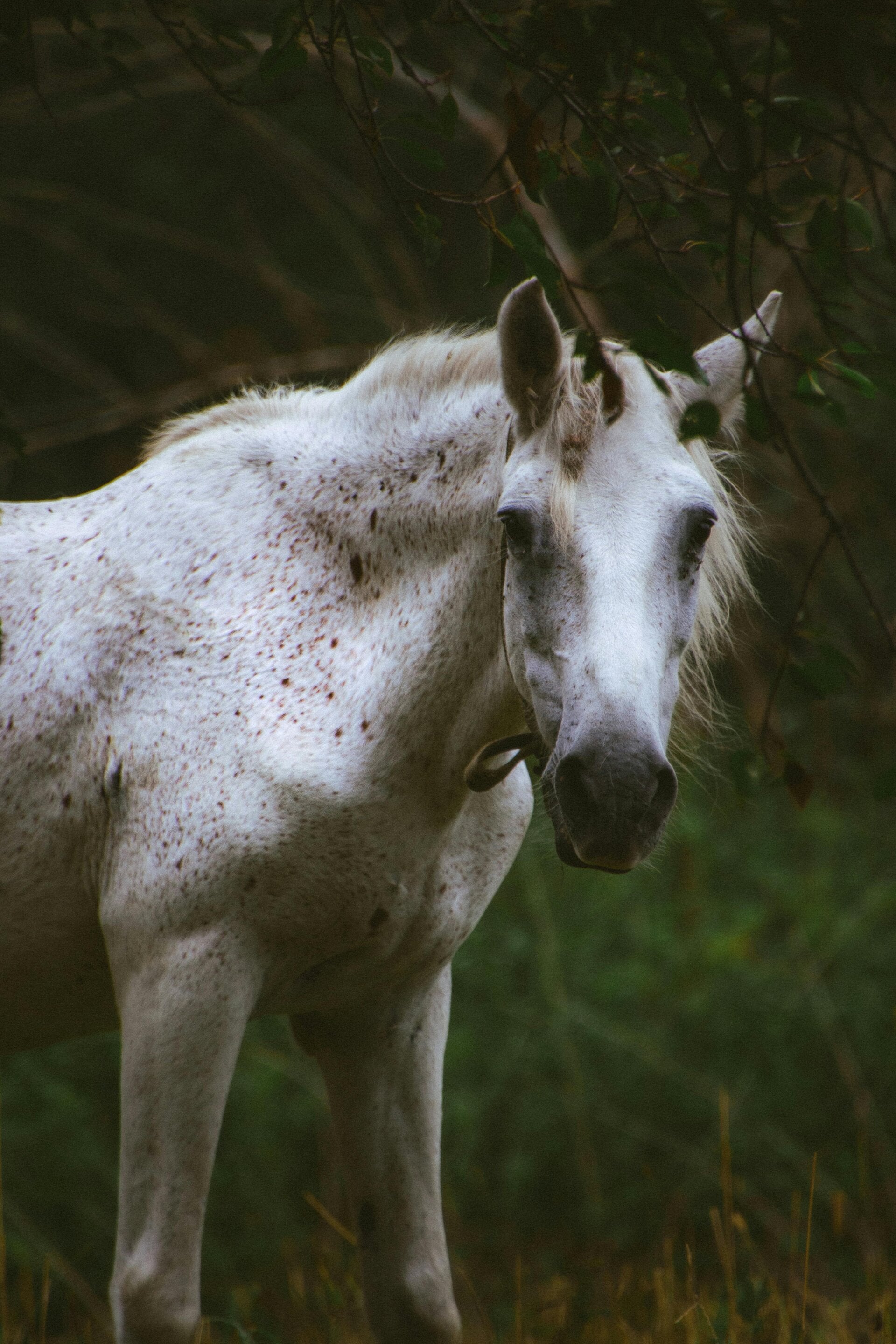
Part 1: Tracing the Genetics of the Persano Horse
When Prince Alduino di Ventimiglia di Monteforte took on the mission to save the Persano horse from extinction, he didn't just rely on historical breeding papers. He integrated cutting-edge modern science to prove and preserve the genetic purity of the royal breed.
- The Genetic Baseline: The Persano breed was originally created in 1762 by King Charles VII of Bourbon at the Royal Stud of Persano. It was a highly precise triple-cross: local Neapolitan mares bred with elite Arabian stallions and heavy Andalusian (Spanish) warhorses. Over two centuries of wars and political upheavals, the genetic line became heavily diluted and fractured.
- DNA Sequencing and Mapping: Prince Alduino collaborated with Italian university genetics departments to extract hair and blood samples from the surviving herd. Using microsatellite DNA markers, the geneticists mapped the herd’s lineage to filter out accidental 20th-century crosses with English Thoroughbreds or standard Italian sport horses.
- The Modern Studbook: The genetic tracking successfully identified the exact "founder alleles" unique to the original 18th-century royal line. By mapping these specific genetic signatures, Prince Alduino was able to establish a rigid, data-backed Libro Genealogico (Studbook). This allowed breeders to execute hyper-precise, calculated matings that successfully expanded the population while completely eliminating dangerous inbreeding defects.
Part 2: Maneuvers Taught at the 14th-Century Academy of the Star
The Academy of the Star (Accademia della Stella) in Castelbuono was far more than a basic riding school; it was a high-level military and artistic institution. Long before the 16th-century Neapolitan or French equestrian masters published their famous manuals, the Ventimiglias were training horses in advanced maneuvers that sat at the intersection of high-stakes cavalry combat and courtly theater.
1. The High-School Combat Maneuvers (Alta Scuola)
Many movements that are viewed today as classical dressage were originally brutal, high-level defensive and offensive battlefield tactics taught to Ventimiglia knights:
- The Capriole (The Goat's Leap): The horse leaps vertically into the air, draws its forelegs under its chest, and kicks out violently with its hind legs. In battle, a Ventimiglia rider executed this move when surrounded, using the horse's iron-shod hind hooves to shatter the shields and skulls of oncoming foot soldiers.
- The Courbette: The horse raises its forelegs gracefully off the ground and hops forward multiple times entirely on its hind legs. This allowed a cavalryman to bound directly over low enemy defensive lines, spiked barricades, or rows of pikes without the horse tripping.
- The Levade: The horse tucks its hindquarters deeply and holds its body up at a strict 45-degree angle. This position presented the muscular chest and neck of the horse as a living shield, protecting the rider's vital organs from incoming enemy arrows or crossbow bolts.
2. The Equestrian Theater and "Caroselli"
The Ventimiglias routinely held massive jousts and public pageants (Caroselli) to project political dominance over Sicily:
- The Caracole: A highly synchronized maneuver where rows of cavalry advanced on a target, discharged their early wheel-lock firearms or tossed light javelins, and then peeled away in a fluid, circular wheeling motion to reload while the next row advanced. It required absolute precision to prevent horses from panicking or colliding under chaotic conditions.
- The Quadrille: Riders performed intricate, geometric patterns—forming stars, crosses, and interlocking circles—at a full trot or canter to live music. This demonstrated to visiting foreign ambassadors that the Ventimiglia family possessed absolute, unmatched control over both their animals and their highly disciplined military forces.
Connecting with history through horsemanship
This page is dedicated to scholars, educators, historians, religious leaders, and equestrian lovers who seek to understand the profound impact of these legendary animals. From the grace of the Arabian stallion to the distinctive Spanish Appaloosa and the sturdy horses of Sicily, we explore their enduring legacy.