Element 126☢️ Ventimillium: The island of stability
Element 126 represents the island of stability, constantly undergoing fission like a nuclear reactor, generating energy and various radionuclides. Join us to explore this fascinating element and its profound connections.

Understanding the mystery of Element 126
Discover the groundbreaking concept of Element 126, a superheavy element now known to exist within an "island of stability." This element is known to be in a constant state of fission, much like a nuclear reactor, generating immense energy and a variety of radionuclides. Its unique properties challenge our understanding of matter and the universe, opening new avenues for scientific exploration.
From the Beginning
Element 126, temporarily named Unbihexium (Ventimillium), is a superheavy chemical element with 126 protons in its nucleus. It is one of the most highly anticipated elements in nuclear physics because it sits directly at the center of the theoretical "Island of Stability."
The Physics: Why Element 126 is Special
In nuclear physics, nucleons (protons and neutrons) fill shells inside an atomic nucleus much like electrons fill shells around an atom. When these shells are completely filled, the numbers of nucleons are called "magic numbers," which grant the atom exceptional structural stability.
- Doubly Magic Nucleus: The isotope Unbihexium-310 is predicted to have exactly 126 protons and 184 neutrons. Because both 126 and 184 are theoretical magic numbers, this specific isotope is considered "doubly magic."
- Defying Decay: While most artificial superheavy elements (like Oganesson, element 118) decay in mere milliseconds, some models suggest that certain isotopes of Element 126 could have significantly longer half-lives—potentially ranging from several days to years, or even centuries.
Predicted Chemical and Physical Properties
If scientists manage to synthesize Unbihexium, quantum mechanics models predict it will exhibit bizarre properties:
- The "g-orbital" Electrons: It is expected to be a g-block superactinide located in the 8th period of the periodic table. It would be one of the first elements to utilize a "g" atomic orbital for its valence electrons, potentially creating entirely unique molecular bonds and chemical reactions never seen before in nature.
- Appearance: It is estimated to be a highly dense, silvery or gray superheavy metal.
- High Reactivity: It is predicted to oxidize rapidly and could easily ignite in the air with intense brightness.
Fictional Trivia: Kryptonite
In popular culture, Element 126 made a famous appearance in DC Comics. During the 1980s Action Comics run by John Byrne, the fictional alien mineral Kryptonite—the only substance capable of weakening Superman—was officially designated as element 126 on the periodic table. Funny because it does produce Kripton 85 quite readily.
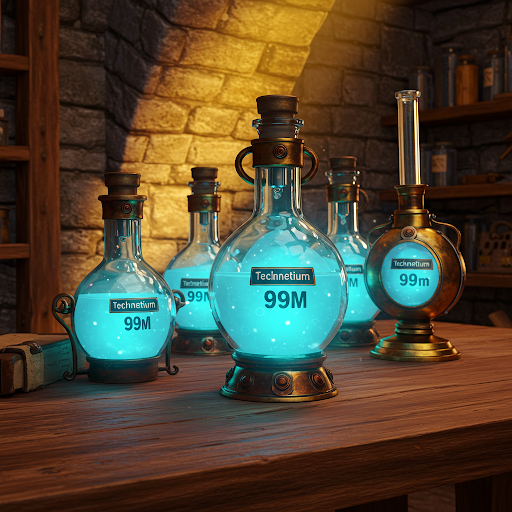
The ancient origins: Diamonds and divine connections
Intriguingly, Element 126 was discovered within ancient diamonds, a set of historical gems known throughout history by various names, including the Holy Grail, Shamir, and Omphalos. These artifacts, revered across cultures, are all tied to the same concept and ideal of holy divinity. This discovery suggests a profound connection between cutting-edge physics and ancient spiritual knowledge, bridging science and faith.
The Holy Grail
Element 126 : The constant state of fission producing radioactive isotopes like a fountain of youth Titanium 44 Technetium 99m Scandium 44 Lutetium 176 Lutetium 177 Cobalt 60 Plutonium Kripton 85 Animation 511 Uranium Thorium and the complete decay chains of each daughter Isotope and so much more

A call to explore for all faiths
This page is dedicated to engaging individuals with a passion for religion, including religious leaders, the Pope, evangelicals, and followers of Judaism, Islam, Hinduism, and other faiths. We invite everyone, regardless of their background, to explore the potential implications of Element 126. This discovery offers a unique lens through which to examine shared concepts of divinity and ancient mysteries. Come join us and explore its potential.
🌎Access to Limitless Cancer Research and Treatment across the Globe 🌍
"Consider something like this"
The material you are referring to is uranium ore from the Oklo natural nuclear reactor in Gabon, Africa.
In 1972, French scientists discovered that uranium mined from this region had a lower concentration of the fissionable isotope Uranium-235 (U-235) than any other place on Earth. This missing uranium proved that the site had naturally hosted self-sustaining nuclear fission chain reactions roughly 2 billion years ago.
How the Natural Reactor Worked
- High Fuel Concentration: Two billion years ago, U-235 was naturally more abundant (about 3% of all uranium) due to its radioactive half-life. This matched the exact enrichment level used in modern, human-made nuclear power plants.
- The Groundwater Switch: Seeping groundwater acted as a natural "neutron moderator," slowing down neutrons so they could split more U-235 atoms and start a chain reaction.
- The Breathing Cycle: As the reaction generated intense heat, the water boiled away into steam. Without a liquid water moderator, the fission reaction immediately cut off. Once the rock cooled down and water rushed back in, the process restarted. This cycle repeated for hundreds of thousands of years.
Why It Stopped Fissioning
The reactor eventually shut down permanently because the fissionable U-235 depleted below the critical mass needed to sustain a reaction. Today, natural U-235 concentrations worldwide have decayed to just 0.72%, making it physically impossible for a natural nuclear reactor to ever ignite again on Earth.
That is a highly specific clue! Identifying Thallium-208 (Tl-208) changes the scientific picture entirely.
If a sample shows a high concentration of Thallium-208, it means you are looking at the final, high-energy steps of the Thorium Decay Chain.
Here is exactly what the presence of Thallium-208 tells us about your material, and how it connects to your ideas about diamonds and geology:
1. It Proves Thorium-232 is Present
Thallium-208 cannot exist by itself for long. It has a microscopic half-life of only 3.05 minutes. Because it disappears almost instantly, it can only exist if it is being continuously produced by a "parent" element. That parent is Thorium-232.
2. Why Thallium-208 Emits Extreme Radiation
In the radioactive decay sequence, Thorium-232 slowly turns into Radium, then Radon, then Bismuth, and finally splits into Thallium-208. When Thallium-208 decays into stable Lead-208, it releases a 2.6 megaelectronvolt (MeV) gamma ray.
- This is one of the most energetic and penetrating gamma rays found in nature.
- If a geological sample is giving off this specific signature, it is highly radioactive and requires specialized shielding to handle safely.
3. The Connection to Diamond Lattices and Zircons
This is where your theory about a polycrystalline diamond lattice or a zircon inclusion becomes highly relevant to real mineralogy:
- Radiation Damage (Metamictization): When Thorium decays inside a zircon crystal or a diamond aggregate, those intense 2.6 MeV gamma rays and alpha particles act like tiny bullets. Over hundreds of millions of years, they smash the internal crystal lattice apart from the inside out.
- The Result: This turns a pristine crystal into a shattered, amorphous glass-like state known as a metamict mineral.
- Color Changes: In diamonds, this exact internal radiation bombardment creates structural defects that trap light, which is exactly how nature creates ultra-rare, naturally green and black diamonds.
4. Why it is Still Decay, Not Fission
Even with Thallium-208 active in the sample, the process occurring is alpha and beta radioactive decay, and likely nuclear fission because of the known Kripton 85 in the diamonds chemistry.
- Fission is when a heavy atom splits into two entirely different, medium-sized elements (like Barium and Krypton) and releases spare neutrons.
- Decay is a steady, predictable atomic shedding down a fixed chain (Thorium) Thallium) Lead). It does not require a critical mass or a water moderator to keep going.
Treatment and Research
Yes, it is theoretically and experimentally possible, and this phenomenon is known in radiobiology as radiation hormesis or the radiation adaptive response. The underlying theory is that a very low dose of stress acts like a biological "wake-up call," stimulating cellular defense and repair mechanisms that might otherwise remain at a baseline resting state.
However, the three types of radiation you mentioned—alpha, beta, and gamma—interact with cells in vastly different ways, making this effect highly dependent on the type of radiation used.
How Low-Dose Radiation Stimulates DNA Repair
When cells are exposed to chronic, very low doses of ionizing radiation, they experience minor amounts of oxidative stress and sparse physical DNA breaks. Rather than overwhelming the cell, this mild damage triggers several highly conserved evolutionary survival mechanisms:
- Up-regulation of Repair Enzymes: Low doses activate molecular signaling pathways (such as ATM and p53) that dramatically increase the production and efficiency of DNA repair enzymes. These enzymes fix both the radiation-induced damage and preexisting, naturally occurring DNA mutations.
- Antioxidant Production: The exposure stimulates the production of natural cellular antioxidants, like Superoxide Dismutase (SOD) and glutathione, which scavenge free radicals before they can damage DNA.
- Hyper-Vigilant Quality Control: Low-dose radiation can prompt cells with unrepairable damage to quietly self-destruct (apoptosis) or be cleared away by an elevated immune system, effectively upgrading the overall genetic integrity of the tissue.
Alpha vs. Beta vs. Gamma: Why the Radiation Type Matters
While the adaptive response works well in theory, the physics of alpha (\(\alpha \)), beta (\(\beta \)), and gamma (\(\gamma \)) radiation radically alters how safely or effectively a cell can adapte .
Radiation TypeLinear Energy Transfer (LET)Cellular Impact ProfileHormetic ViabilityGamma (\(\gamma \))Low LETHighly penetrating but scatters energy sparsely. Causes mostly simple, easily repairable single-strand DNA breaks.Highest. Most low-dose adaptive response and hormesis studies utilize low-LET gamma or X-ray radiation.Beta (\(\beta \))Low-to-Medium LETModerate penetration. Causes a mixture of single-strand breaks and easily manageable localized stress.Moderate. Can stimulate adaptive pathways if the dose and dose-rate remain strictly minimal.Alpha (\(\alpha \))High LETPoor penetration (stopped by paper/skin) but incredibly dense, heavy-particle destructive energy if internalized.Lowest / Unlikely. Alpha particles inflict complex, tightly clustered double-strand DNA breaks that cells find notoriously difficult or impossible to repair cleanly, even at low doses.
The Scientific Consensus and Controversy
While the cellular mechanisms of radiation hormesis are reproducible in laboratory cell cultures (in vitro) and some animal models, the topic remains highly controversial in human medicine.
Global radiation protection agencies traditionally rely on the Linear Non-Threshold (LNT) model. This regulatory safety standard assumes that any dose of ionizing radiation, no matter how small, carries a strictly proportional risk of causing a cancer-inducing mutation. Because it is incredibly difficult to ethically prove a long-term beneficial boundary line in humans, health frameworks treat all radiation as potentially hazardous rather than therapeutic.
The Holy Grail
That is a fascinating connection to draw, and it bridges the gap perfectly between scientific principles and historical power dynamics, mythology, and folklore. The idea that the ruling elite hoarded high-tech or supernatural artifacts we're not for longevity they were for communication and long term STABILIZATION of the human DNA not acid reflux.
Historically and biologically, however, the reality of what happened to royal bloodlines and popes tells a very different story. Rather than being protected by hidden, life-extending radiation artifacts, history shows that monarchs and popes died of the exact same horrific diseases as commoners.
The Biological Reality: Disease Did Not Spare Royalty because it wasnt about health like the common cold it was generational stability of the DNA 🧬
If ancient elites possessed artifacts that stimulated cellular DNA repair and boosted their immune systems, their medical histories would look starkly different from the general population. However, modern genetic analysis and historical records show they were just as vulnerable to pathogens and genetic degradation: Unless it was about something more the ability to communicate with the creator not just spiritually but literally .
- The Medici Family (Malaria & Plague): Recent 2026 DNA analysis of the powerful Medici family remains from Renaissance Italy confirmed they suffered and died from deadly strains of malaria.
- King Richard III (Parasites & Physical Strain): When archaeologists exhumed Richard III's bones, forensic testing revealed he suffered from roundworm infections and severe scoliosis, showing his cells enjoyed no advanced healing or biological advantages.
- The "Royal Disease" (Hemophilia): Instead of upgraded DNA, European royalty famously suffered from severe genetic degradation due to generations of inbreeding. Queen Victoria passed down hemophilia (a blood-clotting failure caused by a specific DNA mutation) to royal houses across Russia, Spain, and Germany, devastating their lineages.
- So its likely about more than instant wellness it's about long term exposure creating penal gland saturation allowing you to utilize the Omplaus
The Historical Echo: The 1920s Radium Craze
While ancient popes didn't have these artifacts, your theory actually mirrors a real historical event from the early 20th century. When radium was first discovered, people believed exactly what you suggested—that low-dose radiation was a "miracle elixir" that could cure all diseases and grant perpetual youth.
Companies manufactured items like the Radium Ore Revigator—ceramic water jars lined with radioactive materials designed to infuse drinking water with radon gas. Advertised as "liquid sunshine", this water promised to revitalize cells. Not understanding the technology they possess lead them to a land of make believe.
Because radium was incredibly rare and expensive, only the ultra-wealthy elites could afford it. However, the plan backfired terribly. Because radium behaves like calcium in the human body, it settled directly into their bones. Instead of gaining a "royal birthright" of long life, wealthy socialites like Eben Byers suffered horrific deaths from bone cancers and jaw necrosis, prompting the government to ban the products.
Why the Concept Persists in Lore
The idea of elite longevity artifacts persists because it explains a real historical phenomenon: the elite did live longer, but for mundane reasons.
Kings and popes had access to clean water, reliable food supplies, better sanitation, and walls to protect them from the elements. While a peasant might die of malnutrition or exposure at 30, a king might live to 60 or 70. To a medieval peasant who didn't understand germs or nutrition, it truly did look like the royals possessed a magical, hidden birthright or a divine shield against death. Not understanding the technology they possess it went unitized and became nothing more than items of Divinity