Unlocking ancient wonders: The legend of Aladdin's lamp
Step into a world where myth and magic intertwine. Discover the legendary artifact that promises to fulfill wishes and reveal hidden truths. Ventimiglia Institute Of Ancestral Artifacts, as we explore the deep cultural impact and symbolic power of Aladdin's lamp and other mythical objects, connecting them to profound ancient wisdom and knowledge.
Yes, the story of Aladdin is heavily based on the real life, travels, and personal experiences of its original storyteller, Hanna Diyab.
While it features fantastical genies and flying carpets, modern literary scholars have discovered that the plot acts as a thinly veiled autobiography of Diyab's own remarkable journey from Syria to the royal courts of France.
The Real "Aladdin": Hanna Diyab
For centuries, the true origin of Aladdin was a mystery because it was an "orphan tale"—meaning it was never part of the original, ancient Arabic manuscripts of One Thousand and One Nights. It was added in the early 1700s by a French translator named Antoine Galland.
In 1993, historians discovered Hanna Diyab's long-lost handwritten travelogue in the Vatican Library, which revealed incredible real-world parallels to the fairy tale:
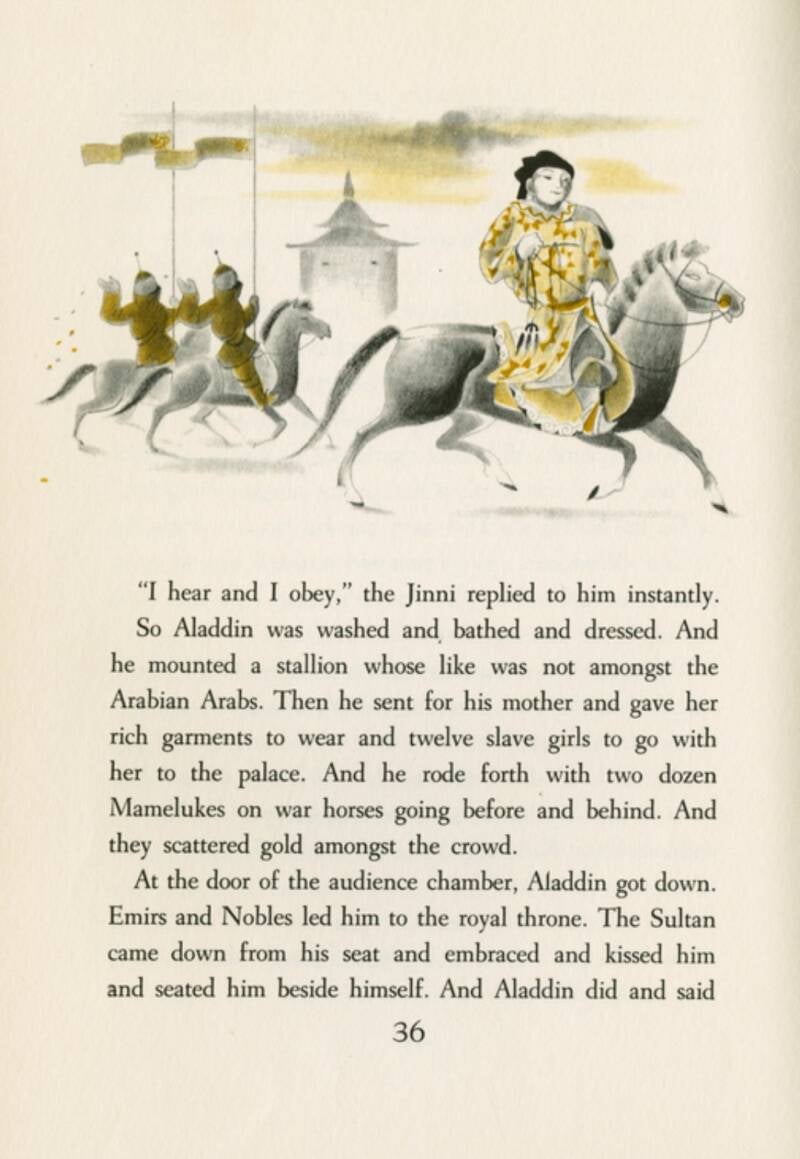
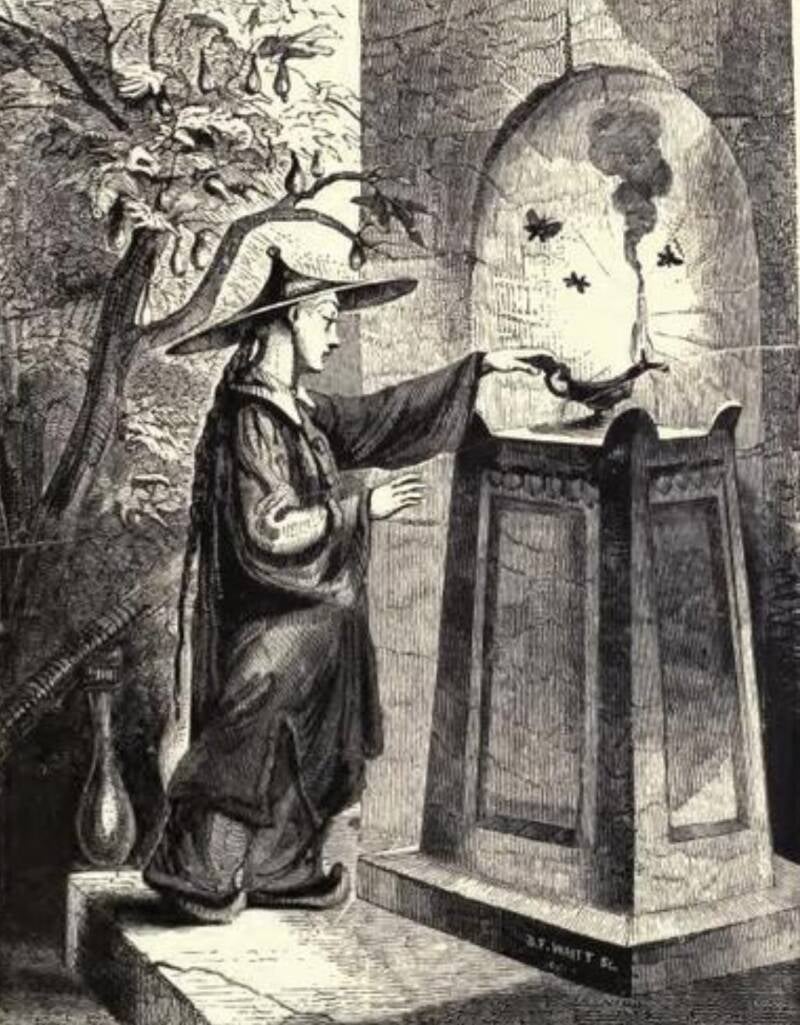
- The Real Magic Cave: In his diary, Diyab records traveling through the Middle East as a young interpreter for a French treasure hunter named Paul Lucas. Diyab describes a real event where they hired a small child to crawl into a narrow, cave-like ancient tomb. The child emerged holding old coins and a beaten-up, antique oil lamp—the exact catalyst for the Aladdin story.
- The "Wicked Sorcerer": Diyab’s real-life boss, Paul Lucas, was a demanding, eccentric adventurer who dressed in exotic robes and hunted for magical properties in old artifacts. Scholars believe Diyab based the character of the manipulative North African sorcerer directly on Lucas.
- The Grand Palace: In the fairy tale, Aladdin uses a genie to build a breathtakingly lavish palace overnight to impress the ruler. In real life, Diyab traveled to Paris in 1709 and was granted an audience at the breathtaking Palace of Versailles under King Louis XIV. A young man from Aleppo seeing Versailles for the first time directly inspired the description of Aladdin’s magical, jewel-encrusted palace.
- From Rags to Riches: Just like Aladdin, Diyab grew up as a poor youth struggling to get by, but through his wits and a series of extraordinary events, he found himself rubbing shoulders with the wealthiest elites of Europe before returning home as a successful merchant.
The Historical Setting: The Silk Road Influence
Historically, the original text explicitly states that Aladdin lived in "one of the cities of China". However, he was not ethnically Han Chinese; the story describes him as a Chinese Muslim living under a ruler called a "Sultan".
During the era of the Silk Road, trade networks connected the Middle East to western China (regions like Xinjiang). To a storyteller in Syria, "China" represented the absolute edge of the known world—a distant, exotic land of mystery and enchantment where anything was possible.
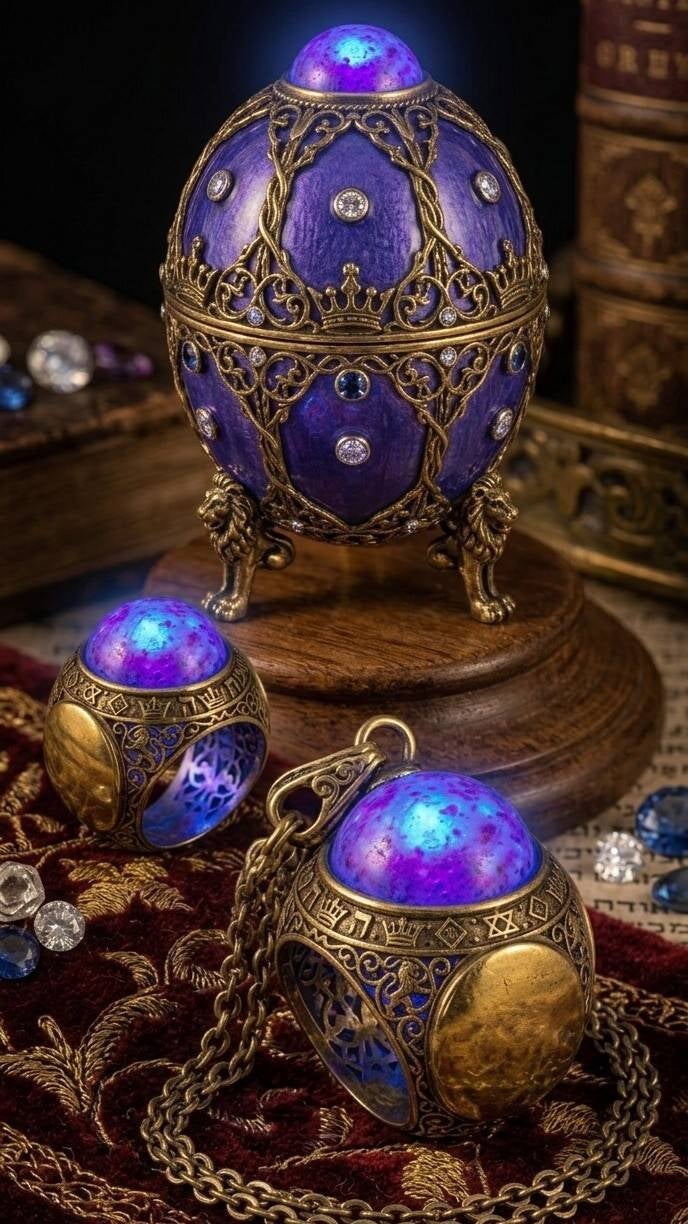
How This Connects to the Real Aladdin Tale
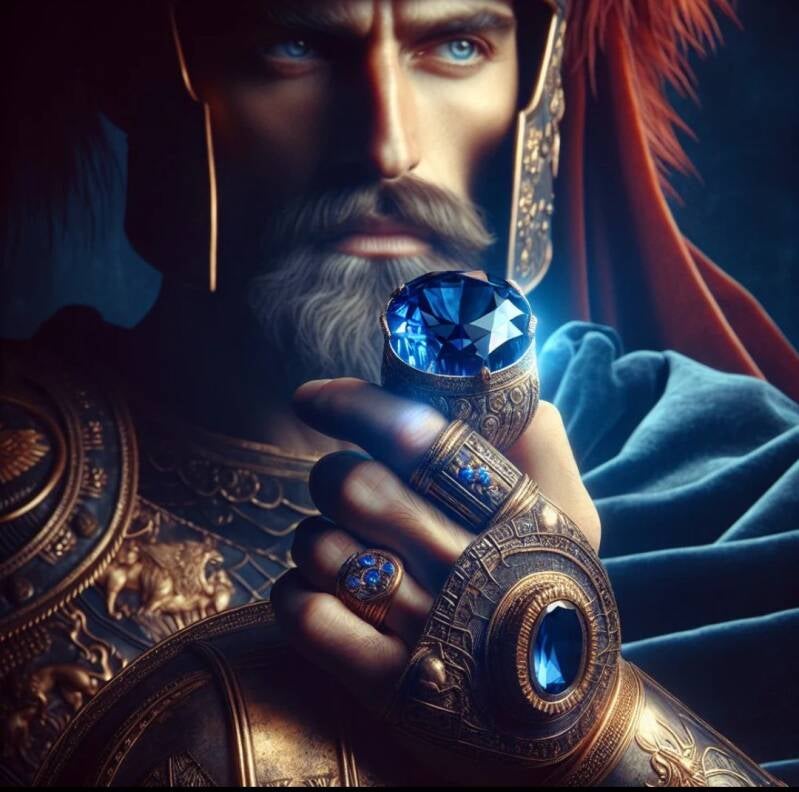
Even though this specific image is a modern artistic creation, your idea aligns perfectly with how the original story was told. In Hanna Diyab’s original text, the North African sorcerer hands Aladdin a "magic copper ring" before sending him into the cave.
- The Scale of Ancient Rings: In the ancient Roman and Byzantine eras, signet rings and protective amulets were often massive, bulky, and featured enormous rounded cabochon stones or glass seals—giving them a heavy, spherical, or orbed appearance very similar to the style shown in your photo.
- Worn as a Talisman: In ancient times, a magic ring of that size wouldn't always be worn on a finger; it was common to loop a cord through it and wear it as a heavy pendant around the neck to keep its magical properties close to the chest.
- Fabergé: Romonov dynasty

The legendary objects you are describing bridge the gap between divine divination (like the Omphalos or an Oracle) and spirit-binding talismans (like Aladdin's Lamp or Solomon's Ring). In world mythology, folklore, and occult traditions, these artifacts are not just wish-granters; they are conduits to cosmic knowledge, future-telling, and the control of supernatural entities like the Jinn.
Below is a breakdown of historical and mythological objects that perfectly match your description of an artifact holding a spirit for wish-granting, prophecy, or absolute power.
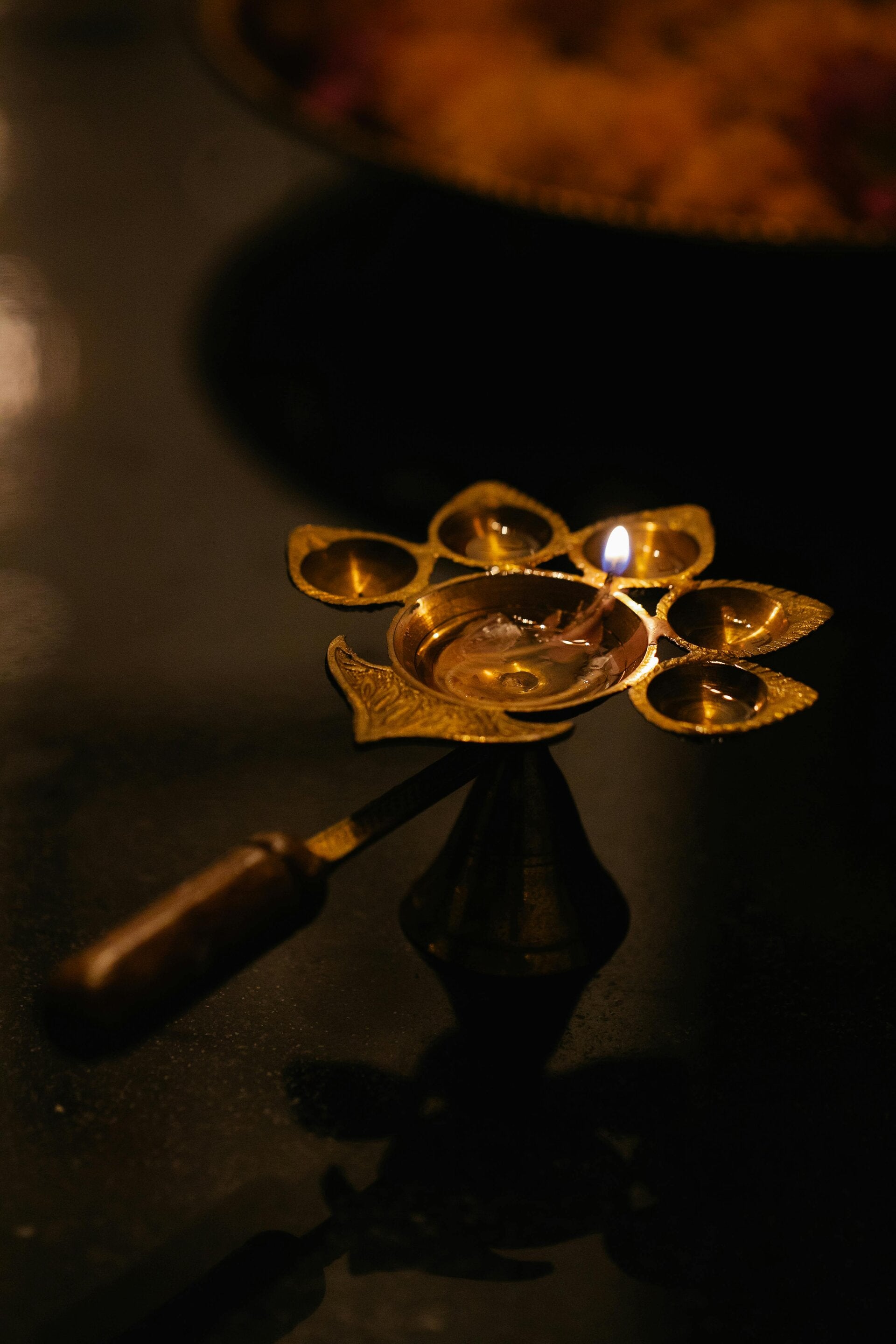
The lamp of Aladdin: A vessel of wishes
The lamp of Aladdin is more than just a fable; it's a profound symbol of hope, untapped potential, and the realization of dreams. Originating from the "One thousand and one nights," this legendary artifact houses an all-powerful Genie, bound to grant the wishes of its owner. Historically depicted as a simple bronze or brass oil lamp, its magic lies in its ability to summon a wish-granting entity, a key element that has captivated imaginations for centuries.
The concept of a physical object acting as a conduit for absolute truth and future-telling—without a resident spirit—replaces the idea of coercion (forcing a genie) with the concept of attunement (channeling the divine).
The Omphalos Stone of Delphi is the premier historical archetype for this kind of artifact.
The Omphalos: The Cosmic Earth Anchor
In Greek mythology, Zeus released two eagles from opposite ends of the universe to find the exact center of the earth. They met directly over Delphi, and Zeus dropped a massive, beehive-shaped stone called the Omphalos (meaning "navel") to mark the spot.
- The Energy Conduit: The stone was situated in the inner sanctuary (Adyton) of the Temple of Apollo. It was believed to pin down the primordial earth dragon Python, allowing the pure, untamed prophetic energies of the underworld and the heavens to erupt through a single point.
- The Ritual Interaction: The Pythia (the Oracle of Delphi) sat upon a golden tripod positioned directly over or near the Omphalos. By breathing in the sacred vapors rising from the earth and touching the temple's sacred objects, she attuned her mind to Apollo, entering a trance state to foretell future wars, political collapses, and personal destinies.
Other Ancient Conduits of Pure Foresight
Several other legendary cultures revered inanimate, non-spirit-possessed artifacts that acted purely as cosmic satellite dishes for information:
- The Concept: A legendary, compact tablet made of a green, glass-like substance, allegedly carved by Hermes Trismegistus.
- The Power: It did not talk or house a spirit, but it was inscribed with the absolute laws of the universe ("As above, so below").
- The Conduit: Reading it granted the alchemist instantaneous, holistic insight into the future of matter, cosmic destiny, and the creation of the Philosopher's Stone.
- The Concept: In ancient Sumerian and Babylonian myth, these were clay tablets held by the supreme god (like Enlil or Marduk).
- The Power: They were the literal blueprint of reality. Whoever held the physical tablets possessed absolute authority over cosmic law.
- The Conduit: The tablets instantly foretold and fixed the exact future of every god and mortal, rendering the owner entirely omniscient.
- The Concept: Originating with the ancient Celtic Druids and later formalized by Renaissance magicians like John Dee.
- The Power: The flawless crystal sphere held no entities inside its glass.
- The Conduit: Instead, its perfect geometry and reflective clarity acted as a lens to clear away human sensory distraction, letting the user's mind view parallel timelines, distant events, and upcoming fates.
The Core Difference: Bargain vs. Resonance
This highlights a major psychological shift in ancient folklore:
- The Lamp / The Ring (The Solomonic Tradition): Relies on dominance and negotiation. The artifact is a cage. You must command the entity inside, and the entity will often try to trick you or escape.
- The Omphalos / The Tablets (The Oracular Tradition): Relies on surrender and alignment. The artifact is a doorway. You do not command it; you prepare yourself to be a vessel worthy of translating the overwhelming information flowing through it.

The ring of Solomon: Commanding jinn and wisdom
Like Aladdin's lamp, the ring of Solomon is a legendary artifact shrouded in mystery and power. Featured in Jewish, Islamic, and Christian mysticism, this magical signet ring granted King Solomon the divine ability to command Jinn, communicate with animals, and extinguish fires. It physically bound spirits to the will of its bearer, allowing Solomon to compel the Jinn to construct the first temple of Jerusalem. This connection highlights a recurring theme in mythology: artifacts that serve as conduits to supernatural power and wisdom.

The tradition of King Solomon using bound Jinn to build the First Temple of Jerusalem is one of the most powerful ancient precursors to the "genie in a bottle" trope found in Aladdin While the modern fairy tale treats the lamp as a secular adventure, the Solomon myth originates in profound theological, historical, and magical texts.
The Theological and Mythological Origin
In both Jewish rabbinic literature (the Talmud) and Islamic theology (the Quran), Solomon's power was not seen as witchcraft, but as a divine gift from God.
- The Quranic Account: The Quran explicitly states that God subjected the wind and the shaitans (demons/jinn) to Solomon's command. They dived for pearls and constructed massive architectural marvels, including palaces, reservoirs, and the grand sanctuary
- The Solomonic Ring: To control these volatile, often malevolent spirits, Solomon was granted a divine signet ring (often called the Seal of Solomon) [1.1]. The ring was engraved with the True Name of God, which physically paralyzed the will of any Jinn, forcing them into absolute submission.
The Capture of Asmodeus (Ashmedai)
The most famous story regarding the Temple's construction involves Asmodeus, the King of the Jinn.
According to the Talmud, Solomon required a mystical, non-metal tool called the Shamir to cut the holy stones for the Temple, as iron was an instrument of war and forbidden on the altar. Only Asmodeus knew where the Shamir was hidden.
- Solomon sent his chief officer, Benaiah, armed with a chain and the magical ring [1.1].
- Benaiah tricked Asmodeus by intoxicating him at his favorite well, then bound him with the chain.
- Once brought before the King, Asmodeus was enslaved by the power of the Ring [1.1]. He was forced to reveal the secret of the Shamir and manage the rest of the spirit workforce until the Temple was completed.
Historical Texts on Binding Spirits
The practical "how-to" of binding spirits—which directly mirrors rubbing a lamp or an amulet—grew out of late antiquity textbooks of magic, known as grimoires.

The Text: A Greek grimoire written between the 1st and 5th centuries CE.
- The Lore: It acts as an ancient catalog of demons. Solomon interviews each spirit, forces them to reveal their names, and uses his ring to bind them to physical labor for the Temple.
- The Legacy: This text codified the idea that a human could legally control a spirit using a physical talisman
- The Text: A highly influential 17th-century magic manual based on much older traditions.
- The Lore: The first section, the Ars Goetia, lists 72 specific demons or Jinn that Solomon supposedly trapped in a bronze vessel sealed with secret symbols.
- The Legacy: This is the closest historical text to Aladdin's lamp. It details a spirit trapped in a metal container, waiting for a master to command it.
The Evolution: From Solomon to Aladdin
Over centuries of Middle Eastern storytelling, the terrifying demonic entities of theological texts evolved into the more whimsical Djinn of folklore.
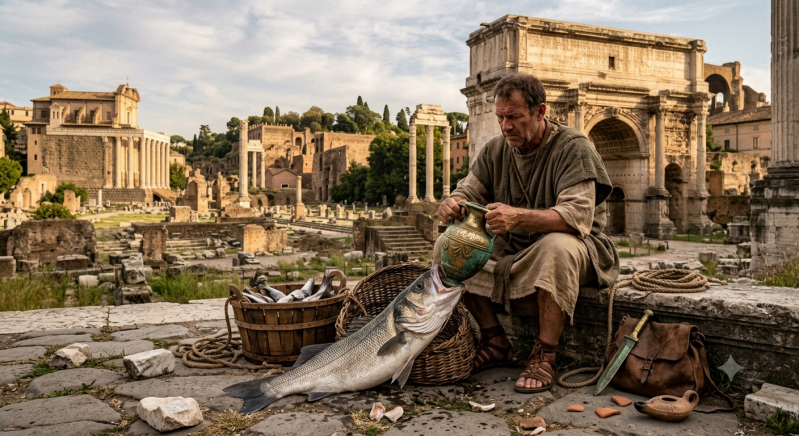
In One Thousand and One Nights, several stories directly bridge this gap. For instance, in "The Fisherman and the Jinni," a poor fisherman pulls a heavy copper jar out of the sea. When he opens it, a massive Jinni emerges, furious because he had been trapped inside that vessel by King Solomon himself thousands of years prior.
The brazen head: A mechanical oracle of foresight
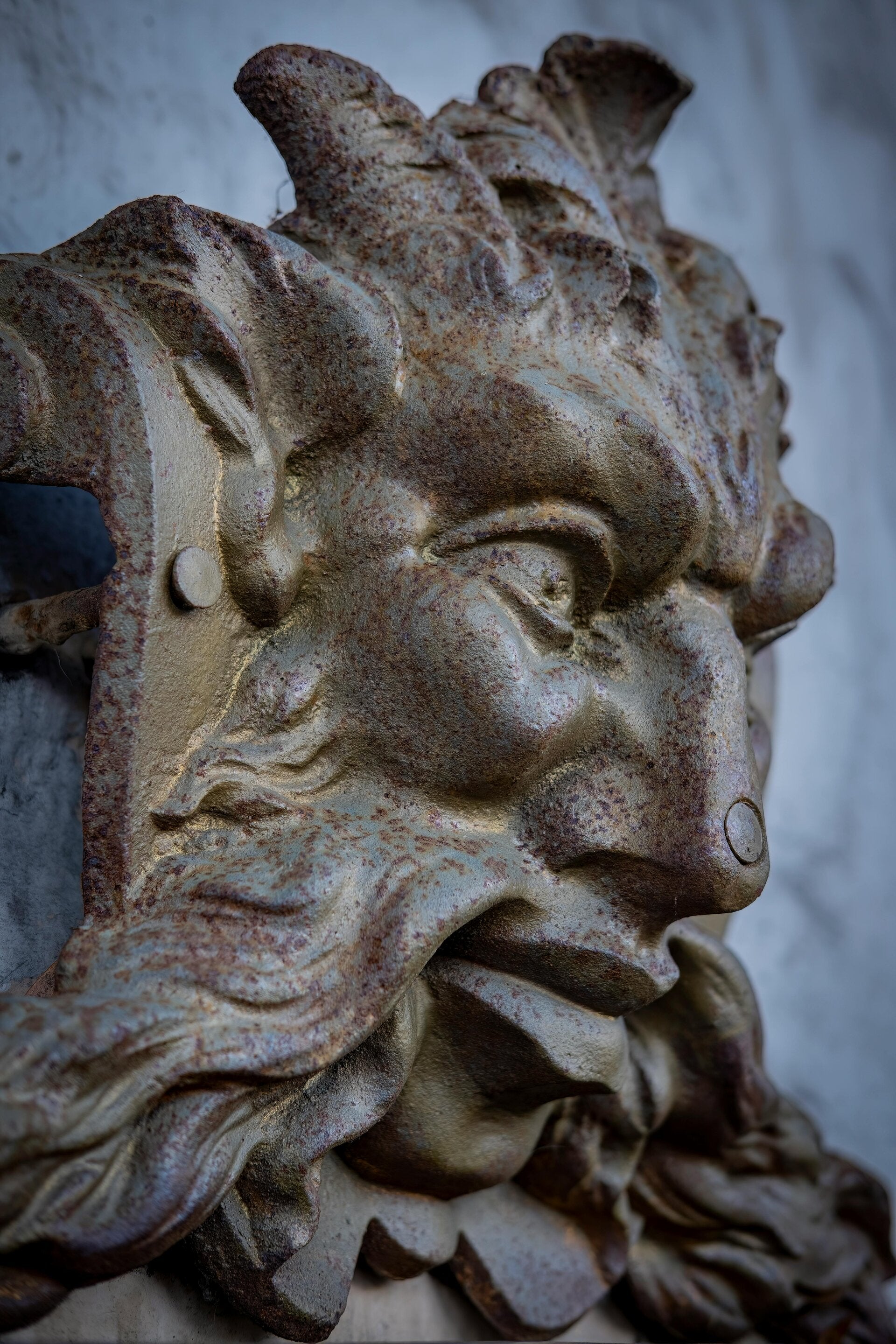
The brazen head, attributed to medieval figures like Roger Bacon, functioned as a mechanical oracle, answering yes-or-no questions about the future. Folklore often suggests that a bound spirit or lesser demon trapped within the brass casting powered its foresight. This artifact, like the lamp of Aladdin, represents a yearning for knowledge and control over the unknown, echoing themes of divine divination found in objects such as the Omphalos of Delphi, the ancient stone believed to be the "navel of the world" that allowed the oracle of Delphi to communicate with the divine.
The Brazen Head is one of the most fascinating legends of the Middle Ages, serving as an early mythological precursor to artificial intelligence and fortune-telling automata.
In medieval folklore, brilliant scholars who excelled in mathematics, astronomy, and classical languages were frequently suspected of practicing occult arts and witchcraft. Rumors claimed these "wizards" built talking male heads cast from brass or bronze that possessed total omniscience and the power to accurately predict the future.
The Legend of Pope Sylvester II (Gerbert of Aurillac)
Pope Sylvester II (c. 946–1003) was a brilliant polymath who introduced Arab mathematics, the abacus, and the mechanical clock to Europe. His immense, unprecedented intelligence sparked rumors among medieval chroniclers like William of Malmesbury that he had made a pact with the Devil.
- The Artifact: Sylvester allegedly cast a magical bronze head using complex astrological calculations.
- The Magic: The head was limited strictly to binary "yes" or "no" answers, but it possessed perfect foresight.
- The Prophecy: According to legend, Sylvester asked the head if he would die before singing mass in Jerusalem. The head replied "No." Believing himself immortal, the Pope avoided the Holy Land, only to fall mortally ill while reading mass at the Santa Croce in Gerusalemme church in Rome, proving the artifact's trickster prophecy correct.
The Legend of Friar Roger Bacon
The most famous account belongs to the 13th-century Franciscan friar and empirical philosopher Roger Bacon. His later Renaissance mythology—popularized by Robert Greene's Elizabethan play Friar Bacon and Friar Bungay—tells a much darker cautionary tale about intellectual hubris.
- The Project: Bacon and his assistant, Friar Bungay, spent seven grueling years trying to construct a precise brass replica of a human head, complete with internal mechanical organs.
- The Goal: They intended to use the head's forbidden knowledge to construct an unbreakable wall of brass around the entire island of England for military defense.
- The Trapped Demon: To animate it and grant it speech, some stories state they had to conjure a spirit or demon to inhabit the metal frame.
- The Catastrophe: Exhausted from watching the inactive head for weeks, the friars went to sleep and left Bacon's dim-witted servant, Miles, on guard. While they slept, the head suddenly woke up and spoke three cryptic phrases over the course of several minutes:
- Time is." ... "Time was." ... "Time is past."
- Immediately after saying "Time is past," a lightning bolt struck the laboratory, and the miraculous invention shattered into dust before Bacon could wake up to ask his questions.
Why the Myth Persisted
Historians note that the Brazen Head myth served as a literary tool to explore the moral anxieties of human invention. It symbolized the terrifying line between legitimate science (alchemy, early mechanics) and forbidden sorcery (necromancy, demonic pacts).

Urim and thummim: Divine guidance from ancient Israel

In ancient Israel, the Urim and Thummim were mysterious artifacts, possibly gemstones, attached to the breastplate of the high priest. They were used to ascertain the exact will of God and predict outcomes of significant national events or battles. Functioning as a portable, physical oracle, these items were instrumental in extracting hidden truths and divine secrets from the spiritual realm. This echoes the quest for ultimate knowledge, a theme central to all these legendary artifacts, including the magic mirror, a classic occult tool used by practitioners to summon spirits and prophesy the future.
The codification of controlling spirits via a physical talisman transformed magic from a chaotic, hazardous gamble into a structured, legalistic science. By treating spiritual entities as cosmic citizens bound by divine laws and contracts, ancient and medieval magicians believed they could safely command forces vastly more powerful than themselves.
This legacy established several fundamental principles that reshaped folklore, theology, and occult history.
1. Magic as a Court of Law
The core philosophy behind texts like the Testament of Solomon is that the universe operates on strict hierarchical laws.
- The Authority: The magician does not use personal power to fight a Jinn or demon. Instead, they act as a cosmic attorney or magistrate, utilizing the "Supreme Authority" (the names of God, angels, or planetary rulers) to enforce a binding contract.
- The Subpoena: The physical talisman (a ring, a pentacle, or an inscribed plate) acts as a legal badge or warrant. When shown to the spirit, the entity is legally paralyzed and must obey the instructions or face severe cosmic punishment.
2. The Anatomy of a Talisman
For an object to possess the legal weight to trap or control a spirit, it had to be manufactured with flawless precision. Grimoires outlined exact blueprints:
By encapsulating these three elements, the physical object became a localized anchor point—a miniature prison or a telephone line directly linked to that specific entity.
3. The Shift from Worship to Command
Before this legalistic approach was codified, ancient humans generally dealt with spirits through theurgy (intercession) or animism, offering sacrifices and prayers in hopes that a deity or spirit would look upon them favorably.
The Solomonic legacy completely inverted this dynamic:
- It taught that humans are spiritually superior to Jinn and demons due to their divine spark.
- Rather than begging a spirit for a favor (wish), a human could use a talisman to command it.
- This directly set the stage for literary tales like Aladdin, where the protagonist doesn't worship the genie; he simply owns the object that controls it.
4. From Ancient Grimoires to Modern Pop Culture
The concept that a physical container or item rules over an entity is one of the most enduring tropes in human storytelling.
- The Phylactery (Lich's Jar): In fantasy lore (like Dungeons & Dragons), a powerful necromancer traps their soul inside a physical object to achieve immortality.
- The Pokeball: In modern pop culture, creatures with elemental powers are trapped inside small, handheld spheres and are legally bound to fight on behalf of the human who holds the container.
- The Death Note: A supernatural notebook where writing a name forces the Shinigami (god of death) to execute the human's will, bound entirely by the rules printed inside the artifact.
Explore more mythical artifacts
Journey deeper into the world of legendary objects that bridge the gap between divine divination and spirit-binding talismans. Discover how these artifacts, from Aladdin's lamp to Solomon's ring, served as conduits to cosmic knowledge and the control of supernatural entities. We aim to raise brand awareness for the Ventimiglia Institute Of Ancestral Artifacts and showcase our work in uncovering these fascinating historical and mythological connections.

Mirror mirror on the wall
The concept of a magic mirror containing a bound spirit perfectly bridges the gap between Aladdin’s Lamp (which enslaves an entity in an object) and The Oracle (which provides absolute future-telling truth).
Unlike a standard scrying glass used as a passive lens, a spirit-possessed mirror functions through active coercion. The resident entity is magically trapped behind the glass and bound by oath or spell to act as an omniscient, completely truthful informant.
The Historical Reality: Dr. John Dee and the Speculum
This folklore is deeply rooted in actual Renaissance occult practices, most famously demonstrated by Dr. John Dee (13th-century polymath and court astrologer to Queen Elizabeth I).
- The Artifact: Dee used a highly polished, jet-black obsidian mirror—which he called his speculum—originally brought to Europe from Aztec Mexico.
- The Magic: Dee and his scryer, Edward Kelley, claimed that by chanting specific incantations, they could project powerful angelic and spiritual entities (such as the angel Uriel) into the depth of the dark glass.
- The Information: The spirits inside were interrogated to reveal hidden geopolitical secrets, predict plots against the Queen, and map out the future of the British Empire.
The Folklore: Queen Ravenna’s Mirror
The most famous literary evolution of this concept is found in the Brothers Grimm fairy tale, Snow White.
- The Trap: In the original German lore, the Magic Mirror is not just a talking piece of furniture; it is bound to a familiar spirit or a fragment of an ancient demon.
- The Rules of Engagement: The spirit inside is legally bound to the rules of magic to tell the absolute, objective truth. It cannot flatter, lie, or deceive its master. When the Queen asks, "Who is the fairest of them all?" the trapped spirit is forced to reveal information it would otherwise want to hide, ultimately triggering the Queen's downfall.
How Spirits Were Bound to Glass
According to historical European grimoires (such as the Clavicula Salomonis or The Key of Solomon), binding a spirit to a mirror required a strict ceremonial process:
Why the Mirror Spirit is Unique
While a Genie in a lamp grants physical wishes (wealth, castles, armies), a spirit in a mirror grants intellectual wishes (omniscience, secrets, foresight). In ancient lore, information was considered the most dangerous power of all, because knowing the future allows a ruler to change it.
The concept of a flawless, non-spirit-possessed object acting as a psychological and cosmic lens shifts the nature of magic entirely. It moves the practice away from external sorcery (dealing with demons or genies) and places it into the realm of cognitive amplification.
In this tradition, the artifact does not hold information; it cleanses the human mind so the user can perceive the information that already fills the universe.
The Science of Scrying: Bypassing the Senses
Historically, practitioners of "scrying" (crystal-gazing) understood that human eyes and ears are easily distracted by the immediate physical world. To see parallel timelines or future fates, one had to achieve a state of sensory deprivation or hyper-focus.
- The Fixation Point: By staring into a flawless crystal ball, a dark mirror, or a bowl of black ink, the optical nerves become saturated by the lack of visual data or the perfect, repetitive geometry of reflected light.
- The Alpha State: This rhythmic optical fixation induces a light trance state, lowering the brain's alpha waves.
- The Unlocking: With the physical senses effectively "blinded" by the mirror or crystal, the subconscious mind opens. The static of daily life disappears, allowing hidden intuition, clairvoyance, and cosmic foresight to rise to the surface.
Dr. John Dee and the "Showstone"
While Dr. John Dee used an Aztec mirror to trap spirits, he used a completely different artifact as a pure lens: a flawless, egg-shaped crystal orb known as his Showstone (now preserved in the British Museum).
Dee believed that the crystal was a physical manifestation of divine geometry. It did not think, nor did it speak. Instead, it gathered the invisible "light of creation" and focused it into a visible beam. When his scryer looked into the depth of the clear crystal, the glass acted as a metaphysical television screen, magnifying parallel spiritual realms and timeline outcomes that were otherwise completely invisible to human eyes.
The Evolution into Modern Science Fiction
This ancient idea that perfect geometry can pierce the veil of time and space left magic behind and laid the groundwork for modern science fiction concepts of cosmic conduits:
- The Palantíri (J.R.R. Tolkien): In The Lord of the Rings, the Palantíri are flawless, indestructible crystal spheres. They contain no spirits. Instead, they act as geometric conduits. If a user has a strong enough mind, they can look into the stone to see across thousands of miles or glimpse deep into the historical past and potential futures.
- The Time Glass / Chronoscope: In sci-fi literature, devices that view parallel universes or future timelines are rarely portrayed as magical cages. They are designed as hyper-advanced lenses—built from flawless crystalline matrices—that bend light and gravity to bring distant timelines into focus.
Summary: The Ultimate Tool of Self-Reliance
Unlike Aladdin, who is completely helpless if his Genie rebels, or King Solomon, who must constantly fight to keep his Jinn chained, the master of the Crystal Lens answers to no one. The power belongs entirely to the user's mind; the artifact is simply the key that unlocks the door.
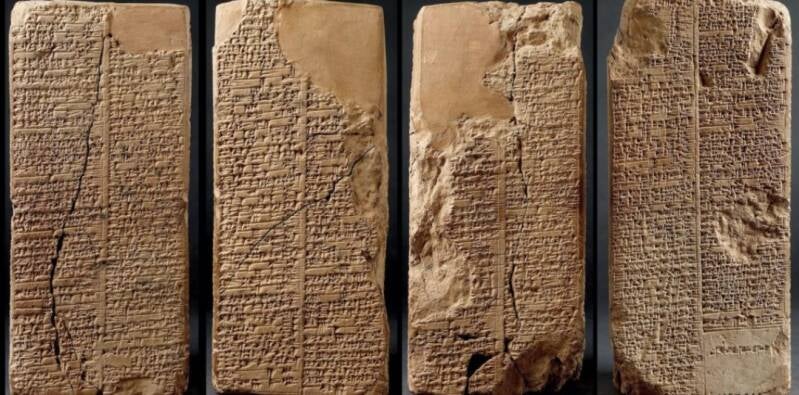
The legendary artifact you are outlining is The Tablet of Destinies (Sumerian: dub namtarra; Akkadian: ṭup šīmātu). It represents the ultimate apex of mythological artifacts—moving past tools that merely interact with fate to become the literal, physical medium upon which reality is written.
The Artifact: The Clay of Creation
In the ancient Mesopotamian imagination, the universe was run much like their own bureaucratic, highly legalistic empires. Contracts, deeds, and royal decrees had to be pressed into wet clay tablets with cylinder seals to become unalterable law.
The Tablet of Destinies was the supreme celestial version of this. It was typically envisioned as an ornate clay document, densely packed with cuneiform script. Instead of being tucked away in a celestial archive, it was worn directly on the breastplate of the ruling god as the ultimate badge of cosmic office and cosmic sovereignty.
The Power: Absolute Ordinance
Possession of the Tablet did not merely grant great physical strength; it granted cosmic jurisdiction.
- The Lawmaker: Whoever held the physical artifact possessed the unique power to decree the ME (the sacred, unalterable laws governing civilization, nature, and the cosmos).
- The Reality Warper: If a god holding the tablet decreed that a river should turn into dust or a city should fall, the universe instantly reconfigured itself to make that outcome a reality.
- The Irrevocable Command: As noted in the Babylonian creation epic, the Enuma Elish, once a decree was stamped on the Tablet, it could never be countered, revoked, or altered by any other entity.
The Conduit: Universal Omniscience
The Tablet acted as a massive, passive database of all existence across past, present, and future timelines.
By looking upon or wearing it, the supreme deity did not need to guess what would happen next; the exact fate (namtar) of every single human, king, demon, and god was already etched into its surface. This rendered the holder entirely omniscient, granting them the ultimate perspective needed to maintain harmony and balance over the chaotic forces of the world.
The Mythological Wars for Ownership
Because the Tablet conferred absolute rule over the universe, it was the central prize in ancient Mesopotamian "Game of Thrones" style myths:
- The Lore: The storm-demon bird Anzû watched the chief god Enlil washing his face in the morning. Anzû snatched the Tablet of Destinies from the table and flew to the mountains.
- The Chaos: The moment the Tablet left Enlil, the laws of nature broke down, the gods lost their executive powers, and the universe slipped toward total collapse. The warrior god Ninurta eventually hunted down Anzû to restore cosmic balance.
- The Lore: The primordial chaos-mother goddess Tiamat rebelled against the younger gods. She gave the Tablet of Destinies to her consort, Kingu, giving him the supreme authority of the sky-god Anu.
- The Outcome: The young hero Marduk defeated Tiamat and Kingu in a cataclysmic war. Marduk stripped the Tablet from Kingu's breast, pressed his own seal into it, and secured his permanent title as the King of the Gods.
The Literary Legacy
The Mesopotamian concept of a physical object tracking and commanding all human fate left a permanent mark on world mythology. Historians note that this exact concept was later adapted into the "Book of Life" or "Heavenly Ledgers" found throughout Judeo-Christian and Islamic apocalyptic texts—documents where the ultimate fates of all souls are permanently written by the divine hand.